My name is Holly Sinclair, and I’m thirty-four years old.
Eighteen months ago, my father slid a piece of paper across the table and said, “Sign this. Sell the house to Madison for $250,000, or from today, you are no longer part of this family.”
$250,000. For a house worth $750,000.
The house my grandmother left me. Her only grandchild who stayed by her side for the last five years of her life.
They thought I would cry. They thought I would crumble. What they didn’t know was that before that family meeting even took place, I had already made a phone call to the CEO of the company where my sister works.
Let me start from the day my grandmother passed away.
Growing up in the Sinclair household meant living in Madison’s shadow. My parents never hid their preference. At dinner tables, during holidays, in front of relatives, the comparisons were constant. Madison was the golden child—ambitious, driven, destined for greatness. I was the afterthought.
“Madison will go far,” my mother used to say, her eyes bright with pride. “And Holly… well, at least she’s kind-hearted.”
Kind-hearted. As if that were a consolation prize.
When I chose to become an elementary school teacher, my father’s disappointment was palpable. He stopped asking about my work entirely. No more “How’s the job?” No more “Any promotions coming up?” Just silence where interest should have been. But when Madison landed her position at Mercer & Associates, a prestigious real estate development firm, my parents couldn’t stop talking about it. They told every aunt, every uncle, every neighbor who would listen. Their younger daughter was climbing the corporate ladder. Their younger daughter was “going places.”
At family gatherings, the pattern was always the same. Everyone would crowd around Madison, asking about her latest deals, her corner office, her company car. And me? I sat at the edge of the conversation, invisible.
“So, Madison, tell us about that new project downtown,” Uncle Robert would say.
No one ever asked what I was teaching that semester. No one wondered about the students whose lives I was shaping. To them, teaching children to read wasn’t an accomplishment worth discussing.
The first sign I was being dismissed happened so gradually I almost missed it. Somewhere along the way, I had become furniture in my own family. Present but unnoticed. Functional but unremarkable.
I accepted it then. I wouldn’t accept it forever.
Grandmother Eleanor was different. She saw me—really saw me—when no one else bothered to look. Every Sunday afternoon, I’d drive to her Victorian house on Maple Street, and we’d sit on her porch drinking sweet tea while she told stories about her youth.
“You remind me of myself, Holly,” she once said. “Quiet strength. People underestimate that.”
When the doctors diagnosed her with stage four pancreatic cancer, everything changed. They gave her eighteen months, maybe two years if she was lucky.
Madison was too busy to visit. A new project at work, an important client dinner, a conference in Chicago—there was always something more pressing than a dying grandmother. My parents came once, stayed for forty-five minutes, and never returned. “It’s too hard to see her like this,” my mother explained over the phone. As if their discomfort mattered more than Grandma’s loneliness.
So, I made a choice. I took a leave of absence from teaching. I moved into the guest bedroom of that Victorian house. For five years, I was there—administering medications, cooking her favorite meals, holding her hand through the long nights when the pain was unbearable.
My mother called once during that time. Not to ask how Grandma was doing. Not to offer help.
“You’re wasting your time, Holly,” she said. “It’s not like she has anything to leave you.”
I hung up without responding.
Grandma Eleanor passed away on a Tuesday morning in April, the sunrise painting her bedroom in shades of gold. Her hand was in mine. She was smiling.
“I’ve prepared everything for you,” she whispered, her voice barely audible. “Don’t let anyone take it away.”
I didn’t understand those words. Not until the lawyer read her will.
The reading took place in a downtown law office three weeks after the funeral. Mahogany furniture, floor-to-ceiling bookshelves—the kind of room that smelled like old money and important decisions. My parents sat on one side of the conference table, Madison on the other. I took the chair nearest the door.
Mr. Patterson, Grandma’s attorney, cleared his throat and began reading.
“I, Eleanor Marie Whitmore, being of sound mind and body, hereby bequeath my property, located at 847 Maple Street, to my granddaughter, Holly Elizabeth Sinclair. The only one who stayed when everyone else left.”
The silence that followed was deafening. My father’s face went pale. My mother’s mouth fell open. But it was Madison’s reaction that I remember most vividly. Her perfectly manicured fingers curling into fists, her jaw tightening with barely contained rage.
“There must be some mistake,” Madison said, her voice sharp. “Grandma wasn’t… she couldn’t have been thinking clearly when she signed this.”
Mr. Patterson removed his glasses, polishing them slowly. “I assure you, Ms. Sinclair, your grandmother was fully competent. This document was witnessed, notarized, and executed according to every legal standard.”
$750,000. That was the market value of the Victorian house on Maple Street. And Grandma had left every brick, every floorboard, every memory to me.
As the meeting concluded, Mr. Patterson handed me a sealed envelope. “Your grandmother asked me to give you this,” he said quietly. “She said you should only open it when necessary.”
I tucked it into my purse without looking at it. Walking out of that office, I felt Madison’s eyes boring into my back. When I turned to face her, I saw something I’d never seen before. She was looking at me like I was the enemy.
The pressure started three days after the funeral. My parents showed up at the house—my house now—without calling first. They sat in Grandma’s living room like they owned the place, their expressions a carefully rehearsed mixture of concern and disappointment.
“We need to talk about the house,” my father began.
“What about it?”
“It’s not right, Holly. One person keeping all of this.” He gestured at the high ceilings, the original hardwood floors, the antique furniture Grandma had collected over decades. “Family should share.”
My mother nodded vigorously. “Madison needs a place. She’s thinking about her future—marriage, children. This house would be perfect for her.”
“And what about my future?” I asked.
They exchanged a glance. The kind of look parents share when a child says something naive.
“Sweetheart,” my mother said. “You’re a teacher. You don’t need a house like this. Madison is building something. She has ambitions.”
There it was. The same message I’d heard my entire life, dressed up in new clothes.
Every day for the next two weeks, they returned. Sometimes together, sometimes separately. My father threatened. My mother cried. They took turns playing good cop and bad cop, their scripts so predictable I could have written them myself.
“If you don’t share this with your sister,” my father finally said, “you won’t have a family anymore.”
I lay awake that night doing the math. If I sold to Madison at the price they were demanding, I’d lose $500,000. I’d lose my home. I’d lose the last piece of Grandma Eleanor I had left. But if I refused, I’d lose my family.
The choice seemed impossible. Until I realized something important: I could lose my family, but I couldn’t lose myself.
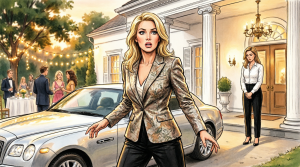
They called it a family meeting. It felt more like an ambush. My parents arrived at seven sharp, settling into the living room chairs like judges taking their seats. Madison showed up twenty minutes late, breezing through the front door in a designer blazer that probably cost more than my monthly salary. She didn’t apologize for her tardiness. People like Madison never do.
“Let’s get this over with,” she said, not bothering to sit. “I have a dinner at nine.”
My father pulled out a document—a sales agreement already drafted.
“Here’s what’s going to happen, Holly. You sign this. You sell the house to Madison for $250,000. We put this whole mess behind us.”
I looked at the number. Then I looked at my father. “The market value is $750,000.”
Madison laughed. It wasn’t a pleasant sound. “Market value, Holly. Do you even know what that means?” She crossed her arms. “Have you ever sold a house? Have you ever negotiated a real estate deal? I work in this industry. Trust me, 250 is generous. It’s one-third of what the house is worth.”
“It’s family price,” my mother interjected. “That’s how families work.”
The conversation circled like a predator around wounded prey. Every time I raised an objection, they had a counter. Every time I stood my ground, they pushed harder.
“This is a family decision,” my father said finally.
“But this is my house.”
Madison stepped closer, her heels clicking against Grandma’s hardwood floors. “It was Grandma’s house. You just happened to be standing in it when she died.”
“I was there for five years, Madison. And I had a career to build.”
“Some of us have real responsibilities.” She mentioned something about a project that required the house. She didn’t elaborate. I didn’t ask.
After Madison and my father left, my mother stayed behind. She waited until their cars pulled away, then turned to me with tears already forming in her eyes. I’d seen this performance before—at school plays, at graduations, whenever she needed something from me.
“Holly, baby… can we talk? Just us?”
I gestured to the couch. She sat, dabbing at her eyes with a tissue she’d conveniently brought.
“You’re tearing this family apart,” she said. “Do you understand that? Everything your father and I built, everything we sacrificed… you’re throwing it all away for a building.”
“It’s not just a building, Mom. It’s Grandma’s home. It’s my home now.”
“It’s wood and nails.” Her voice cracked perfectly on cue. “Family is blood. Family is forever. This house will crumble someday, but family… family is supposed to last.”
She reached for my hand. I let her take it.
“Don’t you remember all those nights I stayed up with you when you were sick? Don’t you remember how hard we worked to give you a good life? And this is how you repay us?”
The guilt rose in my chest like bile. She knew exactly which buttons to push. She’d been pushing them my whole life.
“I love you, Mom. I love this family. But I can’t sell something Grandma trusted me to protect.”
Her expression shifted. The tears dried up faster than they’d appeared.
“I’m giving you one week, Holly.” She stood, smoothing her skirt. “One week to come to your senses. After that, don’t bother calling me ‘Mom’ anymore.”
She walked out without looking back. The front door closed with a sound like a verdict. I sat alone in Grandma’s living room, surrounded by her furniture, her photographs, her memory, and I wondered if keeping this house would cost me everything else.
The phone rang at midnight. I was already awake, staring at the ceiling when Madison’s name lit up my screen. I considered not answering, but something told me I needed to hear what she had to say.
“Did I wake you?”
Her voice was different now. Cold, professional, stripped of the theatrical warmth she performed for our parents.
“What do you want, Madison?”
“I want you to understand something.” A pause. Ice clinking in a glass. “This little standoff you’re staging… it’s cute. But you need to know who you’re dealing with.”
“I know exactly who I’m dealing with. My sister.”
She laughed softly. “I’m not just your sister, Holly. I’m a Senior Project Manager at one of the largest real estate firms in the state. I have connections you can’t even imagine. Lawyers, contractors, city officials. People who owe me favors.”
“Is that a threat?”
“It’s information.” Another pause. “You work at a public school, don’t you? It would be such a shame if someone started raising questions about a certain teacher’s competence. Budget cuts are brutal these days. They’re always looking for excuses to let people go.”
My blood ran cold. “You wouldn’t.”
“I wouldn’t have to. I know people who know people. That’s how the real world works, Holly. Maybe they didn’t teach that in your little classroom.”
She hung up without saying goodbye.
I sat in the darkness for a long time after that, my phone still clutched in my hand. On the nightstand, Grandma’s photograph smiled at me from its silver frame.
Then I did something I’d never done before. I opened my laptop and typed three words into the search bar: Mercer and Associates Leadership.
I didn’t know what I was looking for yet. But I was done being prey. I remembered Grandma’s words: Don’t let anyone take it away.
The sealed envelope had been sitting in my purse for weeks. That night, I finally opened it. Inside was a handwritten letter on Grandma’s lavender stationery and a business card.
My dearest Holly,
If you’re reading this, it means someone is trying to take what I’ve given you. I knew this might happen. Your parents never understood the value of things that can’t be bought.
If you need to keep the house while still protecting yourself, call the number below. Linda Torres was my attorney for many years before Patterson. She specializes in creative real estate solutions. She’ll help you find a way.
Remember, keeping something doesn’t always mean holding on to it with both hands. Sometimes the smartest grip is the loosest one.
All my love, Grandma Eleanor
Linda Torres. The name was vaguely familiar. A friend from college, maybe? I’d lost touch with so many people over the years. I called the next morning.
“Holly Sinclair.” Linda’s voice was warm but professional. “Eleanor told me you might reach out someday. I’m glad you did.”
“I need help. My family is trying to force me to sell my grandmother’s house for a fraction of its value.”
“Tell me everything.”
I did. Every threat, every manipulation, every midnight phone call. When I finished, Linda was quiet for a moment.
“Have you ever heard of a Sale-Leaseback Agreement?”
“No.”
“It’s simple, really. You sell the property at full market value, but you negotiate a long-term lease as part of the deal. The buyer gets an investment property. You get the money and the right to keep living there.”
My heart began to beat faster. “But who would buy a house where the seller still lives?”
Linda’s answer changed everything.
“Tell me,” Linda said, “where exactly is your grandmother’s house?”
“847 Maple Street. The Victorian District.”
Silence on the other end, then a low whistle. “Holly, are you sitting down?”
“Why?”
“Because I just had a very interesting meeting last week. Mercer and Associates—one of the biggest real estate development firms in the region—is actively searching for a property in your exact neighborhood.”
My stomach dropped. “Mercer and Associates? That’s your sister’s company.”
“Yes, I know.” Linda’s voice carried a hint of something I couldn’t quite identify. Amusement, maybe. “Their CEO, Jonathan Mercer, wants to establish a satellite office on that side of town. High-end residential conversion. Your grandmother’s house would be perfect.”
The irony wasn’t lost on me. Madison worked for a company whose CEO was looking for exactly what I had.
“What’s Mercer like?” I asked.
“Strictly professional. Hates drama, especially personal drama. He’s the kind of man who evaluates everything through a business lens. If a deal makes sense, he does it. If it doesn’t, he walks away. Emotion doesn’t factor into his decisions.”
I thought about Madison’s threats, her connections, her certainty that she could make my life miserable.
“If Mercer buys my house,” I said slowly, “Madison would have to work there.”
“Every week. From what I understand, he wants the satellite office to handle regional accounts. Project managers would rotate through regularly.”
The poetic justice of it was almost too perfect. Madison demanding my home, then being forced to report to it under her boss’s authority.
“This isn’t revenge,” I said, more to myself than to Linda.
“No, it isn’t. It’s business.” I could hear her smile through the phone. “And it’s a damn good deal for everyone involved. Well… almost everyone.”
I set up the meeting.
My parents chose the nuclear option. They called it a family dinner. But what they really wanted was an audience for my public humiliation. Aunts, uncles, cousins—everyone gathered at my parents’ house on a Saturday evening, the table set with Grandma’s china. The irony of that particular choice wasn’t lost on me.
Halfway through the main course, my father stood up. He clinked his wine glass with a fork, commanding attention like a general addressing his troops.
“I want to discuss something important,” he announced. “Something that affects all of us.”
The room fell silent. Forks paused mid-air. Eyes turned to him.
“As most of you know, my mother left her house to Holly.” He paused, letting the words settle. “What you may not know is that Holly has refused to share it with Madison. She’s chosen a building over her own family.”
Murmurs rippled through the room. Disapproving glances landed on me like physical weights. My mother began to cry—loud, theatrical sobs that drew sympathetic looks from the relatives.
“She’s changed since Eleanor passed,” Mom wailed. “I don’t even recognize my own daughter anymore.”
Aunt Carol reached over to pat her hand. “That’s terrible, Patricia. Just terrible.”
Uncle Robert shook his head at me. “Holly, you should really think about family.”
“Madison needs that house for her future. She has plans.”
“Plans for marriage,” my mother added. “Children. A life.”
And there it was. The implication that my life, my teaching career, my five years of caregiving amounted to nothing worth considering.
“Holly,” my father said, his voice hard. “Everyone in this room knows what the right thing to do is.”
Eighteen pairs of eyes stared at me, waiting for surrender. I felt very small and very alone. But I also felt something else—something I’d never felt before. Clarity.
Madison wasn’t finished. She stood up from her chair, smoothing her designer dress, and walked slowly around the table until she was standing directly behind me. I felt her shadow fall across my shoulders.
“Let me explain something to everyone here,” she said, her voice carrying the confidence of someone who’d never been told no. “My sister is a school teacher. She teaches children how to color inside the lines and sing the alphabet song.”
Scattered laughter. Condescending smiles.
“She doesn’t understand real estate. She doesn’t understand investments. She doesn’t understand anything about building wealth or planning for the future.” Madison placed a hand on my shoulder, the gesture of a superior addressing an underling. “Holly was lucky enough to be in the right place at the right time when Grandma got sick. That’s all.”
“I was there for five years,” I said quietly.
“Anyone could have done what you did. Changed some bed sheets, made some soup.” Madison shrugged. “It’s not exactly brain surgery.”
Aunt Carol nodded vigorously. Uncle Robert murmured agreement.
I looked around the table at these people who shared my blood, who had known me since childhood, who were now treating me like a stranger—or worse, like a villain. And suddenly, I understood.
This wasn’t about the house. It had never been about the house. Madison didn’t want Grandma’s property because she needed it. She wanted it because I had it. Because for the first time in our lives, I possessed something she couldn’t have, and that was intolerable to her.
“You think you won something?” Madison whispered, low enough that only I could hear. “But you have no idea who you’re playing against. This is my game, Holly. And I always win.”
I said nothing. But inside, something shifted. The fear dissolved. In its place was steel.
I stood up. No dramatic speech, no tearful defense. Just the simple act of rising from my chair while eighteen people watched in stunned silence. I looked at my father first, then my mother, then Madison. Then slowly, I let my gaze travel around the entire table, face by face, relative by relative.
“Thank you,” I said, my voice steady. “Thank you all for showing me exactly where I stand in this family.”
“Holly, sit down,” my father commanded.
“No.”
The word hung in the air like a foreign object. When had anyone in this room ever heard me say no?
I walked toward the door. Behind me, I heard chairs scraping, voices rising in protest, my mother calling my name with practiced desperation. I didn’t turn around. Outside, the night air was cool and clean. I sat in my car for a full minute, my hands trembling slightly on the steering wheel. Not from fear—from adrenaline.
Then I pulled out my phone and called Linda.
“It’s Holly.”
“How did the dinner go?”
“About as well as you’d expect.” I started the engine. “Contact Jonathan Mercer. Tell him I’m ready to discuss terms.”
“Are you sure? Once we start this process…”
“I’ve never been more sure of anything in my life.”
A pause. “I’ll make the call first thing tomorrow.”
I drove home through quiet streets, past houses where normal families were having normal dinners without ultimatums or public humiliations. When I pulled into Grandma’s driveway—my driveway—I sat in the darkness and looked up at the Victorian house that had become the center of so much conflict.
“I don’t need to defend myself with words,” I whispered to no one. “I’ll let the paperwork speak instead.”
Two weeks later, Jonathan Mercer sat across from me in my living room.
I want to pause here for a moment. If you’ve ever been dismissed by your own family because of the choices you made—whether it was your career, your partner, or anything else—drop the word “BOUNDARY” in the comments below. I need to know I’m not alone in this. And if you’re curious about what happens when Madison’s CEO walks through my door, stay with me. The best part is coming.
Jonathan Mercer was not what I expected. Tall, silver-haired, with the kind of presence that filled a room without trying. He wore a charcoal suit that probably cost more than my car, but his handshake was surprisingly warm.
“Miss Sinclair,” he said, surveying Grandma’s living room with professional interest. “This is quite a property. Victorian architecture, original moldings, exceptional location. I can see why your grandmother loved it.”
“She spent forty-three years here. And you spent five of those years caring for her.” He turned to face me. “That kind of dedication is rare. I respect it.”
We walked through the house together—the formal dining room, the library with its floor-to-ceiling bookshelves, the sunroom that overlooked the garden. Mercer asked thoughtful questions about the property’s history, its maintenance, its potential. When the tour was complete, we settled into chairs across from each other.
“Linda explained your proposal,” he said. “Full market value sale with a fifteen-year leaseback. It’s unconventional, but it works for what I have in mind. The ground floor would convert beautifully to office space. You’d retain the upper floors as a private residence.”
“And the price?”
“$750,000. Fair market value.”
He paused. “May I ask why you’re doing this? You could simply refuse to sell.”
I considered lying. I considered deflecting. Instead, I told the truth. “Because certain people are trying to take this property through pressure and manipulation. I need to protect it legally in a way they can’t undo.”
Mercer nodded slowly. “I appreciate your honesty, Miss Sinclair.”
“There’s something else you should know.” I met his eyes. “Madison Sinclair is my sister.”
A flicker of surprise crossed his face. Then, unexpectedly, he smiled. “I had a feeling.”
“You knew?”
Mercer leaned back in his chair. “Madison talks about her family occasionally. Mentions a sister who teaches elementary school. When Linda contacted me about a property being sold by a schoolteacher named Sinclair… I put the pieces together.”
“And you’re still interested?”……………………………..

