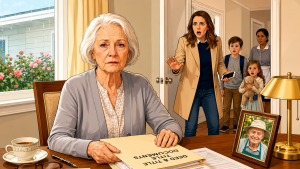
It rested.
Lily sent messages for weeks. Some angry.
Some apologetic. Some practical.
Margarita answered only through the attorney until the sale closed. She refused to debate the value of her own dignity with the person who had priced it against a house.
After my own daughter called me useless, I sold everything and disappeared.
That sentence sounded cruel when strangers repeated it, but Margarita knew the truth beneath it. She had not abandoned love.
She had abandoned being used.
The house sold. The accounts moved.
The remaining furniture was collected under supervision. Lily found another place to stay, smaller and less convenient, and for the first time she had to explain to her children why Grandma was not opening the door.
Margarita did not celebrate Lily’s struggle.
She prayed the children would grow kinder than what they had witnessed. But she no longer mistook suffering for proof that she should return to the role of unpaid servant.
In the months that followed, Margarita took morning walks, learned the names of neighbors, and bought herself a blue cardigan almost like the one Lily had mocked.
The first time she wore it outside, she did not check anyone’s face for approval.
She still missed the grandchildren. She still cried some nights.
Freedom did not erase grief. It simply made room for grief to exist without insult sitting beside it at breakfast.
When asked whether she regretted leaving first, Margarita would touch her wedding ring and shake her head.
She had given Lily shelter, history, trust, and time. Lily had looked at all of it and seen an asset waiting to transfer.
The hardest part of aging was not learning how to live with silence.
It was learning that some people call you useless the moment you stop being available for use. Margarita learned late, but not too late.
She left before Lily could count her among her possessions.
And for the first time in years, the life Margarita built belonged completely to her.