PART 3 — THE SECRET MY HUSBAND TOOK TO HIS GRAVE
“Mom, there’s something Dad never knew either.”
I pressed the telephone against my ear.
Across the kitchen table, Harold watched me carefully.
Eleanor stopped pouring her tea.
“What didn’t your father know, Mark?”
For several seconds, all I could hear was my son’s breathing.
Then he said something that made my stomach tighten.
“The eighty-five thousand dollars wasn’t the only money.”
I closed my eyes.
“How much more?”
“Mom, please let me explain.”
“How much, Mark?”
He began crying again.
“I don’t know exactly.”
I gripped the edge of the table.
“You don’t know?”
“Alicia handled most of it.”
There it was again.
Alicia handled it.
Alicia suggested it.
Alicia knew about it.
My son was forty-six years old, yet he was speaking like a frightened teenager who had been caught doing something he shouldn’t.
“Come back to the house,” I told him.
“I can’t.”
“Why not?”
“Because Alicia has the car.”
“Then walk.”
I ended the call.
For a moment, nobody spoke.
Finally, Eleanor reached across the table and took my hand.
“Dot, you don’t have to do this alone.”
I looked at the empty chair where my husband should have been sitting.
“I wish Raymond were here.”
Harold lowered his eyes.
“In a way, Dorothy, he is.”
He pointed toward the handwritten letter.
“Finish reading.”
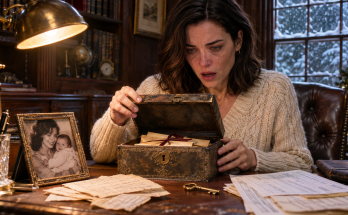
I unfolded the remaining pages.
My husband’s handwriting became increasingly difficult to read near the bottom.
But I recognized every word.
Dot, I discovered that Mark had been borrowing money against equipment from the business.
At first, I believed it was a misunderstanding.
Then I learned that several payments he claimed to have made had never been received.
I confronted him.
He promised to make everything right.
Being his father, I wanted to believe him.
Perhaps that was my mistake.
I wiped my eyes.
Raymond had always been a proud man.
He rarely complained.
He carried his troubles quietly, believing that protecting the people he loved was part of his responsibility.
Even during chemotherapy, he would ask whether the car needed servicing or whether I had remembered to lock the garage.
And while I had been sitting beside his hospital bed, worrying about whether he would live another month, he had apparently been worrying about whether our own son would leave me financially vulnerable.
I continued reading.
I paid the eighty-five thousand dollars because I couldn’t bear the thought of our son facing the consequences of his actions.
But I made him promise that he would never ask you for money again.
I hope he keeps that promise.
If he doesn’t, please remember that you are his mother, not his bank.
My tears fell onto the paper.
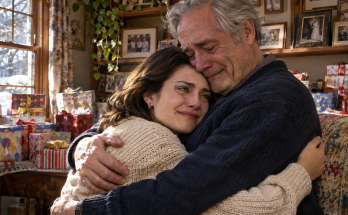
“Oh, Raymond.”
Harold handed me a tissue.
“There is more,” he said gently.
I looked at him.
“How could there possibly be more?”
He opened another folder.
“Raymond made some arrangements before his death.”
“What arrangements?”
“Your home isn’t the only asset he wanted to protect.”
I frowned.
“What other assets?”
Harold looked surprised.
“Dorothy, did Raymond ever discuss the sale of his business with you?”
“Of course. He sold it before he became seriously ill.”
“Did he tell you the terms?”
“He said we would have enough to live comfortably.”
Harold nodded.
“He was certainly correct about that.”
He placed a document in front of me.
The number printed near the bottom made me remove my glasses, clean them, and put them back on.
I read it again.
Then I looked at Harold.
“Is this a mistake?”
“No.”
“Raymond had this much money?”
“Yes.”
I stared at the figure.
More than $1.4 million.
My husband, who refused to replace his favorite twenty-year-old winter coat, had left behind more money than I had ever imagined.
“But why didn’t he tell me?”
“He established arrangements intended to provide for you throughout your lifetime. He was concerned that knowledge of the full amount might put pressure on you.”
I slowly turned toward the window.
My little house.
My flowerbeds.
The bird feeder Raymond built.
The porch where we drank coffee every Sunday morning.
All these years, I had lived simply because that was the life I loved.
And while my son and daughter-in-law had been calculating how much they could get from selling my house, they had no idea what Raymond had left behind.
Or so I thought.
“Did Mark know about this money?”
Harold’s expression darkened.
“He knew his father had sold the business. Whether he knew the exact amount, I cannot say.”
Eleanor shook her head.
“Good heavens, Dot.”
I stared at my husband’s letter.
For the first time that morning, I felt something stronger than sadness.
I felt determination.
Raymond had spent his final months ensuring that I would never have to depend on anybody.
And I was not going to dishonor his efforts by allowing someone to take that independence away from me.
“Harold, I want everything reviewed.”
“Of course.”
“Every document. Every account. Every arrangement.”
He nodded.
“And I want to make certain nobody can make decisions for me without my consent.”
“We’ll take care of it.”
My phone vibrated.
A message from Alicia appeared.
We need to discuss this privately. You have no idea what you’re doing to your family.
I read the message twice.
Then I placed the phone on the table.
A second message arrived.
Think about your grandchildren before you make a terrible mistake.
Eleanor leaned over and read it.
“Oh, that woman.”
I didn’t respond.
Because threatening me with my grandchildren was the one thing Alicia should never have done.
Twenty minutes later, there was a knock at the back door.
Mark stood outside, his hair disheveled and his jacket unbuttoned.
He looked exhausted.
I opened the door.
“Come in.”
He entered without speaking.
When he saw his father’s letter on the table, he stopped.
“Mom.”
“Sit.”
He sat.
I placed the letter in front of him.
“Your father paid eighty-five thousand dollars to save you.”
Mark nodded slowly.
“Did you repay him?”
“No.”
“Did you keep your promise?”
He shook his head.
“Did you borrow more money after he died?”
“Yes.”
“From whom?”
“Several lenders.”
“And did you ever use my name without asking?”
He looked toward Harold.
Then toward Eleanor.
Then back at me.
“Mom, there’s something you need to understand.”
“No, Mark. There’s something you need to answer.”
His eyes filled with tears.
Finally, he whispered, “Once.”
Harold immediately sat straighter.
“What do you mean, once?”
Mark buried his face in his hands.
“Alicia said it was temporary.”
I felt sick.
“What was temporary?”
He explained that their business had been struggling for longer than he had admitted.
They had missed payments.
Their credit had deteriorated.
Their lenders had become increasingly impatient.
And Alicia had convinced him that they could borrow money using paperwork connected to me.
I could barely believe what I was hearing.
“Did you sign my name?”
He shook his head.
“No.”
“Did Alicia?”
He didn’t answer.
“Mark.”
“I believe she did.”
The kitchen became painfully quiet.
Harold closed his notebook.
“Dorothy, we’ll need to determine exactly what happened.”
My son began talking rapidly.
“We were going to pay everything back. I swear. We thought we had enough time.”
“Time for what?”
“To save the business.”
I shook my head.
“You were willing to risk your mother’s financial security to save a business you couldn’t afford?”
He started crying.
“I didn’t think it would get this bad.”
I looked at him for a long time.
“Do you remember when you were nine?”
He blinked.
“What?”
“You stole five dollars from my purse.”
He looked confused.
“You wanted to buy baseball cards.”
I remembered that afternoon as clearly as if it had happened yesterday.
Raymond had taken Mark into the garage.
He hadn’t shouted.
He hadn’t hit him.
He had simply explained that a man’s character was measured by what he did when nobody was watching.
“You spent two Saturdays helping your father clean that garage.”
Mark nodded.
“I remember.”
“And you apologized.”
“Yes.”
“I thought you understood.”
He looked away.
“I did, Mom.”
“Then somewhere along the way, you chose to forget.”
His shoulders began shaking.
I felt the familiar urge to hold him.
But I remained seated.
There were wounds that an apology could begin to heal.
There were others that required time, honesty, and consequences.
This was the second kind.
Harold asked Mark a series of questions.
Some he answered immediately.
Others he claimed not to remember.
Eventually, Harold stood.
“Dorothy, I would like to arrange for a complete review of your financial records.”
“Do whatever you need to do.”
Mark looked terrified.
“Mom, please don’t destroy our family.”
I turned toward him.
“Mark, I didn’t make these decisions.”
He lowered his head.
“You did.”
Before he could respond, his phone rang.
Alicia.
He declined the call.
She called again.
And again.
On the fourth attempt, he answered.
“What?”
Even from across the table, I could hear her shouting.
“WHERE ARE YOU?”
“At Mom’s.”
“Are you insane?”
“Alicia, we need to stop.”
“Stop what?”
“All of it.”
There was a brief silence.
Then her voice changed.
“Don’t say another word.”
Mark looked at me.
“It’s too late.”
Alicia hung up.
Five minutes later, my phone rang.
It was my sixteen-year-old granddaughter, Lily.
“Grandma?”
Her voice sounded frightened.
“Hello, sweetheart.”
“Are you okay?”
“Yes, darling. Why?”
“Mom says you’re having some kind of breakdown.”
I looked toward Mark.
He went pale.
“She said you might need to go somewhere because you can’t take care of yourself anymore.”
I took a deep breath.
“Lily, I’m perfectly fine.”
“Are you sure?”
“Absolutely.”
She hesitated.
“Grandma, can I ask you something?”
“Anything.”
“Did you really promise Mom and Dad your house?”
My heart sank.
“No, sweetheart.”
Another silence.
Then Lily whispered, “I knew something wasn’t right.”
I sat forward.
“What do you mean?”
“Mom has been talking about moving for months.”
“Moving where?”
“Into your house.”
I looked at Harold.
“Into my house?”
“She said we would stay there until she sold it.”
Mark reached for his phone, but I shook my head.
“Lily, when did she tell you this?”
“Around September.”
September.
Nearly three months earlier.
This wasn’t a desperate plan created last week.
It had been developing for months.
“Grandma?”
“Yes?”
“Mom told us not to mention it to you.”
I closed my eyes.
“Thank you for telling me, sweetheart.”
“Are you angry?”
“Not with you.”
“I love you, Grandma.”
My voice broke.
“I love you too.”
When the call ended, I turned toward my son.
“You involved the children.”
He shook his head.
“I didn’t know Alicia had told them.”
I could no longer tell which parts of his explanations were true.
And that frightened me more than anything.
The little boy who used to run into my bedroom after having nightmares had become a man whose words I could no longer trust.
At eleven thirty, Harold left with copies of the documents and my permission to investigate the situation.
Eleanor stayed.
Mark eventually stood to leave.
“Mom, what’s going to happen now?”
“I don’t know.”
“Will you ever forgive me?”
I looked at him.
“Forgiveness isn’t something you can demand on a deadline.”
He nodded.
Then he walked away.
This time, he didn’t ask for a hug.
After he left, Eleanor helped me change the locks.
The locksmith arrived shortly after noon.
For forty-eight years, I had never once worried about whether my own child might enter my home without permission.
Watching that old lock come out of the door broke my heart.
But when the locksmith handed me the new keys, I felt something I hadn’t felt all morning.
Safe.
Or at least safer.
That afternoon, Eleanor insisted I eat something.
We sat together in the kitchen.
The banana bread remained untouched.
Finally, she asked the question I had been avoiding.
“What are you going to do about Mark?”
I stared at the photograph of Raymond on the mantelpiece.
“I don’t know.”
“Do you still love him?”
“Of course.”
“Then you have your answer.”
I turned toward her.
“What do you mean?”
“You can love him without letting him destroy you.”
Her words stayed with me.
At four fifteen, Harold called.
His voice sounded serious.
“Dorothy, I’ve found something concerning.”
My stomach tightened.
“What now?”
“There appears to be an existing financial obligation associated with your name that needs further examination.”
“How much?”
“Approximately thirty-two thousand dollars.”
I couldn’t speak.
“Dorothy?”
“I’m here.”
“Had you authorized anything of that amount?”
“No.”
“Then we have work to do.”
I hung up and sat motionless.
Thirty-two thousand dollars.
Money I hadn’t borrowed.
An obligation I hadn’t authorized.
A situation that had apparently existed while I was going about my ordinary life, attending church, watering my flowers, and mailing birthday cards to my grandchildren.
I wondered how long they would have continued if Alicia’s telephone hadn’t accidentally called me.
Would I have signed those papers?
Would I have trusted my son?
Would I have packed a suitcase and moved into Silver Meadows without understanding what I was surrendering?
The possibilities made me shiver.
At six o’clock, my doorbell rang.
Eleanor had already gone home.
I checked through the window.
Alicia stood on the porch.
She was alone.
Her makeup was smudged.
Her eyes were red.
For the first time since I had known her, she looked genuinely frightened.
I opened the door but remained standing in the doorway.
“What do you want?”
“Dorothy, we need to talk.”
“You’ve had several opportunities today.”
“Please.”
I studied her face.
Then I stepped outside and closed the door behind me.
She glanced toward Eleanor’s house.
“Can we go somewhere private?”
“This is private enough.”
She crossed her arms.
“Mark told me Harold has your financial records.”
“Yes.”
“You need to tell him to stop.”
“Absolutely not.”
She began pacing across the porch.
“You don’t understand what’s at stake.”
“I understand perfectly.”
“No, you don’t!”
Her voice cracked.
“If this gets out, people could lose their jobs. Mark could lose the business. We could lose the children.”
I stared at her.
“Why would you lose the children?”
She looked away.
“Alicia?”
She began crying.
“I made mistakes.”
“That much is obvious.”
“I was trying to keep everything together.”
“By taking my home?”
“I thought you would be comfortable at Silver Meadows.”
I almost laughed.
“Did you ever consider asking me?”
She said nothing.
“Did you ever consider letting me decide?”
Still nothing.
“Did you ever consider that this house contains forty-eight years of my life?”
She wiped her face.
“It’s just a house.”
Those four words struck harder than I expected.
To Alicia, it was just walls, a roof, and a price on a property listing.
To me, it was where Raymond carried me across the threshold.
Where Mark took his first steps.
Where we celebrated birthdays.
Where I held Raymond’s hand on the last Christmas we spent together.
And where I returned after burying him, when the entire world suddenly felt empty.
“No, Alicia,” I said quietly.
“To you, it was just money.”
She stared at me.
Then she reached into her handbag.
“I brought something.”
She handed me a folded piece of paper.
“What is this?”
“An offer.”
I opened it.
It was a handwritten proposal.
Alicia was offering to repay part of the money if I agreed not to pursue the matter further.
I looked at her.
“Where would you get this money?”
She hesitated.
“Bruce said he could help.”
“Your realtor friend?”
She nodded.
“Why would a realtor help repay your debts?”
Her face changed.
I folded the paper.
“Alicia, what exactly is Bruce involved in?”
“Nothing.”
“Then why was he bringing strangers into my house?”
She looked toward the street.
“They were potential buyers.”
My jaw tightened.
“You were showing my home to potential buyers while I was away?”
She began crying harder.
“It wasn’t supposed to happen like this.”
I felt an extraordinary calm settle over me.
Not because I wasn’t angry.
Because I had finally stopped expecting her to behave differently.
“Go home, Alicia.”
“Dorothy, please.”
“Go home.”
She grabbed my wrist.
“If you do this, you’ll regret it.”
I looked down at her hand.
She released me immediately.
For a moment, neither of us moved.
Then I said something I had been waiting years to say without realizing it.
“You are no longer welcome in my home.”
Her expression hardened.
“Fine.”
She wiped her eyes.
“But don’t expect to see your grandchildren.”
I felt the words land like a knife.
She turned and walked down the porch steps.
Before reaching her car, she looked back.
“You’re choosing money over your family.”
I shook my head.
“No. I’m choosing to stop letting my family choose money over me.”
She drove away.
I returned to the kitchen.
My hands were shaking.
I wanted to call Raymond.
For four years, I had occasionally forgotten he was gone.
Something would happen, and for one beautiful second I would think, I must tell Raymond.
Then reality would return.
That evening, I sat beside his photograph and told him everything anyway.
I told him about the telephone call.
The folder.
The house.
The money.
Our son.
And when I couldn’t find another word, I simply cried.
At eight forty that night, someone slipped an envelope through my mail slot.
I heard the sound from the living room.
By the time I reached the door, whoever had delivered it was gone.
There was no name on the outside.
No address.
Just my first name written in black ink.
Dorothy.
Inside was a printed email conversation.
I recognized Alicia’s name immediately.
The other name was Bruce.
The messages were dated nearly four months earlier.
My eyes moved across the first page.
Then the second.
Then the third.
And suddenly, I understood why Alicia had been so desperate to stop Harold’s investigation.
Bruce wasn’t merely helping her estimate the value of my house.
There was already a prospective buyer.
There had been discussions about a sale price, a timeline, and the payment of certain outstanding debts.
But the final message was the one that made my blood run cold.
Alicia had written:
Once Dorothy is permanently moved, Mark won’t interfere. By Christmas, everything should belong to us.
I read those words until they blurred.
Then I noticed Bruce’s reply.
You need to be sure she can’t change her mind. We can’t afford another situation like Raymond.
I stopped breathing.
Another situation like Raymond?
What did that mean?
Why were they discussing my husband?
Raymond had been dead for four years.
I reached for my phone and called Harold.
He answered on the third ring.
“Dorothy?”
“Someone left something at my door.”
“What is it?”
“Emails between Alicia and Bruce.”
I read him the final exchange.
For several seconds, Harold said absolutely nothing.
“Harold?”
“Dorothy, don’t throw anything away. Keep the envelope and every page.”
“Why?”
His next words sent a chill through my entire body.
“Because Raymond mentioned Bruce’s name to me shortly before he died.”
I slowly sat down.
“What did he say?”
Harold took a deep breath.
“He believed Bruce and Alicia had been meeting without Mark’s knowledge.”
My heart began pounding.
“Meeting about what?”
“I don’t know.”
“Was it about the house?”
“Possibly.”
“Was it about the money?”
“Possibly.”
“Then what else could it have been?”
Harold hesitated.
“Dorothy, there is someone we need to speak with.”
“Who?”
“Bruce’s former business partner.”
“Why?”
“Because he contacted Raymond two weeks before Raymond passed away.”
I stared at my husband’s photograph.
“And what did he tell Raymond?”
“I never found out.”
Harold’s voice became quieter.
“Raymond became too ill to finish dealing with the matter.”
I looked again at the emails.
For four years, I had believed my husband’s final worries were about his illness and whether I would manage without him.
Now I was beginning to understand that he had been trying to protect me from something much larger.
At nine twenty-seven, my phone rang again.
An unfamiliar number.
I hesitated before answering.
“Hello?”
A man’s voice spoke.
“Mrs. Dorothy?”
“Yes.”
“My name is Thomas Walker.”
I didn’t recognize the name.
“I used to work with Bruce.”
My entire body went still.
“I’m the person who left the envelope at your house.”
I stood slowly.
“Why?”
“Because I heard what happened this morning.”
“How?”
“Your daughter-in-law called Bruce after leaving your house.”
I gripped the phone.
“Mr. Walker, what is going on?”
He sighed.
“Your husband tried to stop something four years ago.”
“What?”
“Something your family was planning.”
My eyes filled with tears.
“Please tell me.”
“I have records. I have messages. And I have a document Raymond never got to see.”
“What document?”
There was a long pause.
Then Thomas spoke the words that changed everything.
“Mrs. Dorothy, your son wasn’t the person who received most of that missing eighty-five thousand dollars.”
My heart hammered against my ribs.
“Then who did?”
Thomas answered quietly.
“Your daughter-in-law did. And your husband was about to discover why.”
TO BE CONTINUED…
Click Here to continuous Read Full Ending Story👉: PART 4 — THE TRUTH THEY NEVER WANTED ME TO DISCOVER