My Fiancé’s Father Didn’t Know I Was The New Marine General. He Thought I Was Just Some Girl Dating His Son. At Dinner, He Started Lecturing Me About The Military… Then I Told Him My Rank…
Part 1
The first time I walked into the headquarters building at Camp Lejeune as the commanding general, I didn’t feel triumphant. I felt the way you feel stepping onto a ship you’ve just been told you’re responsible for in the middle of the ocean—steady on the outside, keenly aware of the weight beneath your feet.
The brass plate outside the office was new. My name looked too clean against the old paint. Inside, my desk held the same things every command begins with: binders thick as bricks, briefing folders with red tabs, a calendar that suddenly belonged to everyone, and a stack of messages that hadn’t waited for the ceremony to end.
The ceremony had been flawless. The band had played. The speeches had been respectful, predictable, and full of the phrases people use when they’re trying to say, We trust you, without actually admitting how much they’re going to lean on you.
Then the last salute was done, the last handshake released, and the base became what it really is—thousands of young Marines and sailors and civilians, each with a job that matters, each with a life that can change fast, all of them tied together by an invisible chain of responsibility that always leads back to one place.
My office.
At fifty-two, after thirty years in uniform, I’d learned to treat the job like a living thing. It needs constant attention. It can’t be ignored. It doesn’t care about your feelings, your plans, or your personal life.
Which was how I found myself, two weeks into command, standing in a quiet rental house near the coast, wearing a faded T-shirt and socks, watching my fiancé unpack groceries like we were the most normal couple in North Carolina.
Daniel Harper had that calm, competent way of moving that made you trust him without trying. He wasn’t military, but he worked close enough to it that he understood the rhythm. He did logistics systems for the Department of Defense—contracts, coordination, software that made sure things moved where they were supposed to.
He’d proposed two months earlier, in Virginia, on a weekend that was supposed to be nothing more than a break. The ring had been simple. The question had been straightforward. The look in his eyes had been the kind of honest that makes you say yes before you’ve finished processing what it means.
He set two cartons of eggs on the counter and cleared his throat.
“My parents want to meet you.”
I turned from the stove and gave him a small smile. “That sounds reasonable.”
He nodded, but didn’t meet my eyes. The air shifted. It was subtle, the way it always is with Daniel. He never pushed. He never dramatized. He just… paused.
“There’s just one thing,” he said.
I leaned against the counter. “Whenever someone says that, it’s never one thing.”
His mouth twitched like he appreciated the accuracy. “My dad’s a retired Marine. Gunnery sergeant. Vietnam era.”
I waited.
“And he’s traditional,” Daniel added.
“Traditional how?”
Daniel rubbed the back of his neck like he was trying to scratch away his own discomfort. “He thinks the Corps has changed too much. He thinks leadership’s softer now. Too political.”
“That’s not unusual,” I said evenly. You don’t stay in long enough to make general without collecting a museum of opinions people have about you.
Daniel inhaled. “There’s more. He also… struggles with women in command roles.”
That one landed in the familiar part of my brain. Not a surprise. Just a reminder.
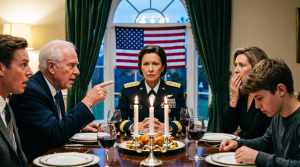
Daniel rushed on. “He’s not a bad man, Elaine. He’s proud. The Corps meant everything to him. It still does.”
“I understand,” I said, and I did.
Then Daniel’s shoulders tightened, and he said the part that mattered.
“He doesn’t know your rank.”
I blinked once. “What does he think I do?”
Daniel looked like a man preparing to step into traffic. “I might have told him you’re a consultant working on logistics systems.”
I stared at him, letting the silence do its job.
“You told your father I’m basically a contractor,” I said.
“I panicked,” he admitted.
“You panicked for three years?”
He winced. “Okay. Maybe I kept panicking.”
I should have been angrier than I was. But Daniel didn’t lie like a game. He lied like someone trying to protect something fragile, and sometimes that fragility is exactly what needs to be tested.
“Why?” I asked.
He exhaled. “Because the second he hears ‘Marine general,’ the conversation stops being about you and becomes about rank. I wanted him to meet you first.”
It was a good intention wrapped around a bad decision, like so many things in life.
“And now?” I asked.
“Now he invited us to Sunday dinner.”
I turned back to the stove and stirred the sauce slowly. In the Marine Corps, the uniform comes first whether you want it to or not. You can be a person, you can have a laugh, you can drink a beer with friends, but your rank follows you like a shadow. Most days, I didn’t mind. Some days, I wanted one evening where I didn’t have to be anyone’s symbol.
“Fine,” I said. “We’ll go.”
Daniel’s shoulders dropped with relief. “You’re sure?”
I glanced at him. “Daniel. I’ve briefed combatant commanders and testified in rooms full of people who think they know my job better than I do. I can survive Sunday dinner.”
He laughed, and for a moment it was just us.
But later that night, after we ate and cleaned up, after Daniel fell asleep beside me, I lay awake staring at the ceiling and thinking about what it means to enter a family.
Military life teaches you plenty about loyalty. It teaches you how to stand with people you barely know because the mission requires it. It also teaches you how quickly loyalty gets complicated when pride enters the room.
I didn’t know then that the dinner would be uncomfortable. I didn’t know then that the moment would come when the room went quiet in a way that felt almost physical.
And I definitely didn’t know that the bigger test wasn’t going to be Frank Harper’s pride.
It was going to be Daniel’s.
Part 2
Daniel’s parents lived half an hour away in a quiet neighborhood where the lawns were trimmed like they were inspected weekly and flags hung from porches like punctuation. As we drove, late afternoon light stretched across the road and turned the pine trees gold at the edges. North Carolina can feel slow and steady at the same time—like it’s moving forward but refusing to be rushed.
Daniel drove with both hands on the wheel. He was quiet in the way people get when they’re running through conversations before they happen.
“You’re nervous,” I said.
He gave a small laugh. “Is it that obvious?”
“A little.”
“I just want it to go well.”
“That’s reasonable.”
He glanced at me briefly. “My dad can come off strong.”
“I’ve met strong,” I said.
“That’s not exactly what I mean.” Daniel hesitated, then added, “He believes the Marine Corps is the most important institution in the country. He believes discipline solves almost every problem, and he believes people should prove themselves before they speak.”
“That sounds like a gunnery sergeant,” I said.
Daniel smiled, grateful for the familiarity in my tone.
We turned onto his street and pulled into the driveway of a modest white house with a Marine Corps banner beneath the American flag. Daniel cut the engine but didn’t move right away.
“You don’t have to do this,” he said.
“I said I would.”
“I just mean… if he starts getting intense.”
I turned toward him. “Daniel. I’m a Marine.”
He let out a soft breath and finally opened the door.
Frank Harper met us at the porch before we knocked. He was taller than I expected for a man in his seventies, built like the kind of man who never stopped carrying himself as if someone might be watching. His silver hair was cut short, and his posture was straight enough to make younger men look sloppy.
“Danny,” he said, gripping Daniel’s hand with a firm shake.
“Good to see you, Dad.”
Frank’s eyes slid to me. He studied me quickly, the way Marines study someone new—taking in posture, voice, confidence, the small details you can’t fake.
“You must be Elaine.”
“That’s right,” I said.
His handshake was firm, brief, and not warm. Not hostile either. Just an assessment.
“Frank Harper,” he said.
“Nice to meet you.”
Margaret Harper appeared behind him, smaller, softer, with warm eyes and the patient calm of someone who’s spent decades balancing a strong-willed husband. She hugged Daniel, then turned to me and smiled.
“Welcome, Elaine. Come in.”
The house smelled like roast chicken and cornbread. The hallway walls were lined with photographs: Frank in dress blues, groups of Marines in dusty airfields, a folded American flag in a glass case, shadow boxes filled with ribbons and old insignia. A life preserved in frames.
Frank noticed my eyes moving over it.
“Vietnam,” he said simply.
I nodded. “Thank you for your service.”
He gave a grunt that might have been approval.
At the dining table, Frank took the head. Margaret moved in and out of the kitchen with practiced ease. Daniel sat beside me, already bracing.
Frank started with questions that sounded polite but were designed to locate you in his world.
“Daniel tells me you work with defense logistics.”
“That’s right.”
“What kind of work?”
“Coordination. Systems planning.”
He nodded slowly. “Civilian side.”
“Yes.”
“Well. That’s important work,” he said, as if granting permission. “Military runs on logistics.”
“That’s true,” I said.
He seemed pleased. “Back in my day we used to say amateurs talk tactics, professionals talk logistics.”
“That still holds,” I said.
The meal arrived: roast chicken, mashed potatoes, green beans cooked with bacon. For a few minutes, it felt almost normal. Margaret asked where I grew up. I told her Ohio, a small town outside Dayton, and she smiled and said she’d always wanted to visit the Midwest in the fall.
Then Frank turned the conversation the way a man turns a wrench: deliberately, toward the thing he understood.
“So,” he said, leaning back slightly. “You ever spend time on base during deployment cycles?”
“Yes,” I said.
“Then you know how chaotic it gets.”
“I do.”
He looked at me like that settled something. Then he launched into stories from his service. Training exercises, long deployments, young Marines learning discipline the hard way. The stories weren’t exaggerated. They were the kind of stories Marines tell because they carry them like stones in their pockets, heavy and familiar.
But as he talked, the tone shifted. The pride in his voice hardened into certainty.
“You see,” he said, gesturing with his fork. “The Corps used to be simpler. You knew who the leaders were. You knew who’d earned their place.”
Margaret gave him a look, small but sharp.
“Frank,” she warned gently.
“I’m just talking,” he said, waving her off.
Then his eyes settled on me again. “Problem today is everybody wants authority, but fewer people understand responsibility.”
“That’s a challenge in any organization,” I said, keeping my voice calm.
He leaned forward. “Let me ask you something, Elaine.”
“All right.”
“You ever worked around Marines directly?”
“Sometimes.”
“Well then you know,” he said slowly, the way people speak when they think they’re teaching, “that command isn’t about titles. It’s about respect. Respect has to be earned.”
“I agree,” I said.
Daniel shifted beside me, uncomfortable.
Frank kept going, gaining confidence with every sentence. “And that’s the problem with civilians. They read a few headlines, maybe watch a war movie, and think they understand what command means. But leadership in the Corps? That’s something you earn. It’s not something that gets handed to you.”
The table went quiet. Margaret looked down at her plate. Daniel’s jaw tightened.
Frank took a sip of iced tea, satisfied with his own speech.
And I realized, in that moment, something that was both simple and painful: Frank Harper wasn’t talking to me. Not really. He was talking to a version of me he’d already created.
Just a woman dating his son.
Just a civilian.
Someone who couldn’t possibly belong to the world he loved most.
I folded my napkin neatly in my lap, met his eyes across the table, and said very calmly, “Frank, I actually do understand command. I’m the new Marine general assigned to your base.”
For a moment, no one moved. Not even the grandfather clock in the corner seemed to tick.
Frank’s face drained of color so fast it looked like the light in the room changed.
“What did you just say?” he asked.
“I’m Major General Elaine Mercer,” I said. “United States Marine Corps. I took command of the installation last week.”
The silence that followed wasn’t the comfortable kind. It was the kind that makes the air feel thinner.
Frank stared at me like he was waiting for the joke.
Daniel didn’t speak, but his posture said everything: guilt, relief, fear, all tied together.
Margaret’s fork slipped against her plate. She looked between us like she was trying to understand how she’d been sitting next to a storm without noticing the wind.
Frank’s pride had carried him through decades.
Now it had nowhere to go.
Part 3
Frank didn’t believe me at first. Not because he thought I was the kind of person who would lie, but because the truth didn’t fit inside the world he’d built in his head. When reality doesn’t match a man’s certainty, the first response is usually denial.
“You’re serious?” he asked, voice rough.
“I am.”
He set his fork down slowly, like the movement itself required restraint. His eyes narrowed as he studied me again, but the assessment had changed. Now he was searching for seams—any sign the uniform beneath my calm was a costume.
“That’s a pretty big claim,” he said carefully.
“It is.”
Frank leaned forward. “You’re telling me you’re the commanding general at Lejeune.”
“Yes.”
He let out a short laugh that didn’t land. “Come on.”
Daniel finally spoke. “Dad.”
Frank held up a hand, cutting him off without looking. “Danny, hold on.”
His eyes stayed on me. “If you’re a Marine general, you’ll know the name of the current operations deputy.”
“I replaced General Wallace,” I said evenly. “Colonel Rivera is acting deputy until the transition review finishes next month.”
Frank’s jaw tightened. That answer was too precise to be guessed.
He tried again, grasping for a test that would give him control. “The readiness inspection scheduled for October.”
“Moved up two weeks,” I said. “Logistics backlog from the last rotation. The timeline didn’t support waiting.”
Margaret inhaled quietly, a sound like surprise pressed through manners.
Frank’s fingers curled against the table. Another long silence passed, and in it I watched something happen to him that I’d seen in Marines before: the moment the rank stops being an idea and becomes real.
Frank sat back as if the chair suddenly felt different. He stared down at his plate, but he wasn’t seeing food. He was replaying every sentence he’d spoken for the last hour, hearing it again through a new lens, feeling each assumption like a misstep on a march.
Daniel looked like he wanted to disappear into the floor.
Margaret, surprisingly, recovered first. She looked at me gently and said, “You’re really the general?”
“Yes, ma’am.”
“Lord,” she breathed, and then she turned her eyes toward her husband like she’d been waiting for this lesson for years.
Frank cleared his throat, the sound raw. “Well,” he murmured. “I’ll be.”
Daniel tried to ease the moment. “Dad didn’t know,” he said.
Frank shot him a look sharp enough to draw blood. “I gathered that.”
Then Frank turned back to me slowly. “You didn’t think to mention that earlier.”
“I wanted to meet you as Daniel’s fiancée,” I said. “Not as a rank.”
That hit him harder than the revelation itself. There was something in his face then—regret, and something like respect trying to form in unfamiliar territory.
He picked up his iced tea and drank like he needed it to keep his mouth from saying the wrong thing.
“I suppose I owe you an apology,” he said finally.
“You don’t owe me anything,” I said.
“Yes, I do.” He sat straighter, the old Marine in him instinctively aligning to face consequences. “I made assumptions.”
“That happens.”
Frank shook his head. “No. What happened is I talked down to someone who outranks every officer I ever served under.”
“Frank, rank isn’t the point.”
“It is when you spend half an hour explaining the Marine Corps to a general,” he snapped, then immediately looked as if he regretted the sharpness.
Daniel coughed into his hand to hide a laugh. Frank glared at him. “Don’t.”
Margaret, with the calm authority of a woman who’d managed Marines without ever wearing the uniform, reached across the table and touched Frank’s arm. “Frank. Breathe.”
He exhaled, long and slow.
Dinner ended quieter than it began. Margaret cleared plates while Daniel helped in the kitchen. Frank offered once or twice, but Margaret waved him off, and I suspected she knew her husband needed to sit with his own thoughts like a man sitting with an old wound.
I stepped onto the back porch, letting the cooler evening air press against my face. Somewhere down the street a dog barked, and from a neighbor’s window came the faint sound of a baseball game. The sky was that deep Carolina blue that comes just before night, and for a moment I felt a strange relief.
Not because Frank had been humbled. I didn’t need that.
Because the truth was out in the open now.
The porch door creaked and Daniel stepped outside, exhaling like he’d been holding his breath all evening.
“You okay?” he asked.
“I’m fine.”
He leaned against the railing. “Well. That escalated.”
I gave him a faint smile. “A little.”
“I’m really sorry,” he said, and his voice was tight with sincerity. “I should have told him. I should have told you I told him that. I—”
“You did tell me,” I said. “Before we came.”
He flinched. “Not soon enough.”
I watched his face in the porch light. Daniel was a good man. I believed that. But good men can still make choices that change the shape of trust.
“You thought you were protecting me,” I said quietly.
He nodded. “I thought I was protecting us. I didn’t want your job to swallow our relationship.”
“And instead you let a lie sit between your family and me for three years.”
Daniel swallowed. “When you say it like that, it sounds worse.”
“It is worse,” I said, not cruelly, just plainly. “Because it wasn’t just your father you were managing. It was me.”
Daniel’s eyes flicked down.
The porch door opened again, and Frank stepped outside. He looked different now. The certainty was gone, replaced by something more careful—like a man who’d just realized he’d been walking around with his fly down in public.
“Daniel,” Frank said.
“Yeah?”
“Could you give us a minute?”
Daniel glanced at me, uncertain.
“I’ll survive,” I said.
He nodded and slipped back inside.
Frank walked to the other side of the railing and stared out at the yard for a while, as if the darkness could organize his thoughts for him. Then he cleared his throat.
“Well,” he said. “That was a hell of a dinner.”
“Yes,” I said. “It was.”
He rubbed the back of his neck. “I’ve replayed that conversation about ten times in fifteen minutes.”
“That sounds uncomfortable.”
“It is.” He shifted his weight, then finally turned toward me. “I owe you a real apology.”
“You already offered one.”
“That one was automatic,” he said. “This one’s deliberate.”
I waited.
Frank met my eyes. “I judged you. I assumed you didn’t understand the Corps. I talked down to you in my house.”
“Yes,” I said.
He exhaled. “You were patient about it.”
“Patience is useful.”
Frank studied my face. “Most people would’ve corrected me a lot earlier.”
“Probably.”
“Why didn’t you?”
I considered him carefully. “Because you weren’t trying to hurt me. You were defending something you care about.”
His expression shifted, surprised by the grace of that interpretation. Then he stared out at the yard again, voice quieter.
“The Corps gave me everything,” he said. “Discipline. Direction. Pride. When you spend that much of your life inside something, you start thinking you know exactly what it looks like.”
“I understand.”
“And tonight,” he continued, “I realized the Corps moved forward without asking my permission.”
“That tends to happen,” I said, and there was no sarcasm in it.
Frank let out a tired chuckle. “Yeah.”
Then he looked at me again. “You love my son?”
“Yes.”
“That’s why you came.”
“Yes.”
He nodded once, like he needed that point to anchor him. “Danny’s a good man.”
“He is.”
Frank’s gaze held mine. “If he’s chosen you, then… I clearly misjudged the situation.”
I didn’t answer right away, because my mind was on Daniel now, inside the house, carrying the consequences of his choices.
Frank’s apology mattered.
But it wasn’t the only truth that had surfaced at the table.
Part 4
Frank called me two days later, which surprised me less than it would have surprised most people. Marines tend to move toward discomfort when they decide something matters. They’ll avoid it for years, then handle it in a single, direct step.
I was in my office when my assistant stepped in and said, “Ma’am, there’s a Mr. Frank Harper on the line. He says it’s personal.”
I looked up from a readiness briefing and felt the faintest flicker of irony. The man who’d lectured me about command wanted to speak to me privately.
“Put him through,” I said.
Frank’s voice came across the line softer than I remembered. “General Mercer.”
“Elaine is fine,” I said.
He cleared his throat. “I suppose it would be, under the circumstances.”
There was a pause, and I could hear the effort in it, the way pride has to be folded carefully to fit.
“I won’t take much of your time,” he said. “I was hoping you might agree to meet me somewhere.”
“What did you have in mind?”
“Well,” he said slowly, “the base museum. The memorial garden out front.”
It made sense. Retired Marines think best surrounded by history.
“I can do that,” I said.
“Thank you.”
We met Thursday afternoon. The museum sat near a memorial courtyard lined with stone walkways and bronze plaques. The air there always felt different, as if the place carried its own quiet discipline. People lowered their voices without being told.
Frank stood near a statue of a Marine in combat gear staring toward the horizon. His hands were clasped behind his back, posture still straight, still practiced.
When he saw me, he snapped a little straighter.
“General,” he said.
“Elaine,” I corrected gently.
He nodded. “Right.”
For a moment we both looked toward the memorial wall, names etched into granite, rows of them, the kind of list that never feels real until you know one.
“You served in Vietnam,” I said.
Frank nodded. “Seventy-one to seventy-two.”
“That was a hard year.”
“They were all hard years.”
We walked slowly along the path. Frank stopped at a plaque listing names from North Carolina who didn’t come home.
“I come here sometimes,” he said.
“I understand.”
Frank took a breath. “Elaine, I didn’t ask you here just to apologize again.”
“All right.”
“I asked you here because I wanted to do it properly.”
I waited.
“Sunday night,” he said, voice steady but tight, “I behaved like a fool.”
“That’s a strong word.”
“It’s the right word.” He looked at me without flinching. “I spent decades telling younger Marines humility is part of leadership. Then the moment I met someone who represents the next generation of leadership, I dismissed her.”
I stayed quiet. Silence can be the kindest thing you offer someone trying to own their mistake.
Frank gestured toward the memorial. “The Marine Corps I remember was full of men who looked like me.”
I nodded slowly. “Times change.”
“They do.” His voice roughened. “But somewhere along the line, I started believing that if things changed too much, maybe what we did back then didn’t matter anymore.”
“That’s not how history works,” I said.
He looked at me sharply, like he needed to be sure I meant it.
“The Corps you served built the foundation the rest of us stand on,” I continued. “It matters. It always will.”
Frank’s shoulders dropped a fraction. “You really believe that?”
“I do.”
He nodded slowly. “That helps.”
We reached a bench overlooking the garden. Frank sat down carefully, like his body was reminding him he wasn’t twenty anymore.
“Can I ask you something?” he said.
“Of course.”
“How did you stay so calm Sunday night?”
I gave a faint smile. “Training.”
He shook his head. “No. There’s more to it than that.”
I watched the light move across the stone. “Experience,” I said. “When you’ve been in command long enough, you learn reacting emotionally rarely improves anything.”
Frank chuckled. “That’s not how gunnery sergeants usually operate.”
“I know.”
He grew serious again. “You could’ve humiliated me.”
“I wasn’t trying to.”
“But you could have.”
“Maybe.”
Frank nodded. “And you didn’t.”
He looked down at his hands, then said quietly, “I talked with some of the guys from my old veterans group yesterday.”
“Word travels,” I said.
He let out a humorless laugh. “Yeah. One of them said something that stuck.”
“What was it?”
He looked up. “He said the Marine Corps has always adapted. Every generation thinks the next one’s doing it wrong.”
“That’s true,” I said.
Frank nodded. “But he also said, ‘If the Corps trusted her with command, then maybe you should too.’”
I sat beside him, the bench cold through my uniform trousers.
“He’s ninety-one,” Frank added. “At that age, you start listening.”
We both laughed softly, and then Frank’s expression tightened.
“There’s one more thing,” he said.
“What?”
“My son,” Frank said, and the way he said it told me he’d been holding it back. “Danny loves you. And if you’re willing to put up with his stubborn old father… I’d like the chance to start over.”
I studied Frank carefully. A good apology isn’t just words. It’s a willingness to change behavior.
“What would starting over look like?” I asked.
Frank thought. “For starters, I’d like to invite you back to dinner.”
I raised an eyebrow. “That’s brave.”
He smiled faintly. “This time, I promise not to explain the Marine Corps to you.”
“That’s probably wise.”
“And maybe,” he added, “you could explain a few things to me instead.”
I stood and offered him my hand. He took it, grip steady, respectful.
“Gladly,” I said.
Driving back to base, I felt lighter about Frank.
He’d made assumptions. He’d owned them. He’d chosen to learn.
But Daniel’s choices were still sitting in the space between us, unaddressed.
A lie told “for a good reason” has a way of returning when you least expect it—usually when you’ve started to relax.
And I hadn’t relaxed yet.
Part 5
A week later, Daniel and I drove back to his parents’ house for the second dinner. The same street. The same flags. The same white house. But the atmosphere in the car was different—less dread, more caution.
Daniel glanced at me as he turned into the driveway. “You sure you want to do this again?”
“Daniel,” I said, “I’ve deployed to places where the air itself felt hostile. I can handle roast chicken.”
He laughed softly, then sobered. “It’s not the chicken I’m worried about.”
“I know,” I said.
We sat for a moment before getting out. Daniel reached over and squeezed my hand. “Thank you,” he said.
“For what?”
“For giving my dad another chance.”
I looked at the Marine Corps banner moving gently in the breeze. “Everyone deserves one,” I said. “If they earn it.”
Frank opened the door before we knocked. This time, he didn’t stand in the doorway studying me like a recruit. He stepped forward immediately and extended his hand.
Not the quick handshake from the first dinner.
This one was steady. Intentional.
“Elaine,” he said. “Good to see you again.”
“It’s good to see you too, Frank.”
Margaret appeared behind him, smiling warmly. “Well,” she said, “this already looks more promising than last Sunday.”
Frank gave a quiet grunt. “Let’s not relive that too many times.”
Margaret’s smile widened. “I plan to bring it up for at least the next ten years.”
Dinner looked familiar. Same meal. Same table. Same cornbread.
Margaret noticed me glancing at the food and said, “If we’re going to rewrite the memory, we might as well start from the same place.”
I couldn’t help smiling. “That’s a thoughtful strategy.”
Frank pulled out my chair before sitting down himself. It was a small gesture, but it said a lot about intent.
The conversation started easy. Margaret asked about my week. Daniel talked about a project deadline. Frank listened more than he spoke.
Halfway through the meal, Frank cleared his throat.
“I’d like to say something,” he said.
The room still went quiet, but this time it didn’t feel like tension. It felt like attention.
“Last Sunday,” Frank said, hands flat on the table, “I made a mistake. I judged Elaine before I knew her. I assumed things about her experience, about her understanding of the Corps. And I embarrassed myself in the process.”
Daniel opened his mouth, but Frank shook his head. “Let me finish.”
Frank’s voice steadied. “The Marine Corps taught me respect has to be earned. But what I forgot is that respect also starts with listening. I spent years telling younger Marines not to underestimate people, and then I did exactly that.”
He glanced at me, eyes sincere. “I’m proud of the Corps I served in. But I’m also proud the Corps continues without me. And I’m proud someone like you is leading it now.”
The silence afterward was warm.
Daniel leaned back, looking like he could breathe again. Margaret blinked rapidly, then smiled down at her plate like she was trying not to make it a bigger moment than it already was.
“If you’re willing,” Frank said, “I’d like to welcome you to this family properly.”
“Thank you,” I said. “I’d like that.”
Dinner continued with a different energy. Frank asked real questions—not tests, not lectures.
“What’s the hardest part of command?” he asked at one point.
I answered honestly. “Making decisions that affect people’s lives, knowing you’ll never have all the information you want. And still having to act.”
Frank nodded slowly, the way Marines do when something lands in the right place.
After dessert, Daniel stepped outside to take a phone call. Margaret went to the kitchen. Frank and I ended up alone at the table again, but this time it wasn’t the aftermath of a collision. It was the quiet after a repair.
“You know something,” Frank said, leaning back.
“What’s that?”
“I spent most of my life thinking leadership had a certain look.”
“What kind of look?”
He hesitated, then admitted it. “Older. Louder. Probably male.”
I smiled faintly. “That used to be common.”
Frank nodded. “But after meeting you, I realized something.”
“What?”
“Real leadership looks like discipline,” he said. “And patience.”
I appreciated that more than I let show.
Frank stared at the table, then added, almost grudgingly, “If you hadn’t stayed calm last Sunday, I probably would’ve stayed stubborn.”
“That happens,” I said.
Frank’s mouth twitched. “Turns out the most powerful kind of revenge isn’t yelling.”
I raised an eyebrow. “What is it?”
He met my eyes. “Grace.”
Margaret returned and changed the subject, and soon Daniel came back inside. We left later that night with porch lights glowing behind us and a sense that something important had shifted.
In the car, Daniel glanced at me. “That went better.”
“Yes,” I said.
He hesitated. “I know I messed up.”
I looked out at the dark road ahead. “We still need to talk,” I said.
Daniel nodded, quiet. “I know.”
We didn’t talk that night. We were both tired, and exhaustion is the enemy of honesty. But the truth doesn’t disappear just because you postpone it.
It waits.
And it always shows up when you least want it to.
Part 6
The next few weeks were a blur of command responsibilities and wedding logistics that felt absurd by comparison. In the morning I signed off on operational decisions that carried real consequences. In the evening I stared at guest lists and menu options like they were puzzles designed to test patience.
Daniel tried hard. He booked appointments. He researched venues. He showed up with coffee and that quiet steadiness that had made me say yes in the first place.
But something had shifted in me after that first dinner. Not because Frank had belittled me. I’d been underestimated before. I knew how to handle that.
Because Daniel had managed the truth like it was his to handle.
That feeling sat in my chest like a stone.
One Tuesday afternoon, my chief of staff came into my office with a folder and a careful expression.
“Ma’am,” he said, “we need to brief you on a contracting issue.”
“Go ahead.”
He sat down and slid the folder across my desk. “It involves a civilian contractor working logistics systems. There’s an inquiry from the inspector general’s office. Potential conflicts of interest.”
I opened the folder.
And saw Daniel’s company name on the second page.
I didn’t move for a moment. My brain did what it always does in crisis: it tried to solve the problem before it let me feel it.
“What’s the nature of the inquiry?” I asked, voice even.
My chief of staff chose his words carefully. “A competitor filed a complaint. They’re alleging Daniel’s team had advance knowledge of internal requirements. That their proposal was tailored in a way that suggests inside information.”
I stared at the paper, the words blurring slightly at the edges.
“Do they have evidence?” I asked.
“Not conclusive,” he said. “But the inspector general is requesting interviews. And your name is mentioned as a potential connection.”
My throat tightened, but my voice stayed calm. “Because I’m engaged to Daniel Harper.”
“Yes, ma’am.”
In the Marine Corps, your integrity isn’t a private possession. It’s a public asset. You don’t get to protect it by hoping.
You protect it by acting.
“Schedule the briefing with legal,” I said. “And notify the appropriate offices that I will recuse myself from any decisions involving this contract immediately.”
“Yes, ma’am.”
After he left, I sat alone in my office and stared at the folder for a long time.
Daniel had never asked me for classified information. He’d never pressed. He’d never acted like the kind of man who would risk my career.
And yet my name was on the paper.
When I drove home that night, the house felt too quiet. Daniel’s car was already in the driveway. Lights were on. He was inside, moving around the kitchen, wearing jeans and a T-shirt like nothing in the world could touch him.
He looked up when I walked in and smiled. “Hey. I made pasta.”
I set my bag down slowly and looked at him.
“Daniel,” I said, and my voice had a tone he recognized immediately.
His smile faltered. “What’s wrong?”
I pulled the folder from my bag and placed it on the counter between us like evidence.
His eyes flicked to it. “What is that?”
“It’s an inquiry,” I said. “From the inspector general. About a contract. About your company.”
Daniel’s face drained of color in a way that made the room feel colder.
“Elaine,” he said, and the way he said my name told me he already knew.
“You didn’t tell me,” I said.
He swallowed. “I didn’t think it would turn into this.”
“Did you know there was a complaint?”
He hesitated, and that hesitation was its own answer.
“Daniel,” I said quietly. “Did you know?”
He exhaled, long and shaky. “A competitor threatened to file something. They always do. It’s politics. It’s—”
“Did you know,” I repeated, not loud, not emotional, “that my name could end up in an inspector general folder?”
Daniel’s eyes dropped. “I hoped it wouldn’t.”
Hope is not a plan. Not in war. Not in love.
“What did you do?” I asked.
He looked up quickly. “Nothing illegal. Elaine, I swear. I didn’t ask you for anything. I didn’t use you.”
But his voice was too fast, too defensive, like a man trying to talk his way out of something before it fully forms.
“Did anyone on your team reference my position?” I asked.
“No,” he said, then hesitated. “Not officially.”
Not officially.
My stomach tightened.
Daniel stepped closer. “Elaine, listen—”
“Stop,” I said, holding up a hand. The command voice came out before I could soften it. “I need the truth.”
His shoulders slumped. “A marketing guy on our team mentioned… in conversation… that I was engaged to the commanding general. It was stupid. I told him not to. I didn’t think it mattered.”
I stared at him. “You told your father I was a logistics consultant so he wouldn’t treat me differently. But you let your team use my rank when it benefited you.”
Daniel’s face twisted. “That’s not—”
“That’s exactly what it is,” I said.
Silence filled the kitchen. The pasta water hissed softly on the stove like it didn’t know it had become irrelevant.
Daniel’s voice went quiet. “I didn’t mean for it to happen.”
Intent doesn’t erase impact. It never has.
“You don’t get to borrow my integrity,” I said. “Not for your family. Not for your work. Not for anything.”
Daniel’s eyes filled with panic. “Elaine, please. We can fix this.”
I looked at him and realized something painful: he’d been managing me from the start. Managing his father’s opinion. Managing how people saw us. Managing my rank like it was a tool he could hide or reveal depending on the situation.
It wasn’t one mistake. It was a pattern.
“I can’t marry you,” I said, and the words came out calm, which is the most terrifying kind of certainty.
Daniel stared at me like he didn’t understand the language. “What?”
“I can’t marry a man who treats my life like something he can rearrange to make his easier.”
“Elaine—”
“I’m going to recuse myself and cooperate with the inquiry,” I continued. “And I’m ending this.”
His voice cracked. “Because of a stupid comment?”
“Because of trust,” I said. “And because you don’t understand what you risked.”
Daniel stepped back, breathing hard. “I love you.”
“I believe you,” I said. “But love doesn’t make you safe.”
That night, Daniel slept in the guest room. The next morning, he packed a bag and left without drama, because he knew drama wouldn’t change my mind.
In the days that followed, the base kept moving. Marines kept training. Emails kept arriving. Problems kept demanding decisions.
And my personal life, for the first time in years, went eerily quiet.
Frank Harper called two days later. Margaret must have told him. Or Daniel did. Word travels.
“Elaine,” Frank said, voice tight. “Danny told me.”
I closed my office door. “Yes.”
There was a long pause. “Did he—” Frank stopped, then tried again. “Did he do something wrong?”
“He made choices,” I said. “And I’m making mine.”
Frank exhaled, sounding older than he had at the memorial garden. “He’s my son,” he said. “But that doesn’t mean he’s always right.”
I didn’t answer. I didn’t need to.
Frank’s voice softened. “I’m sorry.”
“I know,” I said.
And for the first time, Frank Harper and I were standing on the same side of something neither of us wanted: the truth that love doesn’t override character.
Part 7
The inspector general inquiry moved like most official processes do—slow, methodical, indifferent to human feelings. It didn’t care about my heartbreak. It didn’t care about Daniel’s regret. It cared about facts, timelines, emails, and whether anyone had tried to tilt the playing field.
That kind of scrutiny is brutal in its own quiet way. Not because you’ve done something wrong, but because you have to prove you didn’t.
I cooperated fully. I recused myself from anything that could even look adjacent to Daniel’s work. I made it clear, in writing, that no one on my staff was to engage with his company about anything beyond what policy required.
And then I went back to doing my job, because the Marines under my command didn’t get to pause their lives because mine had fractured.
That’s the strange bargain of leadership. Your heart can be bleeding and you still have to show up steady.
Frank asked to meet again, and I agreed. We sat at a small diner off the highway that smelled like coffee and bacon grease, the kind of place where retired men talk quietly about the past without admitting how much it still matters.
Frank wore a faded Marine Corps cap and kept his hands folded in front of him like he was waiting for a briefing.
He didn’t start with small talk.
“I need to say something,” he said.
“All right.”
He swallowed hard. “When you first came to my house, I thought I was protecting my son.”
I said nothing, letting him go where he needed to.
“I thought any woman who could handle Danny would have to be… softer,” he admitted. “Because he’s a good man, but he’s not built like I am. He avoids conflict. He smooths things over. He tries to make everyone comfortable.”
Frank’s eyes fixed on the table. “And I thought that was strength, in its own way.”
“It can be,” I said.
Frank nodded once. “But now I’m realizing… sometimes it’s just avoidance.”
The word hung between us. Avoidance.
It fit Daniel too neatly.
Frank looked up at me, and his eyes were clear. “I’m not here to defend him. I’m not here to tell you to reconsider.”
I appreciated that more than I could say.
“I’m here because you’re going to hear people talk,” Frank continued. “Small town. Folks will have opinions. They’ll say you’re cold. They’ll say you’re married to the Corps and you don’t know how to be human. They’ll say Danny’s heartbroken and you didn’t give him a chance.”
Frank’s jaw tightened. “And I want you to know something.”
I waited.
“If anyone says that in front of me,” he said, voice steady, “they’re going to have a problem.”
My throat tightened unexpectedly. Not because I needed protection, but because the man who’d dismissed me had chosen, deliberately, to stand up for me now.
“Thank you,” I said quietly.
Frank nodded. “You earned respect the hard way,” he said. “The right way.”
We sat for a moment. The diner’s ceiling fan hummed overhead.
“I failed my son in some ways,” Frank admitted. “I taught him to avoid anger instead of face it. I taught him to keep things quiet instead of tell the truth straight.”
I watched him carefully. Regret can either make you bitter or make you honest. Frank was choosing honest.
“I don’t hate Daniel,” I said. “But I can’t build a life on someone else’s management.”
Frank’s mouth pressed into a thin line. “Yeah,” he said. “I understand that better now.”
When I left the diner, I felt something settle in me. Not peace—peace takes time. But clarity.
Weeks later, the inquiry concluded. The findings were exactly what I’d suspected: Daniel hadn’t broken any laws. There was no evidence of classified leaks, no proof of insider access.
But there were emails. Casual ones. Conversations in writing that showed his team had referenced my position in ways that were inappropriate, even if not illegal. It didn’t rise to criminal wrongdoing.
It rose to something else: poor judgment.
The contract decision was reassessed. Oversight tightened. Daniel’s company didn’t get disqualified, but the investigation left a mark. Not the kind that destroys a man’s life, but the kind that follows him.
Daniel called me after the findings became official.
I let it go to voicemail the first time.
The second time, I answered.
“Elaine,” he said, voice raw. “They cleared me.”
“I know,” I said.
There was a pause, and in it I could hear the desperation in him, the belief that this should solve everything.
“So,” he said, “can we talk? Can we… can we fix it?”
I closed my eyes for a moment. Not because I was tempted. Because I needed to choose my words carefully.
“Daniel,” I said, “this was never only about the inquiry.”
“I know,” he whispered, and he sounded like he didn’t.
“It was about how you handled me,” I continued. “How you hid my rank when it embarrassed you and let it surface when it benefited you. How you chose comfort over honesty again and again.”
“I didn’t mean—”
“I know what you meant,” I said. “But meaning isn’t enough.”
He breathed hard into the phone. “I love you.”
“I believe you,” I said again. “But I’m not coming back.”
Silence stretched.
Then Daniel said, quietly, “Do you ever worry you chose the Corps over happiness?”
The question was meant to sting. Maybe he didn’t intend it that way, but it landed like a jab from someone who knew where your armor was thin.
I opened my eyes and looked out my office window at the base—young Marines moving with purpose, the place humming with the life of a mission bigger than any one person.
“I chose integrity,” I said. “And that is happiness, eventually.”
Daniel’s voice broke. “Goodbye, Elaine.”
“Goodbye,” I said.
When I hung up, I didn’t feel victorious. I felt sad, and clean, and steady.
The wedding plans were canceled. The guest list was rewritten into apologies. The ring went into a small box on my dresser.
And the life I thought I was building dissolved into something I hadn’t planned.
Which is, in its own way, exactly what the Marine Corps trains you for.
Part 8
Spring on the North Carolina coast arrives quietly. One week the air still bites in the morning. The next, the trees are green again and the light lasts longer, as if the world is reminding you that endings don’t stop time.
Work didn’t slow down for me. If anything, the months after the inquiry were heavier. There were inspections, hurricane readiness drills, personnel issues that required careful leadership, and a training accident that pulled my focus hard into the kind of responsibility you can’t share.
One night, after a long day and a longer briefing, I drove out to the memorial garden alone.
The base was quieter at that hour. Streetlights cast pale pools of light. The air smelled like damp earth and pine. I walked the stone path slowly, reading names I didn’t know and thinking about the ones I did.
People like to imagine generals as removed from emotion, like the job bleaches you clean. It doesn’t. It just teaches you how to carry emotion without letting it steer.
I sat on the same bench where Frank and I had spoken weeks earlier and let myself feel the sadness fully, without fighting it.
I missed Daniel in a way that surprised me. Not because I doubted my choice, but because I’d loved him honestly. Loving someone doesn’t vanish when you decide they’re not safe for you.
It just changes shape.
Footsteps sounded on the path behind me. I didn’t turn immediately. I knew the rhythm. Controlled. Measured.
Frank sat down at the other end of the bench with the careful movement of an older man who still refuses to admit he’s older.
“I figured I’d find you here,” he said.
I finally looked at him. “Do I have a reputation now?”
Frank’s mouth twitched. “With me, you do.”
He stared at the memorial wall for a moment. “Margaret said you’ve been working too much.”
“I have a job,” I said.
Frank grunted. “I know. I just… I remember what it’s like to use the Corps as a shield.”
That made my chest tighten. “You think that’s what I’m doing?”
Frank shrugged slightly. “Maybe not on purpose.”
We sat in silence for a while, the kind of silence that doesn’t demand anything.
Then Frank said, “Danny moved back to Virginia.”
“I heard,” I said.
“He’s ashamed,” Frank added. “Not just because you left. Because he realizes he tried to manage a Marine like you manage a meeting.”
I let out a slow breath. “I hope he learns.”
Frank nodded. “I do too.”
He turned toward me. “I want to tell you something, Elaine.”
“All right.”
Frank’s voice went careful, like he was choosing each word. “When you came into our family, you changed it. Not because of your rank. Because of your standards.”
I didn’t speak.
Frank continued, “I used to think the Corps was the only place where those standards mattered. Turns out they matter everywhere. In dinner rooms. In marriages. In how a man talks about a woman when she isn’t in the room.”
He looked at me, eyes steady. “You made me a better man.”
I felt my throat tighten again, and this time I didn’t try to hide it.
“Thank you,” I said.
Frank nodded once, satisfied, like a Marine concluding a difficult conversation.
He stood. “Margaret wants you to come for dinner next Sunday,” he said. “No pressure.”
I hesitated.
Frank raised an eyebrow. “You think you can survive roast chicken again?”
I gave a small smile. “I think I can.”
The next Sunday, I went. Not as Daniel’s fiancée. Not as a guest trying to earn approval.
As myself.
Margaret hugged me at the door and held on a second longer than necessary, the way mothers do when they know you’ve lost something.
Frank didn’t lecture. He didn’t test. He asked about my week and listened like it mattered. He told stories, but they weren’t about how things used to be better. They were about what the Corps had given him, and what he hoped it would keep giving the next generation.
After dessert, Margaret brought out a small box and set it on the table.
“What’s that?” I asked.
Margaret smiled. “Frank insisted.”
Frank looked uncomfortable, which was almost funny. “Just open it,” he muttered.
Inside was a simple coin—an old Marine Corps challenge coin, worn at the edges, the kind that’s been carried in pockets and rubbed like a talisman.
Frank cleared his throat. “It belonged to one of my buddies,” he said. “He gave it to me when I got back. Told me it was for the next time I met someone who reminded me what the Corps was supposed to be.”
I stared at the coin, surprised by the weight of it.
“I’m not giving it to you because you’re a general,” Frank added, voice rough. “I’m giving it to you because you’re you.”
I closed the box carefully. “Thank you,” I said, and meant it.
That night, driving home, I realized something I hadn’t expected: the end of my engagement hadn’t left me with nothing. It had stripped away a future built on shaky ground and left space for a different kind of family—one that wasn’t mine by law, but by choice.
Months passed. My command settled into rhythm. The base improved under focused attention. Young Marines thrived when given clear standards and real care. The mission continued, as it always does.
And my life, slowly, started to feel like my own again.
A year later, on a warm evening when the air smelled like salt and cut grass, I stood on my porch and watched the sky darken over the pine trees. I had a glass of iced tea in my hand, and for the first time in a long time, I felt something like peace without needing to earn it.
My phone buzzed. A text from Margaret: Frank says he’s proud of you. I say the same. Come by this weekend.
I smiled and set the phone down.
In the distance, I could hear the faint sound of training—cadence carried on wind, young voices in unison, the steady pulse of a Corps that moves forward whether anyone approves or not.
Frank Harper had learned that.
Daniel Harper had learned it too, in a different way.
And I had learned the thing leadership teaches you again and again: sometimes the clearest victory isn’t winning someone back.
It’s walking away with your dignity intact, building a life that doesn’t require you to shrink, and letting the future arrive on your terms.
Part 9
By late August, the base had settled into a rhythm that felt almost predictable, which is usually the moment North Carolina decides to remind you that predictable is an illusion.
It started the way storms always start now: a cone on a screen, a track that wobbles, a few people shrugging because they’ve lived through worse. Then the pressure drops a little more, the models tighten, and suddenly the conversation isn’t about weather. It’s about choices.
At 0500 on a Monday, my operations officer stood in my doorway holding a tablet like it weighed something.
“Ma’am,” he said, “the storm’s shifted west overnight.”
I took the tablet and looked at the map. The cone had narrowed. The projected landfall line sat uncomfortably close to our stretch of coast.
“How long?” I asked.
“Seventy-two hours until we start feeling tropical-storm-force winds. Forty-eight until the county starts moving.”
I set the tablet down and looked at the wall calendar. Three days was plenty of time to do everything right, and not enough time to do anything wrong.
“Get the emergency operations center stood up,” I said. “Full staff. And call a 0700 with key leaders. I want the housing office, the schools liaison, the medical group, and the family readiness reps in the room.”
“Yes, ma’am.”
The storm had a name, but I didn’t say it out loud. Names make people emotional. I needed them focused.
By 0700, the conference room was packed. Colonel Rivera sat to my right, steady and sharp. The base sergeant major sat across from me, posture like a straight line, eyes scanning the room the way good senior enlisted do—checking not just for competence but for confidence.
“Here’s what we know,” I said, keeping my voice calm and clear. “We have a potential major hurricane approaching. There’s still uncertainty, but we’re going to plan like it’s coming directly at us. That means we prepare early, we communicate early, and we protect our people first.”
I watched the faces as I spoke. You can see fear before people admit it. It shows up as extra notes taken, too many questions, nervous coughing.
“We’re not going to wait for panic,” I continued. “We’re going to outrun it.”
The housing representative started discussing evacuation zones. The medical group outlined surge capacity and generator readiness. The schools liaison explained how quickly families would need to move if county officials called for mandatory evacuation.
And then the base sergeant major leaned forward and said the sentence that always matters most.
“Ma’am, the junior Marines in the barracks are going to take their emotional cues from their leadership. If their NCOs look rattled, they’ll get stupid. If their NCOs look steady, they’ll follow the plan.”
I nodded once. “Then we make sure the NCOs have the plan, and they understand why.”
By midday, the base was humming with a different kind of energy. Fuel trucks moved. Sandbags piled. Maintenance crews checked generators. Families were notified through every channel we had. The commissary increased stock like it was preparing for an invasion.
Storm preparation looks like logistics, but it feels like leadership.
That night, I stayed at headquarters later than I should have. When you’re in command, your instinct is to be present, to show people you’re there. The problem is that being present can become its own addiction, a way to avoid thinking about what happens if the storm doesn’t just inconvenience you.
At 2200, I finally drove home. The air was heavy, the kind that feels like the atmosphere is holding its breath. I walked into my quiet house and realized I’d been functioning so efficiently all day that I hadn’t thought about one simple thing.
I was alone.
Not lonely. Not helpless. Just alone in a way that felt new after months of planning a future with someone else.
I set my keys down, poured a glass of water, and sat at the kitchen table without turning on the TV. I didn’t want commentary. I wanted reality.
My phone buzzed. A text from Margaret: Frank is outside securing the porch furniture. He says don’t be stubborn. If you need a place to ride this out, you come here.
I stared at the message for a moment, then typed back: Thank you. I’m fine for now. But I appreciate you.
A minute later, another message appeared, this one from Frank, which surprised me.
No hero stuff. You’re responsible for other people. Make sure you’re also responsible for yourself.
Frank Harper still sounded like Frank Harper, even when he was being kind.
The next morning, the county issued the evacuation order for low-lying areas. Our base housing was a complicated patchwork—some parts safer, some parts vulnerable, all of it tied to families who didn’t have the luxury of pretending weather was just weather.
At the emergency operations center, I stood in front of the big screen and watched the track update again.
“Ma’am,” Colonel Rivera said quietly beside me, “winds are expected to sustain at a hundred and ten by landfall if it holds.”
A strong Category 2, maybe pushing 3. Enough to rip roofs, flood roads, break lives into pieces.
“Execute the evacuation plan for vulnerable housing,” I said. “And I want transportation resources assigned to families without vehicles. No one gets left behind because they don’t have a truck.”
“Yes, ma’am.”
We pushed out updates constantly, careful to be honest without being dramatic. Too calm and people ignore you. Too intense and they panic. The right tone matters more than most leaders admit.
By the time the outer bands arrived, the base felt like a different world. Wind bent the trees. Rain came sideways. The air smelled like wet pine and metal.
The storm hit overnight. At headquarters, we monitored power. We tracked flooding. We communicated with county emergency management. We listened to radio calls that were calm until they weren’t.
At 0300, a call came in from one of the housing areas. A family had decided to stay despite the order. Now a tree had fallen across their driveway, and the water was rising around the house.
I closed my eyes for a second, then opened them.
“Coordinate with the fire department,” I said. “Get them out now. I don’t care if it’s inconvenient.”
Rivera nodded and moved.
There’s a moment during any crisis when you feel the line between control and chaos. It’s thin. It’s always thinner than you want.
Just before dawn, the winds peaked. The headquarters building groaned like it was alive. In the emergency operations center, people kept working, but the strain showed. Coffee cups piled up. Voices became clipped. Radios crackled endlessly.
Then, around 0800, the wind began to drop.
Not stop. Just drop enough that you could hear yourself think again.
By late morning, the storm moved inland. The rain eased. The base looked like it had been punched. Trees down. Debris everywhere. Some buildings damaged. Roads flooded in pockets.
But we were standing.
When the immediate danger passed, the real work began: accounting for people, restoring utilities, checking housing, coordinating repairs, and helping the surrounding community that didn’t have our resources.
That afternoon, I drove with a small convoy to one of the hardest-hit neighborhoods just outside the base perimeter. The streets were littered with branches and torn shingles. A few homes had tarps already. Others had roofs open like peeled lids.
At a makeshift command post near a school, I saw a Coast Guard vehicle parked beside county trucks. A tall officer in a damp uniform stood over a map with local responders.
He looked up when I approached, and for a moment his expression was neutral—professional—until recognition flickered.
“Ma’am,” he said, stepping forward. “Captain Marcus Lee, Coast Guard. We’re coordinating water rescues and supply runs along the flooded routes.”
I shook his hand. His grip was firm without trying to prove anything.
“Major General Mercer,” I said.
“I know,” he replied, and there was no awe in it. Just respect, the normal kind.
He gestured to the map. “Your base teams have been impressive. Quick, organized. Makes our job easier.”
Compliments during a crisis are rare. People don’t waste breath unless they mean it.
“Your teams pulled a family off a roof at dawn,” I said. “That made mine easier too.”
Marcus’s face tightened slightly, the way it does when someone’s mind is still in the rescue. “We got them,” he said simply.
We stood over the map together and talked through routes, priorities, and what the next twenty-four hours would look like. It was practical. Efficient.
But as we worked, I noticed something else.
Marcus didn’t ask about my personal life. He didn’t slip into curiosity. He didn’t treat my rank like a novelty. He treated me like a leader doing the job.
When we finished, he said, “Ma’am, if you need additional boats, we can reroute one from the southern sector. Just tell me where the need is.”
I nodded. “Thank you, Captain.”
He hesitated, then added, quieter, “And for what it’s worth—storms have a way of exposing what’s solid. You’ve got solid people.”
I watched him for a moment, then said, “So do you.”
He gave a small nod, then turned back to his team.
I walked to my vehicle feeling the strange mix of exhaustion and clarity that comes after danger passes. The storm had stripped away distractions. It had reminded everyone what mattered.
It had also reminded me, in a quieter way, that there are men who can stand beside a woman in power without needing to control the story.
I didn’t know Captain Marcus Lee. Not yet.
But in the wreckage, he felt like something steady.
Part 10
The week after the storm felt longer than the month before it. Days blurred into each other, full of meetings, inspections, damage assessments, and phone calls that never stopped. You don’t realize how many systems keep a base alive until the power fails and you have to rebuild everything by priority.
Every morning, I met with the emergency operations staff at 0600. We tracked repair progress, housing inspections, medical reports, and community needs outside our gates. I signed off on resource allocations with the same care I gave operational decisions, because in a disaster, food and water become strategy.
Frank Harper showed up at the base volunteer center on day three.
I was walking through the building with my staff when I saw him stacking boxes with a small group of older men wearing caps from different wars. Vietnam. Desert Storm. Some just said Marine Corps in faded thread.
Frank turned when he heard my voice and froze for a split second, like he wasn’t sure if he was allowed to be here.
Then he straightened.
“Elaine,” he said, and nodded toward the boxes. “We figured we’d help where we can.”
I looked at the men beside him. “I appreciate it,” I said. “The community does too.”
One of the older men grinned. “We got told we’re too old to do the fun stuff, so we’re doing the useful stuff.”
Frank snorted. “Speak for yourself.”
I caught Frank’s eye and saw something new there: pride that wasn’t tangled with ego. The kind that shows up when a man finds a role that matters after he thought his time was done.
Later that day, Margaret delivered food to a family readiness center and insisted on washing dishes afterward like she was personally offended by the idea of anyone else doing it.
“You don’t have to do that,” one young spouse told her.
Margaret smiled. “Honey, I’ve been doing dishes since Nixon. I’m not stopping now.”
I watched Margaret move through the room like she belonged there, calming young mothers, handing out snacks to kids, giving hugs without making anyone feel pitied. Family is built in moments like that, not in ceremonies.
Two days after the storm, I saw Captain Marcus Lee again.
We were at a joint briefing with county officials when he stepped in, hair still damp, uniform crisp but worn at the edges like he’d been sleeping in it.
He caught my eye and nodded once. No show. No performance.
After the meeting, he approached while I was looking over a supply list.
“Ma’am,” he said.
“Captain.”
He held out a laminated sheet. “We mapped the flooded access points that are still changing with the tide. This might help your teams.”
I took it. “Thank you.”
He hesitated, then added, “Your volunteers have been impressive. Especially the veterans.”
I thought of Frank stacking boxes. “They’re stubborn,” I said.
Marcus’s mouth twitched. “Stubborn can be useful.”
“It can,” I agreed.
He shifted, as if deciding whether to say something personal. Then he didn’t. Instead he said, “We’re moving our boats out tomorrow if water levels keep dropping. If something changes, you have my direct line.”
I nodded. “I appreciate it.”
Marcus turned to go, then glanced back. “Also… I’m glad you didn’t lose your home in the storm.”
It was a small sentence, but it landed gently. He’d noticed I was alone without making it a story.
“My roof held,” I said.
He nodded once. “Good.”
That was it. He walked away.
It shouldn’t have mattered. It was nothing. But after months of dealing with Daniel’s habit of shaping narratives, Marcus’s simplicity felt like clean air.
By mid-October, the base had mostly recovered. Repairs were ongoing, but we were operational. Families were back. Schools reopened. The storm became a memory people referenced when they wanted to complain about small inconveniences.
Then November arrived, and with it the Marine Corps Birthday, which always has a way of making Marines feel both older and younger at the same time.
We held a ceremony on base. The cake was cut with the usual formality. The oldest Marine present was honored, then the youngest. Traditions matter because they’re one of the few things that can connect a nineteen-year-old private to a seventy-year-old veteran without words.
Frank and Margaret attended, standing among the crowd like they belonged there.
When the ceremony ended, Frank approached me carefully, as if still uncertain about the boundaries between us.
“You ran a tight operation after that storm,” he said.
“Thank you,” I replied.
Frank nodded once, then looked out at the Marines dispersing. “Seeing them like this,” he said quietly, “it reminds you. The Corps keeps going.”
“It does,” I said.
He hesitated. “Danny would’ve loved this.”
The mention of Daniel didn’t hit like a knife anymore. It was a dull ache now, the kind you can carry without flinching.
“I know,” I said simply.
Frank didn’t push. He just nodded and stepped back, which was its own kind of respect.
That night, I went home and found an envelope slipped under my door.
No return address. My stomach tightened anyway.
Inside was a handwritten letter in Daniel’s neat, controlled script. He didn’t apologize. Not directly. He talked about memories, about the future we’d planned, about how he’d been cleared, about how he hoped time would soften me.
And then he wrote one sentence that made my hands go cold.
I never meant for anyone to use your name, but you know how people are. They look for leverage. I tried to protect you from that.
Protect.
The same word. The same excuse.
I folded the letter carefully and set it on the counter. For a long time, I just stared at it, feeling the old anger try to rise again.
Then I picked it up and put it in a drawer.
Not because I was saving it. Because I was done letting it control my evening.
Two days later, my legal officer requested a meeting.
I walked into his office and saw the careful expression on his face. The kind of expression people wear when they’re about to deliver news that will ruin your day.
“Ma’am,” he said, “the inspector general’s office wants an additional interview.”
I didn’t sit down right away. “About what?”
He slid a document across the desk. “They received new material. Emails. Internal. Referencing you.”
My throat tightened.
“From Daniel’s company?” I asked.
“Yes, ma’am.”
I looked at the document and saw fragments quoted: lines about tailoring a proposal, lines about confidence, lines that didn’t explicitly say my name but danced around it like a shadow.
He cleared his throat. “They’re not alleging you did anything,” he said quickly. “But your previous engagement makes this… sensitive.”
Sensitive was a polite word for dangerous.
I took a slow breath. “Schedule it,” I said. “And notify public affairs. If this becomes public, we control the facts.”
“Yes, ma’am.”
Walking back to my office, I felt the old weight return. The storm had exposed what was solid, Marcus had said.
Now something else was being exposed.
Not my misconduct.
Daniel’s pattern.
And patterns are harder to defend against than storms, because they come from inside your walls.
Part 11
The second round of questions from the inspector general wasn’t dramatic. It was worse than dramatic. It was clinical.
They asked about dates, locations, conversations. They asked whether I’d attended any company events. Whether I’d met any of Daniel’s coworkers. Whether I’d ever mentioned internal base needs in casual conversation that could have been repeated.
The answers were simple.
No. No. No.
But the process wasn’t about my answers. It was about what could be proven, and what could be implied.
After the interview, I sat in my office with my chief of staff and public affairs officer.
“If this leaks,” my PAO said, “it’ll get simplified. It’ll become a headline about a base commander and a contractor, even though you ended the engagement months ago.”
“Then we make sure we’re ready with the timeline,” I said.
My chief of staff leaned forward. “Ma’am, we can also issue an internal statement to the senior leaders. Calm the rumor mill before it starts.”
I nodded. “Do it. Facts only.”
Leadership doesn’t mean you never get hit. It means you don’t let the hit knock you into silence.
Still, when I went home that night, the house felt smaller. The quiet pressed closer. I poured a glass of iced tea and sat on the porch, trying to breathe through the frustration.
My phone buzzed.
A text from an unknown number: I’m in town. We need to talk.
I stared at the message for a moment, then typed back: No.
The response came quickly: Elaine, please. They’re twisting things.
I didn’t answer again. A boundary only works if you hold it.
The next day, my security officer notified me that Daniel had attempted to access the base through the main gate.
“He said he needed to speak to you,” the officer reported. “We denied entry. He left.”
I stared at the wall for a moment after the officer left. Daniel knew better. Even asking was reckless. It wasn’t love. It was urgency.
Urgency usually means someone is trying to fix a problem that’s growing faster than they can control.
Two evenings later, I was reviewing storm recovery updates when my assistant told me Captain Marcus Lee was on the line.
I blinked, surprised. “Put him through.”
His voice came across steady as ever. “Ma’am. Captain Lee.”
“Captain. What can I do for you?”
“I’m in Jacksonville for a coordination meeting,” he said. “I heard through county channels there’s some noise around you. Media rumors.”
My jaw tightened. “There’s always noise.”
“I figured,” he said. “I’m not calling to pry. I’m calling because if anyone tries to spin you as reckless, I’m willing to speak on what I saw during the hurricane response. You were professional. You ran a clean operation.”
The offer caught me off guard. Not because he was offering support, but because he was offering it without expecting anything back.
“Thank you,” I said quietly.
There was a pause. Then Marcus said, “Also… if you want coffee sometime, away from base, away from all of it, I’d be glad to buy you one. No agenda.”
I leaned back in my chair and stared at the ceiling.
The cautious part of me wanted to say no. The part that had learned to live behind walls.
But another part of me, the part that had built a career on trusting the right people, recognized something different in Marcus’s voice. Not persistence. Not manipulation. Just a door left open.
“All right,” I said. “Coffee.”
We met two days later at a small place near the water. No uniforms. No rank in the room unless you looked for it.
Marcus wore jeans and a plain jacket. He looked like a man who’d learned early not to advertise himself.
He didn’t start with questions. He started with something simple.
“How are you holding up?” he asked.
I exhaled. “I’m handling it.”
He nodded. “That wasn’t the question.”
I looked at him for a moment, then gave him a truth I didn’t often give strangers.
“I’m angry,” I said. “Not because of the investigation. Because of the pattern that made it possible.”
Marcus didn’t ask me to explain. He waited.
So I told him, in broad strokes, about Daniel: the lie to his father, the way he’d hidden my rank until it was convenient, the way my name kept resurfacing in his world like a tool he couldn’t stop touching.
Marcus listened without reacting like he was judging Daniel or rescuing me. When I finished, he said one sentence.
“That sounds exhausting.”
It was the first time anyone had described it perfectly without trying to fix it.
“I don’t miss him,” I admitted. “I miss who I thought he was.”
Marcus nodded slowly. “That’s a different kind of grief.”
We talked for an hour about nothing urgent: the coast, the storm aftermath, what it’s like to carry responsibility in public, how people confuse strength with hardness.
When we stood to leave, Marcus didn’t reach for me. He didn’t try to turn coffee into a promise. He just said, “If you want to do it again sometime, let me know.”
I nodded. “I will.”
Driving back to base, I felt something unfamiliar.
Not romance. Not relief.
Just the small comfort of being seen without being claimed.
The next week, the rumors reached a local reporter who called public affairs. The questions were sharp. The story was hungry.
I issued a statement that was clear and boring: I had recused myself, I had cooperated, the engagement was ended, integrity measures were in place.
Boring truth is the strongest shield.
But that night, my phone buzzed again with an unknown number.
This time the message was longer.
Elaine, they found more. I’m not the only one under scrutiny. If this goes wrong, your name gets dragged again. Please let me explain in person. I never wanted to hurt you.
I stared at the screen, heart steady, and realized something that would have shattered me months earlier.
Daniel wasn’t asking for forgiveness.
He was asking for access.
And access was the one thing I couldn’t give him anymore.
Part 12
The next month confirmed what my instincts already knew: the renewed inquiry wasn’t about a careless marketing comment.
It was about a culture.
Investigators didn’t call it that, of course. They used phrases like inadequate internal controls and inappropriate references to external influence. But the effect was the same. Daniel’s company had treated proximity to power as a selling point. And Daniel, whether by weakness or choice, had allowed it.
The most surprising part wasn’t that the emails existed.
It was where the inquiry had originated.
My legal officer came into my office one afternoon carrying a thin folder and an expression that told me he’d found something unexpected.
“Ma’am,” he said, “we got clarification from IG on how this reopened.”
I looked up. “A competitor complaint, right?”
He hesitated. “That’s what we were told initially. But there was an anonymous tip as well. They won’t officially identify the source, but… the timing lines up with your first dinner at the Harpers’.”
I stared at him. “What are you saying?”
He lowered his voice. “Whoever tipped them off did it shortly after you met Daniel’s family.”
My mind moved fast. There weren’t many people who had both motive and access to those old networks.
That evening, I drove to Frank and Margaret’s house without calling first.
Frank opened the door and froze when he saw me.
“Elaine?” he said. “Everything all right?”
I stepped inside and looked at him carefully. “Did you contact the inspector general.”
Frank didn’t deny it. He didn’t even try.
He shut the door behind me and rubbed his jaw. “Margaret,” he called. “Can you give us a minute?”
Margaret appeared in the hallway, took one look at Frank’s face, and nodded without speaking. She disappeared into the kitchen like she already knew what this was.
Frank exhaled slowly. “Yeah,” he said. “I did.”
I held his gaze. “Why.”
Frank’s voice went rough. “Because after that first dinner, I started thinking about why my son would hide the truth about you. Not just from me. From himself.”
I didn’t speak.
Frank continued, “Then one of the guys in town mentioned hearing Danny talk at a work thing. Not bragging exactly. But… letting it be known he was connected.”
My stomach tightened. “He used my position.”
Frank nodded once. “And I remembered what you said. About integrity. About how your name isn’t a tool.”
He swallowed. “So I called an old buddy. Not to accuse. To ask who watches for that kind of thing. And I made an anonymous report. I told them, ‘You might want to look at this, because it could hurt her.’”
The room was quiet except for the faint sound of Margaret moving in the kitchen.
I should have been angry that Frank had acted without telling me. It was my career. My command. My risk.
But standing there, looking at the retired gunnery sergeant who had once dismissed me, I understood the truth behind what he’d done.
He hadn’t acted to control me.
He’d acted to protect my name from being borrowed again.
“You could have told me,” I said softly.
Frank’s shoulders dropped. “I know.” He looked ashamed. “But I didn’t want you thinking I was meddling. And I didn’t want Danny knowing. I figured if it was nothing, it would die quietly. If it was something, at least you’d be clean.”
I stared at him for a long moment, then exhaled.
“Thank you,” I said.
Frank looked up, surprised.
“I don’t like that you did it behind my back,” I added. “But your intent was clear.”
Frank nodded once, relief and regret mixing on his face. “I’m learning,” he said. “Slow.”
Margaret reappeared and set two glasses of iced tea on the table like she was placing peace offerings.
She looked at me gently. “Is it bad?”
“It’s complicated,” I said.
Margaret’s mouth tightened. “Danny called yesterday,” she admitted. “He wanted us to talk to you.”
Frank’s eyes flashed. “I told him no.”
Margaret nodded. “I told him no too.”
Something in my chest eased, not because I needed their loyalty, but because it confirmed what I’d started to believe: I wasn’t alone in seeing the pattern.
Two weeks later, I was asked to provide testimony as part of the procurement review process. Not a courtroom. Not a spectacle. A formal statement, sworn, documented.
Daniel requested to speak to me before it happened.
I declined.
He showed up anyway, not at the base this time, but at the memorial garden just outside the museum, like he’d chosen the place because it felt sacred enough to soften me.
I arrived for a scheduled meeting with staff and saw him standing near the granite wall.
For a moment, old memories surged—his hand in mine, his laugh in my kitchen, the future we’d planned.
Then I saw his eyes, and I recognized the same thing I’d recognized in his texts.
Urgency. Control.
He stepped forward. “Elaine.”
I stopped at a respectful distance. “Daniel.”
He swallowed hard. “Please. Just five minutes.”
“Say what you need to say,” I replied. “Here. Now.”
Daniel’s face tightened. “I didn’t do anything illegal.”
“That’s for the process to decide.”
“I didn’t use you,” he insisted, and the words sounded like he needed to convince himself.
I looked at him steadily. “Daniel, your company used me. And you let it happen.”
His eyes flashed. “It was my team. They got carried away. I tried to stop it.”
“You stopped it the way you stopped lying to your father,” I said quietly. “You let it go until it blew up.”
Daniel flinched like I’d slapped him.
“I love you,” he said again, desperate.
I felt the sadness rise, then settle. “I know you think you do,” I said. “But love doesn’t look like this.”
He stepped closer. “You’re going to testify. You’re going to destroy me.”
I didn’t move. “I’m going to tell the truth.”
Daniel’s voice cracked. “Elaine—”
“I’m not your shield,” I said. “And I’m not your ladder.”
Something in his face collapsed. For a second, he looked like the man I’d loved. Then pride rushed in to fill the gap.
“So that’s it,” he said, bitter now. “You’ll just move on. Like I didn’t matter.”
I held his gaze. “You mattered. You just weren’t safe.”
Daniel stared at me for a long moment, then turned away and walked off without another word.
I watched him go, and I didn’t chase him.
The testimony process took months. In the end, the findings were clear: Daniel’s company had engaged in improper influence tactics. Not enough to send people to prison, but enough to trigger penalties, contract restrictions, and professional consequences that would follow them for years.
Daniel resigned from his position.
He sent me one last letter. Shorter this time. No excuses. Just one sentence that was almost honest.
I didn’t understand that protecting myself would cost me you.
I read it once, folded it, and let it go.
That winter, after everything settled, Captain Marcus Lee invited me to walk along the beach one evening. The wind was cold, the sky pale, the ocean steady in its endless motion.
We walked without talking much at first. Then Marcus said, quietly, “You look lighter.”
“I am,” I admitted.
He didn’t ask for details. He didn’t need them.
After a while, he stopped and looked at me. “Elaine,” he said, and my name sounded different coming from him. Not like a title. Like a person.
“Yes?”
“I’m not asking you for anything,” he said. “I just want you to know I’m here. If you want company. If you want a slow start. If you want nothing at all except a friend who doesn’t need to manage you.”
The words hit me harder than any grand declaration could have.
I looked at the ocean, then back at him.
“A slow start,” I said.
Marcus nodded once. “Slow is good.”
In the months that followed, my life didn’t become perfect. Command is still command. Responsibility still follows you home sometimes. But the quiet in my house stopped feeling like emptiness.
It started feeling like space.
Frank and Margaret remained in my life, not as in-laws, but as something stranger and more honest: chosen family. Frank never stopped being blunt, but his bluntness softened into pride whenever he watched young Marines salute smartly, men and women alike.
Daniel stayed a chapter behind me, closed for good.
And when the next hurricane season came, and the first storm cone appeared on the screen, I stood in front of my staff with steady eyes and a calm voice, and I knew something I hadn’t known a year earlier.
I could lead a base.
I could lose a future.
I could rebuild.
And I could do it without ever going back to the person who tried to borrow my name.
THE END!
Disclaimer: Our stories are inspired by real-life events but are carefully rewritten for entertainment. Any resemblance to actual people or situations is purely coincidental.

