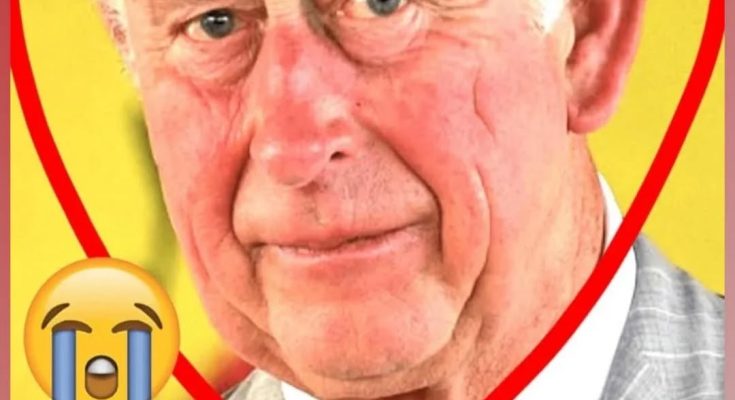
Sources say Queen Camilla didn’t want King Charles to reveal his cancer diagnosis to the public.Charles just announced that he’ll be scaling back treatment in 2026.His majesty was first diagnosed with cancer in February 2024.King Charles has been extremely transparent and open about his cancer diagnosis, a major change from previous monarchs—including his mother, Queen Elizabeth II—who preferred to keep their health private.
Apparently, Camilla felt that “once the door on it had been opened, it could never be closed,” but now she realizes King Charles made the right choice. Per a source, “Both of them now unequivocally think that being so open has been hugely positive — positive for public engagement with raising awareness around cancer and also personally for him in terms of how public good has come from personal misfortune.”
When King Charles learned that he had cancer, the news was not immediately something he wanted the entire world to know.
For a man whose every movement is watched, photographed and analyzed, the decision to reveal something as deeply personal as a cancer diagnosis carried enormous consequences.
It was not simply a question of whether the public deserved to know.
It was also a question of whether the King should be allowed to face one of the most difficult moments of his life away from the cameras.
According to reports cited by The Times, Queen Camilla initially believed that the diagnosis should remain private.
Her concern was reportedly not about hiding the truth for political reasons or protecting the institution of the monarchy. Instead, she was said to be worried about Charles himself.
She reportedly feared that once the diagnosis became public, the King would face a level of attention that could make an already difficult period even harder.
Every photograph would be examined.
Every cancelled engagement could generate speculation.
Every appearance could lead to questions about his health.
And every medical update could become international news.
For Camilla, protecting her husband from that pressure was reportedly more important than satisfying public curiosity.
But Charles ultimately took a different view.
The King decided that the public should be told about his diagnosis.
That decision would change the way the world followed his health.
Rather than allowing rumors to develop around his absence from official duties, the palace could explain the situation directly.
Charles had cancer.
He would receive treatment.
And, when his doctors allowed it, he would continue carrying out his responsibilities.
The announcement was met with an enormous response.
People across Britain and around the world sent messages of support to the monarch.
For many members of the public, the news also made Charles seem more relatable. Cancer is a disease that affects millions of families, and suddenly the person sitting on the British throne was publicly experiencing something that countless ordinary people and their relatives have experienced themselves.
That connection became one of the unexpected consequences of the announcement.
The King was no longer discussing cancer only as a public issue.
He was speaking about it from personal experience.
His decision also contrasted with the approach associated with his late mother, Queen Elizabeth II.
Throughout her reign, the Queen maintained considerable privacy surrounding her personal health. Official announcements about medical matters were generally limited, and details were often closely controlled.
Charles appeared willing to take a different path.
He allowed the public to know that he was undergoing treatment and later provided additional updates about his return to official duties.
For Camilla, however, the early days were reportedly filled with concern.
The Times report described her as believing that opening the door to public discussion of the King’s health could make it impossible to close again.
That concern was particularly understandable given the nature of modern media.
Once information becomes public, it can spread across television, newspapers, websites and social media within minutes.
A single photograph can produce thousands of comments.
A short statement can generate endless speculation.
And a change in a royal schedule can become the subject of headlines around the world.
For someone undergoing cancer treatment, that level of attention could be overwhelming.
Yet Charles continued with his decision.
And as time passed, something changed.
According to the source cited by The Times, Camilla eventually came to believe that the decision had been the right one.
The couple reportedly began to see that Charles’ openness had produced benefits that went beyond the immediate news cycle.
His diagnosis encouraged greater public discussion about cancer awareness.
His comments helped draw attention to the importance of early diagnosis.
And his willingness to speak about treatment showed that even someone in the most prominent position in Britain could be affected by the disease.
The King’s experience also became part of his public service.
Instead of allowing the diagnosis to completely define his public life, Charles continued to work when possible.
He gradually returned to official engagements while maintaining his medical treatment.
His schedule had to be balanced carefully.
Public duties had to be considered alongside medical advice.
The King could not simply return to his previous routine overnight.
But his gradual return demonstrated his determination to continue his responsibilities.
Then came another important update.
Charles announced that his treatment schedule could be reduced in the New Year.
He attributed the progress to early diagnosis, effective intervention and following his doctors’ instructions.
For supporters of the King, the announcement represented an encouraging development.
But it also highlighted an important point: reducing treatment is not necessarily the same thing as declaring a person completely free of cancer.
The palace has continued to protect the private medical details surrounding the King’s condition.
That balance between transparency and privacy remains important.
Charles has chosen to tell the public enough to explain his circumstances, but he has not opened every part of his medical life to public inspection.
In that sense, the King and Queen appear to have found a middle ground.
They have allowed the public to understand that Charles has been receiving cancer treatment and that his treatment schedule is changing, while keeping many medical details private.
Looking back, Camilla’s reported concerns at the beginning of the journey now appear very different from the couple’s current position.
The Queen reportedly feared that public knowledge of the diagnosis could place additional pressure on Charles.
But after seeing what happened, she reportedly came to appreciate the positive side of the decision.
The King’s openness created an opportunity for a personal health experience to contribute to a larger public conversation.
It also demonstrated how much the monarchy has changed.
The British royal family still values privacy, tradition and discretion.
But it exists in a world where information moves almost instantly.
The public expects explanations.
News organizations compete for updates.
And social media can turn even the smallest royal development into a worldwide discussion.
Charles’ decision may therefore have reflected not only his personal character but also the realities of being a modern monarch.
By speaking first, the King and the palace were able to establish the basic facts themselves.
That reduced some of the uncertainty surrounding his absence from public engagements.
More importantly, it allowed Charles to control how his diagnosis was introduced to the public.
Rather than allowing speculation to define the story, the King provided his own message.
His words also carried another meaning.
By discussing cancer openly, he helped reinforce the idea that talking about the disease does not have to be a source of shame or secrecy.
For families dealing with cancer, that kind of openness can be meaningful.
The King’s experience does not represent every cancer patient’s experience, and his medical care is obviously different from that available to ordinary people.
But the simple fact that he chose to speak publicly about receiving treatment helped make cancer part of a wider conversation.
For Camilla, meanwhile, the episode revealed another side of her role as Queen.
Behind the public appearances, ceremonial events and official engagements is a wife concerned about her husband’s wellbeing.
Her reported initial desire for privacy can therefore be understood in the context of protecting someone close to her during a vulnerable period.
The disagreement, if accurately reported, was not necessarily about whether the public should be respected.
It was about where the boundary between public duty and private life should be drawn.
Charles ultimately placed that boundary further toward transparency.
Camilla initially wanted it further toward privacy.
And according to the reports, the experience eventually brought them to the same conclusion.
Today, the story is no longer simply about a cancer diagnosis.
It is also about how the modern monarchy handles personal hardship.
It is about the changing expectations placed on public figures.
And it is about how a deeply private family matter can become a global conversation almost overnight.
Charles’ announcement about reducing his treatment schedule adds another chapter to that story.
It signals a new stage in his medical journey while leaving many details private.
The King continues to receive medical care, while his public responsibilities remain an important part of his life.
For Camilla, the experience has reportedly changed her perspective as well.
What she once feared could become an endless cycle of scrutiny has instead, according to the source cited by The Times, become something she and Charles believe has had a positive impact.
The couple reportedly now see value in the openness surrounding the King’s diagnosis.
And perhaps that is the most unexpected part of the entire story.
At the beginning, the question was whether the world needed to know.
Camilla reportedly believed that privacy might protect her husband.
Charles believed that openness was the better path.
Nearly two years after the diagnosis, the couple reportedly view the decision very differently from those first difficult days.
The King’s health remains personal.
His treatment remains under medical supervision.
And many details will likely never be made public.
But the decision to speak openly has already changed the way people understand his journey.
It has also created a lasting example of how a modern monarch can acknowledge personal vulnerability while continuing to fulfill a public role.
For Charles, the road ahead remains one step at a time.
For Camilla, it is a journey she has experienced beside him.
And for the public, the latest announcement offers another glimpse into the private reality behind the crown: a husband undergoing treatment, a wife concerned about his wellbeing, and a royal family navigating the difficult line between public duty and personal privacy.

