
Concern Surrounding Hillary Clinton Prompts Calls for Compassion and Restraint
Uncertainty Quickly Drew Public Attention
Concern surrounding Hillary Clinton began spreading after reports suggested that something may be wrong with one of the most recognizable figures in American political life.
There were no campaign speeches, debates, or major policy announcements driving the discussion.
Instead, attention centered on uncertainty and the possibility that Clinton could be facing a personal health concern.
Details remained limited, leaving the public with more questions than answers.
That lack of confirmed information quickly became part of the story itself.
Questions Spread Before Clear Answers Emerged
As discussion grew, social media users began trying to determine what had happened.
Some posted questions.
Others offered theories about Clinton’s condition or circumstances.
Without reliable details, however, there was little foundation for firm conclusions.
The situation demonstrated how easily uncertainty involving a famous person can become a source of widespread speculation.
A small amount of information can quickly produce a much larger conversation, particularly when the person involved has spent decades in public life.
Many People Chose Support Instead of Speculation
Alongside the rumors, another response became noticeable.
Many people simply wished Clinton well.
Some came from people who had supported her during her political career.
Others came from individuals who had strongly disagreed with her positions or political identity.
For a brief period, those differences appeared less important than concern for another person’s well-being.
Messages of encouragement reflected the idea that political disagreement does not prevent someone from showing basic compassion.
Support Came From Different Political Perspectives
The public reaction included prayers, wishes for strength, and expressions of hope that Clinton would recover from whatever may have prompted the concern.
Many people also urged others to avoid making assumptions until more reliable information became available.
That restraint was significant because public uncertainty often creates an environment where speculation spreads quickly.
Instead of immediately turning every unanswered question into a conclusion, some observers emphasized patience.
Their message was simple: concern could exist without pretending to know more than had actually been confirmed.
A Life Spent Under Constant Public Scrutiny
Clinton has spent much of her adult life under intense public attention.
Her years as first lady placed her at the center of American political life.
She later served as a senator from New York and then as secretary of state.
She also became a two-time presidential candidate.
Each stage of that career exposed her to extraordinary levels of scrutiny.
Her political victories became major news.
Her mistakes were examined publicly.
Her marriage became the subject of national discussion.
Her health also became something people analyzed and debated.
Fame Can Create the Illusion of Complete Access
Decades of visibility can create a misleading sense that the public knows nearly everything about a famous person’s life.
People see speeches, interviews, public appearances, photographs, and political events.
Over time, that familiarity can begin to feel like personal knowledge.
But public visibility does not eliminate private life.
Famous people still receive personal phone calls that nobody else hears.
They still sit with family members away from cameras.
They still experience fear, uncertainty, and difficult moments that may never become public.
Their relatives also experience those moments privately.
Health Concerns Deserve Particular Caution
The distinction between public interest and private life becomes especially important when health is involved.
Without confirmed information, even a small detail can quickly be transformed into something much larger.
A photograph may be treated as evidence of a diagnosis.
A canceled appearance can generate assumptions.
An unclear statement may be repeated as though it were proof.
Within a short period of time, speculation can travel farther than the facts that eventually emerge.
That is why caution matters.
Concern Does Not Require a Diagnosis
People do not need detailed medical information in order to express support.
They can hope that Clinton is well without claiming to know exactly what happened.
They can wish strength to her family without inventing a medical explanation.
They can acknowledge uncertainty without turning it into certainty.
This approach allows concern to remain compassionate rather than intrusive.
It also prevents rumor from becoming more influential than reliable information.
Clinton Has Long Inspired Strong Opinions
Few political figures have generated reactions as intense as Hillary Clinton.
Supporters have often viewed her as an example of persistence, experience, and the expansion of opportunities for women in American politics.
Critics have strongly opposed many of her policies, decisions, and associations.
Those disagreements have lasted for decades.
They are unlikely to disappear because of a personal health concern.
Nor does compassion require anyone to erase serious political differences.
Political Disagreement and Humanity Can Coexist
A person can strongly disagree with Clinton’s political career while still hoping that she is healthy.
Those two ideas are not contradictory.
Political criticism concerns public decisions, policies, and conduct.
Concern for another person’s health belongs to a different category.
There are moments when disagreement can temporarily make room for humanity without disappearing.
A possible medical concern is one of those moments.
Illness Is Not a Partisan Experience
Health uncertainty reaches beyond political identity.
Families across every background understand what it feels like to wait for news about someone they love.
People understand the anxiety that appears when ordinary routines suddenly stop and attention narrows to one question.
Will the person be okay?
That fear does not disappear because someone is famous.
Status cannot remove it.
Financial resources cannot eliminate it.
Political influence cannot guarantee that a family avoids uncertainty.
Some Experiences Reduce Everyone to Waiting
When health becomes uncertain, many of the things that normally define public status can suddenly feel less important.
Political influence offers no complete protection from fear.
International connections do not remove the emotional experience of waiting for answers.
Security arrangements do not eliminate uncertainty.
Even people who have spent years managing national and international crises can encounter moments in which they have little choice but to wait.
That basic human experience is shared across families everywhere.
Privacy Can Be a Form of Compassion
When reliable details are limited, allowing a family time and space can be more respectful than demanding immediate information.
Clinton has spent decades answering questions in public.
People have asked where she is going, what she believes, what she plans to do next, and how she intends to respond to major events.
A private health concern is different.
Not every question requires an immediate public answer.
Sometimes concern can exist without constant demands for additional details.
Simple Messages Can Carry Meaning
Some of the public responses were brief.
“Praying for her.”
“Wishing her strength.”
“Politics can wait.”
None of those statements requires ideological agreement.
They do not ask anyone to rewrite political history or abandon strongly held beliefs.
They simply acknowledge that another person may be experiencing a difficult moment.
Political Arguments Can Suddenly Feel Smaller
A serious personal concern has a way of changing perspective.
Arguments that felt urgent only hours earlier can temporarily lose some of their importance.
Campaign statistics become less relevant.
Old speeches feel distant.
Political victories and defeats fade into the background.
The person at the center of the conversation stops looking like only a political symbol.
She becomes a member of a family.
Public Identity Is Only One Part of a Person
Clinton’s public identity is enormous.
She has occupied some of the most visible roles in American political life.
But those positions do not describe every part of her life.
She is also a wife, mother, grandmother, friend, and relative.
Those relationships exist outside campaign events and political institutions.
They are part of the private world that remains even when public attention becomes intense.
Rumors Should Not Become Diagnoses
Until reliable information is available, caution remains important.
Concern should not automatically become confirmation that something serious has happened.
Rumors should not be treated as medical facts.
Unanswered questions should not be used as opportunities to invent explanations.
The desire to understand what is happening is natural.
But curiosity does not make speculation accurate.
The Speed of Social Media Increases the Risk
Modern communication allows rumors to travel almost instantly.
A single post can be repeated by thousands of people before anyone verifies what it means.
Once a claim gains attention, corrections often move more slowly than the original speculation.
That creates a particular problem when health is involved.
Private medical issues can become public narratives built from fragments of information.
By the time accurate details emerge, the rumors may already have reached millions of people.
Waiting for Reliable Information Is Not Indifference
Refusing to speculate does not mean refusing to care.
In fact, restraint can be one of the clearest forms of respect.
People can remain concerned while acknowledging that they do not know the full circumstances.
They can wait for Clinton, her family, or representatives to decide what information should be shared.
Until then, uncertainty can simply remain uncertainty.
Compassion Does Not Require Political Agreement
The reaction surrounding Clinton offered a reminder that compassion is not the same thing as political support.
A person does not have to agree with a politician’s record to wish that person good health.
Someone can remain critical of Clinton’s policies while still recognizing her humanity.
Likewise, supporters do not need to turn concern into political defense.
A personal health issue does not need to become another contest between ideological sides.
Families Understand the Fear of Waiting
At the center of any health scare is usually a much smaller circle than the public discussion surrounding it.
There are relatives waiting for information.
There are loved ones trying to remain calm.
There may be private conversations that nobody outside the family ever hears.
That experience is familiar to countless people regardless of politics or social status.
It is one reason the public response can remain humane even when details are scarce.
There Will Be Time for Facts
If Clinton or those close to her choose to provide additional information, there will be time to consider those facts when they emerge.
Until then, speculation does not improve understanding.
It only fills the absence of information with assumptions.
The more responsible response is to distinguish clearly between what is known and what remains uncertain.
That distinction protects both accuracy and privacy.
Hope Can Exist Without Certainty
For now, the most meaningful response may be one of simple hope.
Hope that whatever prompted the concern proves manageable.
Hope that Clinton is receiving whatever care she may require.
Hope that the people closest to her have enough privacy and support to navigate the situation.
None of those wishes requires additional medical details.
None requires political agreement.
A Rare Pause in a Divided Culture
American political life has become increasingly hostile and divided.
Clinton’s name has been at the center of that division for many years.
Yet moments involving personal vulnerability can briefly change the nature of the conversation.
Instead of another argument, people can choose restraint.
Instead of immediately demanding answers, they can allow time.
Instead of treating uncertainty as entertainment, they can recognize that a real family may be dealing with it privately.
The Person Behind the Political Figure
It can be easy to forget that a famous political figure exists beyond speeches, elections, controversies, and headlines.
Public life encourages people to think in symbols.
A politician can come to represent an entire ideology or period of history.
But the individual behind that symbol still experiences ordinary human emotions.
Fear remains fear.
Uncertainty remains uncertainty.
Family remains family.
A Moment for Restraint Rather Than Assumptions
Whatever the reality behind the concern surrounding Hillary Clinton, the absence of confirmed information should encourage caution rather than certainty.
There is no need to transform questions into conclusions.
There is no need to diagnose someone from a distance.
There is no need to turn a potentially private health situation into another political confrontation.
People can simply acknowledge that something may be happening and hope that the outcome is positive.
Humanity Can Exist Beyond Politics
The broader lesson is simple.
Compassion does not require agreement.
People do not have to vote for someone to wish that person good health.
They do not have to admire an entire career to recognize another person’s vulnerability.
Decades of disagreement can remain intact while people still respond with basic decency.
That does not erase political differences.
It simply recognizes that health, fear, family, and uncertainty belong to everyone.
For Now, the Most Responsible Response Is Hope
Until reliable information becomes available, the wisest approach is to avoid treating rumors as facts.
Clinton and those closest to her can decide what they wish to share and when they wish to share it.
The public does not need every answer immediately in order to express concern.
Sometimes the most respectful response is also the simplest.
Whatever prompted the uncertainty, people from very different political backgrounds can still share one basic wish.
They can hope that Hillary Clinton is okay.
Dolly Parton Explained Why She and Carl Dean Never Had Children
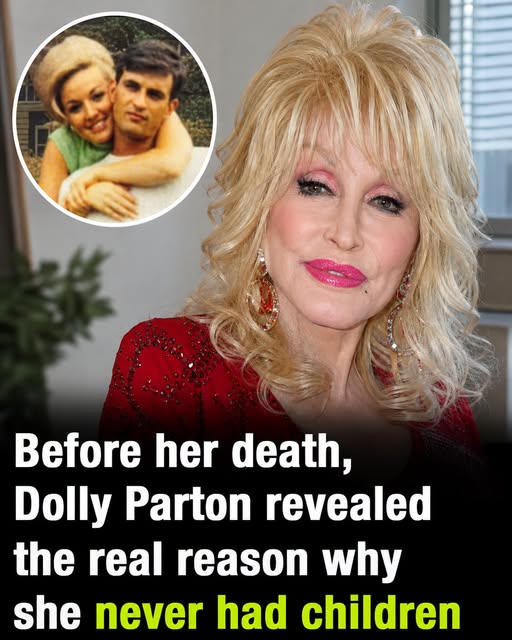
Dolly Parton Explained Why She and Carl Dean Never Had Children
A Marriage That Lasted Nearly Six Decades
Dolly Parton and Carl Dean built one of the longest and most private marriages connected to American entertainment.
They married in 1966, long before Dolly became an international superstar.
The relationship lasted for almost six decades until Carl’s death in March 2025.
Throughout that time, one question followed them repeatedly.
Why did they never have children?
Dolly answered that question more than once over the years, and her explanation was far more thoughtful than many people expected.
They Did Think About Becoming Parents
Dolly never suggested that motherhood was something she had always rejected.
She spoke publicly about imagining what children with Carl might have been like.
Like many couples, they considered the possibility.
But life moved in another direction.
Her career expanded rapidly.
Recording sessions became tours.
Tours became films, television appearances, businesses, and philanthropic projects.
Over time, Dolly came to believe that her life had followed the path it was supposed to follow.
A Medical Turning Point Changed What Was Possible
During the 1980s, Dolly underwent a partial hysterectomy after experiencing significant health problems.
The procedure meant she would no longer be able to have biological children.
She later spoke openly about how difficult that period was emotionally.
It came during a time when she was dealing with several personal pressures and questioning parts of her life.
Eventually, however, she began viewing the experience differently.
Rather than defining her life by what had not happened, she focused on what she could still give.
She Believed Her Life Had a Different Purpose
Dolly was deeply religious throughout her life.
Faith shaped how she understood success, hardship, marriage, and family.
As the years passed, she increasingly described not having children as part of a larger plan.
She believed that if she had become a mother, her priorities would have been different.
She might have traveled less.
She might have accepted fewer professional opportunities.
And she believed she would have devoted enormous energy to raising her own family.
Instead, she was able to spread that energy across music, charitable work, and projects serving children around the world.
She Said Children Would Have Changed Her Career
Dolly was unusually candid about the practical reality.
She believed that having children probably would have changed the scale of her career.
That was not because she viewed motherhood negatively.
Quite the opposite.
She believed she would have taken it extremely seriously.
Dolly understood herself well enough to know that she would have wanted to be fully present for her children.
She doubted she could have pursued the same relentless professional schedule while giving motherhood the attention she believed it deserved.
Her Career Required Enormous Freedom
Dolly’s professional life eventually stretched across several industries.
She wrote and recorded hundreds of songs.
She toured internationally.
She appeared in films.
She built businesses.
She launched charitable initiatives.
And even late in life, she continued developing new projects.
That level of activity required extraordinary flexibility.
Dolly eventually recognized that not having children gave her freedom that would have been much harder to maintain otherwise.
Carl Dean Preferred a Very Different Life
While Dolly became one of the most recognizable entertainers in the world, Carl Dean preferred privacy.
He rarely attended red-carpet events.
He generally stayed away from the entertainment industry.
That contrast became one of the defining features of their marriage.
Dolly could spend months surrounded by cameras and audiences, then return to a husband who had little interest in celebrity life.
She often said that arrangement worked well for both of them.
Their Marriage Did Not Depend on Having Children
For some couples, children become the center of family life.
Dolly and Carl built their relationship differently.
Their bond centered on companionship, humor, independence, and mutual understanding.
Dolly often spoke affectionately about Carl while respecting his wish to remain out of the spotlight.
The fact that they did not become parents did not prevent them from creating a long-lasting partnership.
Their marriage endured through extraordinary changes in Dolly’s career and public life.
Dolly Still Had a Strong Maternal Side
Not having biological children did not mean Dolly lacked nurturing relationships.
She came from a large family and remained close to nieces, nephews, and younger relatives.
She was also famously Miley Cyrus’s godmother.
Younger family members and performers often described Dolly as encouraging, protective, and generous.
Those relationships allowed her to express a caring side of herself without becoming a traditional parent.
She Often Said She Felt Connected to All Children
One of Dolly’s most memorable explanations was that perhaps she had been meant to belong to more than one family.
She believed that not having her own children gave her the ability to focus on children more broadly.
That idea became especially visible through her charitable work.
The clearest example was the Imagination Library.
The Imagination Library Became One of Her Greatest Legacies
Dolly launched the Imagination Library in 1995.
The original goal was simple.
She wanted children in her home county in Tennessee to receive free books from birth until they entered school.
The inspiration came from her father, Robert Lee Parton.
He was intelligent and hardworking but never learned to read or write.
Dolly believed that inability had limited some of the opportunities available to him.
She wanted other children to have a different start.
The Program Grew Far Beyond Tennessee
What began as a local literacy project eventually expanded internationally.
The Imagination Library began mailing free books to millions of children across several countries.
Families did not need to demonstrate financial hardship to participate in areas where the program operated.
The goal was simply to help children grow up surrounded by books.
Dolly repeatedly said the project was among the accomplishments that made her proudest.
Her Father Inspired the Mission
Dolly often explained that her father’s experience gave the literacy project special meaning.
She considered him one of the smartest people she had ever known.
But because he could not read, she believed some dreams had remained beyond his reach.
Helping children develop a love of books became her way of honoring him.
Her father reportedly told her before his death that he considered the Imagination Library one of the most important things she had ever done.
Her Influence Reached Millions of Families
By the end of Dolly’s life, the Imagination Library had distributed hundreds of millions of books.
The program expanded across the United States and internationally.
For Dolly, those books represented more than literacy.
They represented possibility.
A child opening a book might discover an idea, profession, place, or dream they had never encountered before.
That belief connected directly to Dolly’s own childhood.
She grew up in rural East Tennessee with very little money but an enormous imagination.
She Never Described Herself as Missing a Complete Life
Dolly’s comments about children were generally not framed as regret.
She acknowledged that there had been moments when she wondered what motherhood might have been like.
But she ultimately described herself as content with the life she lived.
She believed one path had closed while another expanded.
Rather than viewing herself as someone who lacked children, she often focused on the enormous number of young people she had been able to reach.
Her Faith Helped Her Accept the Path
Dolly frequently returned to faith when discussing major turning points.
She believed difficult events sometimes made sense only years later.
The fact that she never became a mother was one example.
When she was younger, she could not necessarily see how that choice and circumstance would shape her future.
Later, she viewed it as something that allowed her to fulfill a broader calling.
She Had Space to Give Everything to Her Work
Dolly’s work ethic became legendary.
She wrote constantly.
She recorded.
She performed.
She developed businesses.
She worked on charitable programs.
She remained creatively active even at an age when many performers would have retired.
Not having children meant she could organize her life around those ambitions in a way that would have been more complicated otherwise.
Her Relationship With Younger Relatives Mattered Deeply
Dolly’s extended family remained important throughout her life.
Nieces, nephews, great-nieces, and great-nephews knew a much more private version of her than fans did.
She helped relatives pursue education and creative ambitions.
She offered advice.
She encouraged younger family members.
Those relationships demonstrated that parenthood is not the only way someone can become an important adult in a child’s life.
She Became a “Fairy Godmother” Figure
Dolly often embraced the idea of being a kind of fairy godmother.
That description fit both her public personality and the relationships she developed with younger people.
She could be playful and glamorous while also offering practical support.
For many fans, the term became a useful way to understand the nurturing role she occupied without being a mother herself.
Her Marriage Survived an Extraordinary Career
Dolly and Carl’s relationship lasted through dramatic changes in fame, wealth, and public attention.
When they married, there was no guarantee Dolly would become internationally famous.
Over time, her career became larger than either could have imagined.
Carl continued living largely outside the public spotlight.
Dolly frequently credited that independence with helping their marriage endure.
Carl’s Death Changed Her Final Years
Carl Dean died in March 2025 at age 82.
Dolly openly acknowledged the difficulty of losing the person who had been beside her for almost six decades.
She continued working and leaned heavily on faith, family, and memories of their life together.
The loss marked one of the most personal transitions of her final years.
Dolly Continued Thinking About Children Until the End
Even late in life, Dolly’s literacy mission remained central to her identity.
The Imagination Library continued expanding.
She regularly encouraged children to read, dream, and believe that their circumstances did not have to determine their future.
That message came directly from her own life story.
She had grown up in poverty and understood how powerful imagination could be.
Her Choice Was Never Simply About Career
It would be too simple to say Dolly never had children because she wanted fame.
Her explanation included health, circumstance, faith, personality, and a clear understanding of the sacrifices parenthood would have required.
She recognized that she had been able to build an unusually large career partly because she did not have responsibilities to children at home.
She also came to believe that the freedom allowed her to serve children in another way.
A Different Definition of Motherhood
Dolly never claimed that philanthropy was the same experience as raising a child.
But she understood that care can take many forms.
People can influence children as parents.
As relatives.
As teachers.
As mentors.
Or as people who create opportunities for children they may never meet.
Her own life became an unusually large example of that idea.
Her Legacy Reaches Far Beyond Music
When people remember Dolly Parton, songs such as “Jolene,” “Coat of Many Colors,” and “I Will Always Love You” will remain central to her legacy.
But the millions of books sent to children represent another side of her life.
The girl who never became a mother built a program designed to place stories in the hands of children around the world.
That was not a substitute for the family she never had.
It was simply the form her own life eventually took.
Why Dolly Said She Had No Regrets
Looking back, Dolly repeatedly expressed gratitude rather than bitterness.
She had an extraordinary marriage.
She built the career she dreamed about as a child.
She remained close to a large extended family.
And she used her success to support children on a scale few individuals ever achieve.
That perspective explains why her answer to the question of motherhood was ultimately peaceful.
She did not believe she had missed the life she was supposed to have.
She believed she had lived it.
The Family She Built Looked Different
Dolly and Carl never became parents in the traditional sense.
But their nearly 60-year marriage created a stable partnership at the center of an otherwise extraordinary life.
Around that partnership grew a much larger circle.
Relatives.
Friends.
Artists.
Employees.
Fans.
And millions of children whose homes received books bearing Dolly’s name.
That was the family Dolly eventually described as part of her purpose.
Her Answer Became Clearer With Time
When Dolly was young, she could not have known where the decision not to have children would eventually lead.
Decades later, she could look back and see the connection.
Without children of her own, she had more freedom to pursue a career that reached nearly every corner of popular culture.
That success then gave her the resources to create opportunities for millions of other children.
For Dolly, that became the answer.
Motherhood was not part of her personal journey.
But caring about children remained one of the defining themes of her life.

