My name is Ingred Fairbanks Webb, and I’m thirty-four years old. Four years ago, on the night before Mother’s Day, I discovered that I had been erased from my own family, removed from our WhatsApp group like a stranger, like someone who had never belonged there at all. My mother’s message to my siblings was crystal clear. All my children are successful except Ingred. She chose to be a lowly teacher. I no longer see her as my daughter. I didn’t scream. I didn’t call her in tears. I simply disappeared the way she wanted me to. What my mother didn’t know was that four years later, I would be standing on a stage in front of five hundred people, shaking hands with the governor of Virginia, while she sat uninvited in the audience, waiting for a moment in the spotlight that would never come. Before I tell you what happened next, take a moment to like and subscribe, but only if this story truly speaks to you. Where are you watching from right now? And what time is it where you are? Let me start from the beginning, from the night I realized I had lost the family I thought I had and began building the one I actually deserved.
Growing up, the Fairbanks family was what people in our Virginia suburb called picture-perfect. My mother, Margaret Fairbanks, retired from her job as a regional bank manager at fifty-five, not because she needed rest, but because she had finally secured her seat at the Westbrook Country Club. The membership alone cost more than my annual salary. She wore her Hermès scarves like armor, always draped just so over her shoulders, always in muted tones that whispered old money, even though our money was barely a generation old. My sister Victoria was the crown jewel, thirty-eight years old, a plastic surgeon in Richmond with a clientele that included local news anchors and politicians’ wives. She posted photos of her Rolex Datejust casually resting on restaurant tables, her perfectly manicured nails wrapped around champagne flutes at charity galas. Every Thanksgiving, she would update us on her latest subtle work as if we couldn’t see the tightening around her eyes, the lips that seemed a little fuller every year. Then there was Bradley, forty years old, a corporate lawyer in D.C. who drove a Mercedes G-Wagon and made sure to park it in the most visible spot at every family gathering. He had a wife named Carolyn who collected designer handbags the way some people collect stamps, methodically, obsessively, always hunting for the next limited edition. And then there was me, Ingred, the youngest, the one who never quite fit the family portfolio.
I was a fourth-grade teacher at Maple Creek Elementary, a small school tucked into the rolling farmland about ninety miles from my mother’s pristine Colonial Revival house. My Honda Civic was twelve years old. My apartment could fit inside Victoria’s walk-in closet. But here’s what no one ever mentioned at those country-club brunches: my mother had two successful children, a doctor and a lawyer. Not three. Never three. I didn’t choose teaching because I couldn’t do anything else. When I graduated from high school, I had a 4.1 GPA and a full scholarship offer to pursue pre-med at UVA, the same path Victoria had taken a decade earlier. My mother had already ordered the Future Doctor bumper sticker for her car. She had told all her friends at the club. The narrative was set. But that summer, I volunteered at a literacy camp for underprivileged kids in our county, and there was this boy, Marcus Jr., eight years old, who couldn’t read past a first-grade level and had been told his whole life that he was slow. By August, he was devouring chapter books. The day he finished Charlotte’s Web on his own, he hugged me so hard I thought my ribs might crack. That was the moment I knew.
I called my mother that night and told her I was turning down the pre-med scholarship. I was going to study education instead. I wanted to teach elementary school. The silence on the other end lasted seventeen seconds. I counted.
“You’re throwing your life away,” she finally said. “For what? A government salary and ungrateful children?”
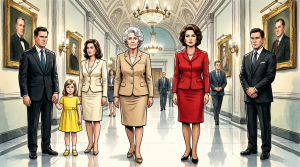
She didn’t come to my college graduation. She said she had a conflict, a garden party at the club that same weekend. Victoria sent a card with a fifty-dollar check and a note that read:
“Good luck with your little career.”
I cashed the check. I needed groceries. But I never forgot the message beneath those words. You chose wrong. You chose less. And we will never let you forget it. I didn’t choose to be poor. I chose meaning. To my mother, those were the same thing. The exclusion didn’t happen all at once. It crept in slowly, like mold in the corners of a room no one bothered to clean. Thanksgiving 2019, I arrived at my mother’s house with a homemade sweet potato casserole, her favorite recipe, the one Grandma Ruth used to make. When I walked into the dining room, I found my place card at the small folding table in the corner, the one set up for Victoria’s stepchildren and Bradley’s toddler nephew.
“Oh, honey, we just ran out of room at the main table,” my mother said, adjusting her pearl earrings. “You don’t mind, do you? You’re so good with children.”
I was thirty years old. Christmas that year was worse. I spent three weeks knitting my mother a cashmere scarf in her favorite shade of dove gray. When she opened it, she held it up, smiled thinly, and said:
“How handmade.”
Then she turned to Victoria, who had given her a Chanel clutch, and spent the next twenty minutes praising the stitching, the hardware, the craftsmanship. My scarf ended up in the coat closet. I found it there two months later, still wrapped in tissue paper, with the tags I had carefully removed stuffed back inside. But the final blow came on her birthday in early 2020. I called to ask what time dinner was.
“Oh, Ingred,” she said, her voice dripping with practiced regret. “The restaurant only had six seats available. Your father, Bradley and Carolyn, Victoria and her date. You understand, don’t you? Family comes first.”
Six seats, and somehow I wasn’t family enough to fill one of them. But all of that, the folding table, the forgotten scarf, the restaurant that supposedly didn’t have room, none of it prepared me for what came next. The only person in my family who still treated me like I existed was my cousin Rachel. She was twenty-four then, my aunt Patricia’s daughter, eight years younger than I was, fresh out of college and working her first marketing job in Charlottesville. We had been close since she was little. I used to babysit her on weekends, take her to the library, help her with homework when her own parents were too busy fighting. Rachel was the kind of person who noticed when you were hurting even when you tried to hide it.
The night before Mother’s Day 2020, my phone rang at 11:47 p.m. Rachel’s name lit up the screen. When I answered, her voice was shaking.
“Ingred, I need to tell you something. I just… I didn’t know if I should, but you deserve to know.”
My stomach dropped.
“What happened?”
“Check your WhatsApp. The family group.”
I opened the app and scrolled to Fairbanks Family Dinner, the group my mother had created three years earlier to coordinate holidays. I wasn’t in it anymore.
“Rachel, I don’t—”
“I know. They removed you. Your mom asked Victoria to do it last week, but she only got around to it tonight.”
Rachel’s voice cracked.
“Ingred, I’m so sorry. I screenshot everything. I’m sending it to you now.”
My phone buzzed. One image, then another. I stared at the screen, at my mother’s words frozen in digital ink, and something inside me went very, very quiet.
“Why are you telling me this?” I whispered.
“Because you’re my family,” Rachel said. “Even if they’ve decided you’re not theirs.”
I saved those screenshots in a folder titled Proof. I didn’t know then that I would need them. I just knew I couldn’t let those words disappear. I read that screenshot forty-seven times that night. Not because I didn’t understand the words. I understood them perfectly. I read them over and over because some part of me kept searching for a loophole, a phrase that might mean something else, a context that could soften the blow. There wasn’t one. The message was from my mother, posted in the family group at 8:32 p.m.
“Reminder: Mother’s Day dinner at the Jefferson, 7 p.m. sharp. All my children will be there. All my successful children. Ingred chose to be a lowly teacher. I no longer see her as my daughter. Please don’t mention her name tomorrow.”
Below it, Victoria had replied with a heart emoji. Just a heart. No protest. No hesitation. Bradley’s response had been even worse.
“Understood, Mom.”
Two words. That was all I was worth to my brother. Two words and total compliance. I sat on the edge of my bed in my tiny studio apartment, phone clutched in both hands, and I didn’t cry. I wanted to. God, I wanted to fall apart, to scream into a pillow, to call my mother and demand an explanation. But what would that have changed? She had made her decision. She had announced it to the family like a press release. Ingred is no longer one of us. And everyone had agreed. I stayed awake until two in the morning, staring at those messages, reading the timestamps, noticing that not a single person, not my father, not my aunt, not anyone, had pushed back. Rachel was the only one who thought to warn me. By sunrise, I had made a decision of my own. If my mother wanted me gone, I would be gone completely, on my own terms. But I would not forget, and I would not delete those screenshots. Some receipts you keep forever.
Mother’s Day morning, I woke up to silence. No calls. No texts. No awkward We miss you, wish you could make it from Victoria. Nothing. For the first time in thirty years, I didn’t send my mother flowers. I didn’t call to wish her a happy day. I didn’t drive ninety miles to sit at a corner table while she pretended I didn’t exist. I made myself coffee. I graded papers. I went for a walk along the creek behind my apartment complex and watched the water catch the morning light. And I thought about my options. I could call her, confront her, demand to know why she had said those things, why she had cut me out, why being a teacher made me unworthy of her love. I could screenshot her message and post it online, let the world see what kind of mother raises a doctor, a lawyer, and a daughter she throws away. I could show up at the Jefferson uninvited, make a scene, force them to acknowledge my existence. But what would any of that accomplish? My mother had made her choice. She had chosen status over her own child. She had chosen the opinions of women at a country club over the daughter who had loved her for three decades. If she wanted me to disappear, I would give her exactly what she asked for. Not because she demanded it, but because I chose it.
I blocked her number that afternoon, then Victoria’s, then Bradley’s. I deleted Instagram so I wouldn’t have to see their curated family photos. I didn’t know then that my silence would last four years. I didn’t know those four years would change everything. All I knew in that quiet moment was this: I would not beg to be loved by people who saw me as a stain on their reputation. The world kept spinning, and the Fairbanks family kept pretending I had never been part of it. Six months after that Mother’s Day, Rachel called me with an update I hadn’t asked for.
“Thanksgiving photos are up,” she said quietly. “Victoria posted them an hour ago.”
I told myself I wouldn’t look. I lasted three hours. The image showed my mother at the head of her formal dining table, with Victoria and Bradley on either side, their spouses arranged perfectly behind them. Crystal stemware caught the light. A massive turkey glistened in the center. The caption read:
“Grateful for my amazing family. Mom, you raised us right.”
Three people, not four. My chair wasn’t even empty. They had simply reconfigured everything as if the table had always been set for six instead of eight. By Christmas, I had stopped torturing myself with social media. But Rachel still called.
“Your mom tells everyone you’re doing volunteer work in Africa,” she said. “Some kind of education nonprofit. Very prestigious. Can’t come home because you’re changing lives overseas.”
I laughed, the bitter kind that scrapes your throat raw.
“She’s lying to cover up the fact that she disowned me. She’s lying so no one asks questions. She doesn’t want to admit she kicked out her own daughter for being a teacher.”
Rachel paused.
“Ingred, she told Mrs. Patterson at the club that you were nominated for some international teaching award in Kenya.”
I hadn’t left Virginia in three years. That was when I understood it. My mother didn’t hate me. She hated what my existence said about her. So she invented a version of me she could brag about, a humanitarian hero, conveniently unreachable. The real me, the one who taught fourth grade ninety miles away, was already a ghost.
I met Marcus Webb on a Tuesday in October, surrounded by pumpkins and giggling nine-year-olds. His farm, Webb Family Organics, was a local legend, fifty acres of rolling hills, heritage vegetables, and a small orchard where families came every fall to pick apples and take pictures against the red barn. I had brought my fourth graders on a field trip to learn about sustainable agriculture. Marcus was waiting by the tractor when our bus pulled up, tall and broad-shouldered, with kind eyes and soil permanently embedded under his fingernails. He shook my hand and said:
“You must be Miss Fairbanks. My daughter hasn’t stopped talking about you.”
His daughter was Lily, five years old, with golden curls and a smile that could have melted glaciers. She was in my colleague’s kindergarten class, but I tutored her twice a week after her mother died of cancer the year before.
“Lily is an incredible kid,” I told him. “Smart as a whip. Curious about everything.”
Something shifted in his face, gratitude maybe, or the recognition of a kindred spirit.
“She says you’re her favorite teacher in the whole school, even though you’re not technically her teacher.”
He smiled, and that field trip turned into a phone call. The phone call turned into coffee. Coffee turned into a picnic under the old oak tree on his property, where Marcus asked about my family and I told him the truth.
“I don’t have one,” I said. “Or they decided they don’t have me.”
He didn’t ask for details. He didn’t push. He just handed me a slice of apple pie his late wife’s mother had taught him to make and said:
“Family isn’t always blood, Ingred. Sometimes it’s the people who show up when everyone else leaves.”
That was the moment I started believing him. Two years passed like pages turning in a book I was finally writing for myself. In 2022, Marcus and I got married, not at a country club, not with three hundred guests and a twelve-tier cake. We exchanged vows under the oak tree where we had our first real conversation, with Lily as our flower girl and a handful of friends who had become family. I officially adopted Lily that same year. The day the paperwork came through, she handed me a crayon drawing of three stick figures holding hands under a yellow sun. At the bottom, in wobbly kindergarten letters, she had written: My mom, my dad, me. I keep that drawing in my desk at work. Some days, when the world feels heavy, I pull it out just to remember what matters.
I finished my master’s degree in educational leadership through night classes and summer sessions, typing papers at eleven at night after Lily was asleep, studying during my lunch breaks, determined to prove that ambition did not require abandoning the students I loved. When a position opened up for assistant principal at Maple Creek Elementary, I applied. The interview panel included three school board members, one of them Marcus, who recused himself from voting. I got the job anyway. Through all of it, I stayed invisible. No social media. No press releases. No proud announcements to the family that had erased me. Somewhere in Richmond, my mother was still telling people I was saving children in Africa. Somewhere in D.C., Bradley was still pretending he had never had a second sister. Somewhere online, Victoria was posting family dinner photos at tables that would never have a place for me. They had no idea who I had become, and I wasn’t ready to tell them yet.
The phone call came on a Thursday afternoon in March 2024.
“Mrs. Fairbanks Webb?”
The voice was formal and precise.
“This is Diana Morrison from the Virginia Department of Education. The board has reviewed your application, and I’m pleased to inform you that you have been selected as the new superintendent of schools for Clark County.”
I sat down on the edge of my desk because my legs suddenly didn’t feel reliable. Superintendent. The position I had applied for on a whim, never believing I would actually be considered. Overseeing twelve schools, four thousand students, two hundred teachers.
“Are you certain?” I managed.
“Your track record speaks for itself. Literacy rates are up eighteen percent in three years. Teacher retention is the highest in the region. The mentorship program you developed is being adopted statewide. Dr. Hart specifically recommended you. She said you were the best educator she had ever worked with.”
Eleanor Hart, my mentor from my first year teaching, now the state education commissioner. I hadn’t spoken to her in months. The announcement hit the local papers two weeks later. Local Teacher Rises to Superintendent, a small headline in the Shenandoah Valley Voice, complete with my photo from the school district website. I didn’t think anyone in my family would see it. I was wrong. Rachel called that evening, breathless.
“Ingred, your sister just posted the article in the family group chat with the caption, Isn’t this our Ingred?”
My stomach tightened.
“What did my mother say?”
“Nothing. She hasn’t replied. But…” Rachel hesitated. “I was at Aunt Patricia’s when it happened. Your mom called Victoria immediately. I could hear her through the phone. Ingred, she was furious. Furious that you got the job. Furious that she didn’t know. Furious that she has been telling everyone you’re in Africa and now there’s proof you’ve been here the whole time.”
The email arrived three days later. The subject line read: From your mother. I almost deleted it unread. Almost.
My dearest Ingred,
I saw the wonderful news about your promotion. I always knew you had it in you. We should meet for lunch soon. I’d love to hear about everything you’ve accomplished. Mother’s Day is coming up. It would mean so much to have the whole family together again.
No apology. No acknowledgment of the four years of silence. No mention of the WhatsApp message that had shattered me. Just an invitation, as if nothing had happened, as if I had simply been away on a long trip and was now welcome to return. I didn’t respond. Two weeks later, my phone rang from an unknown number. Against my better judgment, I answered.
“Ing, it’s Victoria.”
Her voice was honeyed and warm, a tone I hadn’t heard since we were children.
“I know it’s been a while, but I wanted to reach out personally. Mom hasn’t been feeling well, and she’s been asking about you. She really wants to see you.”
“What’s wrong with her?”
“Just stress. You know how she gets. But she misses you, Ingred. We all do.”
I called Rachel that night.
“Is my mother sick?”
Rachel snorted.
“She was at the spa yesterday. Posted a selfie in the eucalyptus steam room. Ingred, they’re not reaching out because they miss you. They’re reaching out because you made the news.”
I already knew that, but hearing Rachel confirm it made the truth settle deeper into my bones. Can I ask you something? Have you ever received one of those reconciliation calls, the kind where you can hear the insincerity dripping through the phone? If you know exactly what I’m talking about, comment yes below. And if you want to know what I did next, keep reading, because what happened at that award ceremony surprised even me.
I wish I could tell you I was strong every single day, that I never wavered, never questioned, never lay awake at three in the morning wondering whether I was the villain in my own story. But that wouldn’t be the truth. The doubts crept in slowly after that phone call from Victoria. At work, colleagues kept congratulating me. The superintendent announcement had spread through the county like wildfire. Everyone wanted to shake my hand, ask about my plans, tell me how proud they were. And then came the questions I dreaded.
“Your parents must be over the moon,” my assistant principal said one morning, beaming. “I bet your mom is bragging to everyone at church.”……………….
Click Here to continuous Read Full Ending Story👉 PART 2-“She Said I Wasn’t Her Daughter Because I Became a Teacher—Years Later, She Regretted It”

