By the eighth shirt, Emily Carter had stopped wondering what she would wear. She was wondering how much longer she could get through a day like this.
The Tennessee college student had spent months watching her clothes grow tighter while the pain in her back and shoulders grew harder to ignore. She could set the shirts aside. She still had to get through class, go to work, and bend down to help the children she cared for.
Before the year was over, strangers who heard her story on local television would help her get an operation that lasted more than ten hours. Surgeons would remove approximately 22 pounds of breast tissue. Afterward, one of the things Emily looked forward to most was putting on a shirt and getting on with her day.
The pain followed her out the door
Emily first noticed the changes in 2024. Her breasts were growing quickly, and each time she thought the growth might slow, another piece of clothing became uncomfortable. Eventually, she began relying on specially made garments.
Doctors diagnosed her with gigantomastia, a rare condition involving excessive growth of breast tissue. As the growth continued, the combined weight reached about 26 pounds. By then, the pain stretched from her back into her neck and shoulders.
At her childcare job, the effects showed up in ordinary moments. A child needed help with a shoe. A toy had rolled under a chair. Emily had always been able to bend down without giving it a thought. Now she sometimes had to pause and brace herself before reaching the floor.
She felt the difference at school, too. Standing for any length of time wore her out, and sitting through class could mean shifting in her chair to find a position she could tolerate. By the time she got home, she had spent much of the day thinking about how to get through the next hour.
She finally had a diagnosis. The surgery was still out of reach.
Getting a diagnosis gave Emily a name for what was happening. Her doctors discussed surgery to remove excess tissue and ease the strain on her body. But arranging the operation meant finding a way to cover costs her family couldn’t manage on their own.
The delay was especially hard on workdays. Every morning she still had to decide how much she could do, and every evening she still had to go home with the same pain. A treatment plan gave her something to look forward to, but she had no date to circle on the calendar.
Eventually, Emily agreed to share her story with a local television station. She explained what the growth had done to her daily life, including the morning she tried on eight shirts and couldn’t find one she could wear comfortably. It was an ordinary problem anyone could picture, and it gave viewers a way to understand how thoroughly the condition had changed her routine.
After the segment aired, donations began coming in. People Emily had never met contributed what they could. Together, they raised enough to cover the cost that had been keeping the operation out of reach. For the first time, she could make plans around a surgery date.
More than ten hours in the operating room
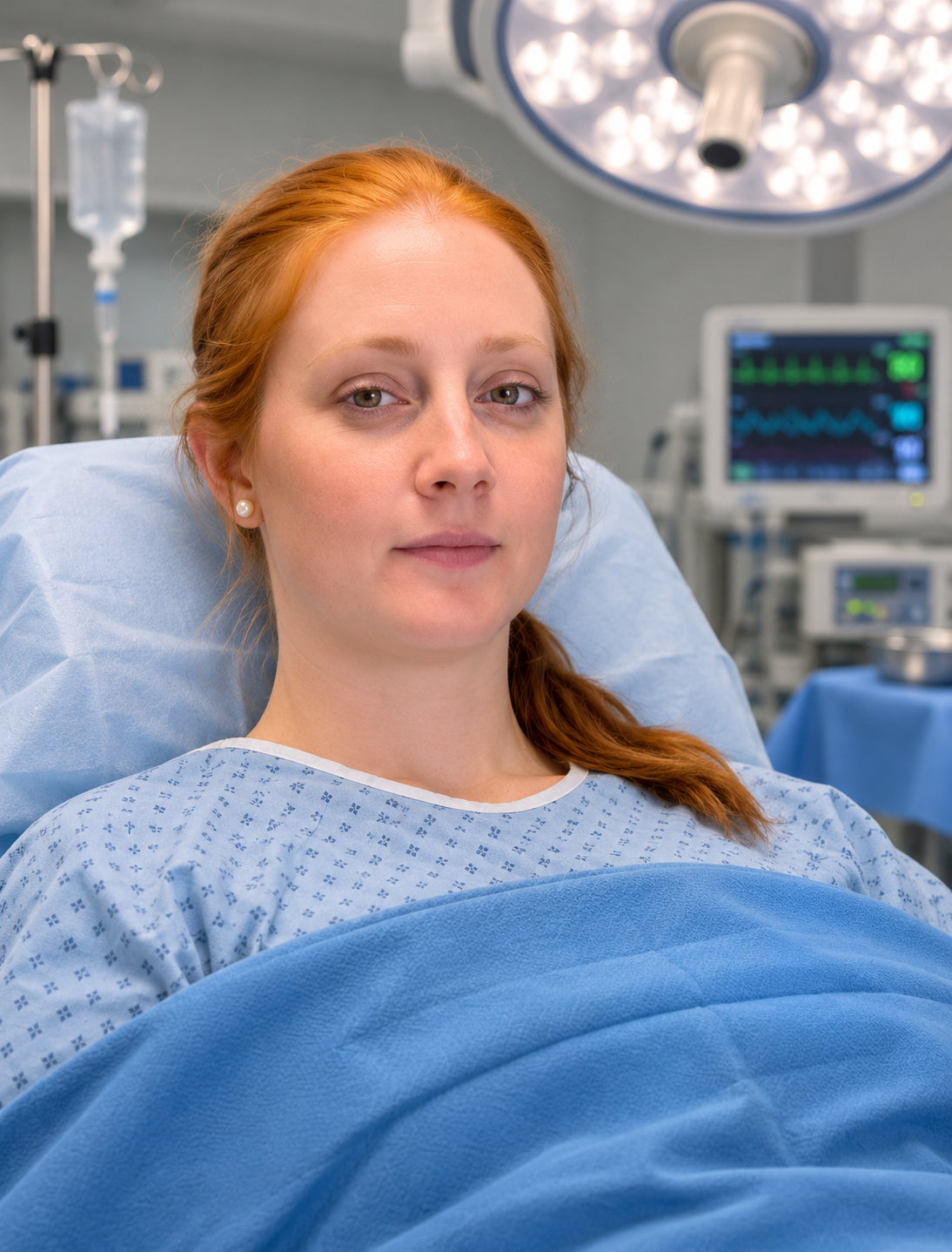
On October 25, 2024, Emily went into surgery. Her family had spent months waiting for that day. Once she was in the operating room, they had hours more to wait.
The operation lasted more than ten hours. Surgeons removed approximately 22 pounds of breast tissue. For months Emily had felt the weight whenever she stood up, leaned forward, or tried to settle into a chair. Now her body had to heal from the operation that relieved it.
The early weeks moved slowly. She rested and went to follow-up appointments. As she began to feel the difference, she found herself thinking about exercising again. She also wanted to browse a rack of ordinary shirts and pick one because she liked it. She’d spent months making that choice based on what she could physically get through the day in.
The first thing she wanted back was an ordinary morning
Before surgery, getting dressed could tell Emily what kind of day she was about to have. If a shirt pulled painfully at her shoulders before she even left home, she knew she’d still be feeling it in class and at work. Sometimes the calculation started before she’d had breakfast.
Recovery gave her a chance to picture a different morning. She could take her time getting stronger and look forward to the day when bending down to help a child with a shoe might feel routine again.
She had tried eight shirts that morning because she needed one she could get through the day in. What she wanted now was simple. She wanted to get dressed and spend the rest of the day thinking about something else.
The Life Emily Had Been Waiting to Get Back
For Emily Carter, waking up after surgery meant more than discovering that the physical weight was finally gone.
It meant beginning a new chapter in a life that had been interrupted by circumstances beyond her control.
For months, the simplest activities had required extraordinary effort. Getting dressed, walking across campus, sitting through a lecture, and completing a shift at her childcare job had become exhausting challenges.
But recovery would not happen overnight.
Although the surgery had removed approximately 22 pounds of breast tissue, her body still needed time to heal after everything it had endured.
There were appointments to attend, limitations to respect, and unfamiliar changes to adjust to.
Emily’s journey was far from finished.
For the first time in months, however, she was moving toward something instead of simply trying to survive another difficult day.
Learning to Live Without the Constant Weight
Imagine carrying a heavy backpack against the front of your body every hour of the day.
Imagine being unable to take it off when you wanted to sleep, study, work, or relax.
Over time, that weight would affect nearly everything you did.
For Emily, that was part of everyday life before surgery.
The condition had gradually taken away freedoms that many people never stop to appreciate.
Even something as ordinary as reaching for an item on a shelf could become uncomfortable.
A long walk could leave her exhausted.
Finding a comfortable sleeping position could feel impossible.
The physical discomfort was only part of the challenge.
Living with a rare medical condition can also create feelings of isolation, particularly when other people cannot fully understand what someone is experiencing.
Emily was pursuing an education, building her future, and working with children.
She had dreams that extended far beyond hospitals and medical appointments.
Gigantomastia had forced those dreams to compete with daily pain.
Now, following her operation, she finally had reason to believe that her future might look different.
The Small Victories That Meant Everything
Recovery after a major operation is often measured in small victories.
A comfortable night’s sleep.
A short walk.
A little more independence.
The ability to complete a task without overwhelming discomfort.
For someone who has spent months struggling with ordinary activities, these achievements can carry enormous emotional significance.
Emily’s hope of wearing regular clothing again might have seemed simple to someone unfamiliar with her experience.
But it represented something much bigger.
It represented freedom.
Instead of choosing clothing based entirely on physical limitations, she could eventually look forward to choosing something because she loved its color, its design, or the way it made her feel.
She could imagine walking into a clothing store without immediately wondering whether anything would fit.
She could think about exercising again.
She could make plans for her future without every decision revolving around the condition that had changed her life.
The things she looked forward to were not extravagant.
They were beautifully ordinary.
And that was precisely what made them so meaningful.
The Strangers Who Changed Her Future
One of the most remarkable parts of Emily’s story happened before she entered the operating room.
When her family faced the financial challenge of arranging surgery, there was no guarantee that sharing her experience publicly would make a difference.
Speaking about such a personal medical condition on television required courage.
Emily allowed strangers to see a struggle that had affected her confidence, comfort, education, and independence.
She shared details that many people would have preferred to keep private.
Yet the response demonstrated something powerful about human kindness.
People listened.
People understood that behind the medical diagnosis was a young woman who simply wanted her life back.
And people decided to help.
Every donation became part of a collective effort to remove the financial obstacle standing between Emily and her operation.
Some supporters may have contributed only what they could afford.
Others may have shared her story so that more people could learn about her circumstances.
Together, those acts helped turn a distant hope into a real surgery date.
For Emily and her family, that generosity meant more than financial assistance.
It meant knowing that they were not facing the situation alone.
A Medical Condition Many People Have Never Heard Of
Before hearing Emily’s story, many people had probably never encountered the word gigantomastia.
Rare conditions often remain unfamiliar to the public until someone shares a personal experience.
That lack of familiarity can make life especially difficult for the people affected.
Others may see an outward physical change without understanding the discomfort, practical difficulties, and emotional strain accompanying it.
Emily’s experience illustrates why it is important to look beyond appearances.
An individual standing in front of you may be dealing with pain you cannot see.
Someone struggling to complete an ordinary task may be facing a medical challenge you have never heard of.
A person who seems tired, uncomfortable, or withdrawn may be using extraordinary energy simply to get through the day.
Understanding begins when people stop making assumptions and start listening.
By sharing her experience, Emily helped bring attention to a condition that is rarely discussed in everyday conversation.
Her story was no longer just about her own operation.
It became an opportunity for others to recognize the challenges faced by people living with unusual medical conditions.
The Emotional Side of Starting Over
Physical recovery is only one part of rebuilding a life after a difficult medical experience.
There is also the process of rediscovering confidence.
When someone has spent months organizing their life around discomfort, limitations, and uncertainty, it can take time to develop a new sense of normality.
Emily had spent countless days thinking about how much standing, walking, or bending she could tolerate.
She had learned to approach ordinary situations with caution.
The possibility of leaving those limitations behind brought hope, but it also marked the beginning of an adjustment.
She could begin imagining experiences that had previously seemed difficult or inaccessible.
A shopping trip with friends.
A comfortable afternoon on campus.
Exercise when her recovery permitted it.
A day at work focused entirely on the children rather than her own discomfort.
These were the moments that made the future exciting again.
Not because they were extraordinary experiences, but because Emily had learned how precious ordinary experiences could be.
The Future Beyond the Hospital
Emily entered the hospital on October 25, 2024, with a condition that had dominated much of her daily life.
She emerged having taken a significant step toward reclaiming it.
The operation itself lasted more than ten hours.
But the significance of those hours stretched far beyond the operating room.
They represented months of uncertainty, determination, financial challenges, and the generosity of people who had chosen to help.
They represented the possibility of returning to school with greater comfort.
They represented the hope of continuing her work with children.
They represented a young woman’s opportunity to think about her future without the same overwhelming physical burden.
There would still be challenges.
Healing requires patience, and every person’s recovery is different.
But Emily finally had something that had been difficult to hold onto during the hardest months of her experience.
Hope.
What Her Journey Teaches Us About Kindness
Emily’s experience is a reminder that extraordinary changes do not always begin with extraordinary people.
Sometimes they begin with ordinary individuals who decide to care.
Someone hears a story.
Someone makes a contribution.
Someone shares information with a friend.
Someone offers encouragement to a person who feels overwhelmed.
Individually, these actions might appear small.
Together, they can change the direction of someone’s life.
Emily’s surgery became possible because people recognized her struggle and responded with compassion.
They did not need to experience her condition themselves to understand that she deserved help.
They simply needed to listen.
And perhaps that is one of the most meaningful lessons her story offers.
We may never know the full difficulties another person is carrying.
But we can choose to treat them with understanding.
The Meaning Behind Those Eight Shirts
There was a time when Emily stood in front of her closet, trying on one shirt after another.
Each unsuccessful attempt was another reminder of how much her life had changed.
The eighth shirt was not just another piece of clothing.
It represented frustration, discomfort, and the loss of something as basic as getting dressed without difficulty.
Months later, her operation opened the possibility of a very different experience.
One day, she could choose a shirt because she liked it.
She could put it on, leave the house, and focus on whatever the day had in store.
No complicated calculation.
No endless search for something comfortable.
Just a young woman getting ready to live her life.
Sometimes the greatest victories are the ones that look completely ordinary to everyone else.
And for Emily Carter, an ordinary morning might be one of the most extraordinary gifts of all.
PART 3 — The Freedom She Never Thought She Would Feel Again
For months, Emily Carter had measured her days by how much discomfort she could endure.
Now, she could begin measuring them by the possibilities ahead of her.
The operation had changed her physical circumstances, but its greatest significance extended far beyond the dramatic amount of tissue removed.
It offered Emily something that had gradually disappeared from her life: the freedom to make ordinary choices.
Before her surgery, even accepting an invitation to spend time with friends could involve difficult considerations.
Would there be somewhere comfortable to sit?
How much walking would be involved?
Would she have enough energy to enjoy herself?
Would her clothing remain comfortable throughout the day?
These were questions most young adults rarely needed to consider.
For Emily, they had become part of everyday life.
When Ordinary Life Becomes a Luxury
There is something heartbreaking about being young and feeling as though your body is preventing you from living the life you imagined.
College should be a time of discovering independence, building friendships, exploring interests, and preparing for the future.
Instead, Emily had been forced to devote much of her attention to managing discomfort.
Her responsibilities had not disappeared simply because she was struggling.
Assignments still needed to be completed.
Classes still required attendance.
Children at her workplace still needed her attention.
The world continued moving forward, even when her own body made keeping up increasingly difficult.
Yet she continued trying.
That determination is one of the most powerful aspects of her story.
Long before surgeons entered the operating room, Emily had already demonstrated tremendous strength through the ordinary things she refused to abandon.
The Courage Behind Asking for Help
For many people, asking for assistance can feel more difficult than suffering in silence.
There may be embarrassment, uncertainty, or fear of being misunderstood.
Sharing a deeply personal medical experience with an entire community can require even greater courage.
But Emily’s decision to speak publicly ultimately opened a door that had previously seemed closed.
Her interview allowed people to understand that her situation was not simply about appearance.
It was about pain.
It was about mobility.
It was about education, independence, employment, and quality of life.
The response from strangers demonstrated how dramatically compassion can change someone’s circumstances.
Rather than looking away, people chose to become part of the solution.
Rather than allowing her story to disappear after a television broadcast, they helped give it a different ending.
Their kindness made the surgery financially possible.
And their support created something equally important: a reminder that Emily’s struggle mattered.
Ten Hours That Changed Everything
Ten hours can feel like an eternity when someone you love is undergoing a major operation.
For Emily’s family, October 25, 2024, marked the culmination of months of uncertainty and preparation.
Everything that had happened before that day had led to this moment.
The uncomfortable mornings.
The exhausting afternoons.
The search for medical answers.
The financial obstacles.
The decision to share her story.
The generosity of strangers.
All of it had brought Emily to the operating room.
When the procedure was completed, approximately 22 pounds of breast tissue had been removed.
But numbers alone could never fully explain what that meant.
The true significance would emerge gradually as Emily recovered and discovered which parts of her everyday life she could reclaim.
Recovery Was Not a Race
An operation of that magnitude does not erase every difficulty in a single moment.
Recovery takes time.
The body needs opportunities to rest and heal.
There are follow-up appointments and important decisions about when to resume everyday activities.
Emily’s next challenge was learning to be patient with herself.
After spending months dreaming about the things she wanted to do again, it was understandable that she would look forward to becoming more active.
But the journey toward renewed independence was one that needed to unfold gradually.
Every improvement represented another step toward the life she had imagined.
The pressure to accomplish everything immediately could finally give way to something different.
Hopeful anticipation.
There was no longer a need to wonder endlessly whether the surgery would ever happen.
That enormous obstacle was behind her.
The future was beginning to open.
Rediscovering the Person Beyond the Diagnosis
One difficult aspect of living with a medical condition is how easily it can begin to dominate a person’s identity.
Conversations become focused on symptoms.
Plans revolve around appointments.
Daily decisions are influenced by discomfort.
Over time, it can become difficult to remember what life felt like before the condition demanded so much attention.
But Emily was always more than her diagnosis.
She was a student.
She was a childcare worker.
She was a daughter.
She was a young woman with interests, ambitions, responsibilities, and dreams.
Gigantomastia was something she experienced.
It was never the entirety of who she was.
Her surgery offered an opportunity to rediscover the parts of herself that had received less attention during those difficult months.
Instead of constantly thinking about what her body prevented her from doing, she could begin imagining what she wanted to accomplish next.
That shift in perspective was as meaningful as any change in her wardrobe.
The Invisible Battles Behind Familiar Faces
Emily’s experience raises an important question.
How many people around us are struggling with challenges we know nothing about?
The student sitting quietly in the back of a classroom might be enduring physical discomfort.
The employee who seems exhausted might have spent hours managing a medical condition before arriving at work.
The stranger who avoids certain activities may have reasons that are impossible to recognize from appearance alone.
It is easy to make assumptions about other people’s lives.
Understanding requires something more.
It requires curiosity, patience, and empathy.
Emily’s story reminds us that a person’s outward appearance rarely tells us everything about what they are experiencing.
Behind an ordinary face can exist an extraordinary struggle.
And behind a seemingly simple achievement can be months or even years of determination.
Why Her Story Resonated With So Many People
Not everyone who heard Emily’s story understood the medical details of gigantomastia.
But almost everyone could understand the frustration of losing something they had once taken for granted.
People understood what it meant to struggle.
They understood the fear of receiving a difficult diagnosis.
They understood the uncertainty of waiting for treatment.
They understood the desire to wake up in the morning without being immediately reminded of a problem they could not control.
Emily’s experience connected with people because its deepest themes were universal.
She wanted comfort.
She wanted independence.
She wanted opportunities.
She wanted to live her life without constantly negotiating with pain.
Those desires are familiar to people from every background.
That connection transformed her story from a rare medical experience into a powerful reminder of our shared humanity.
A Different Kind of Beauty
Stories involving dramatic physical changes often attract attention because people are curious about someone’s appearance before and afterward.
But focusing exclusively on appearance misses the meaning of Emily’s journey.
Her greatest achievement was never about satisfying someone else’s expectations of beauty.
It was about gaining the possibility of a more comfortable, independent life.
True transformation is not always found in the mirror.
Sometimes it is discovered when a person can participate in an activity they previously avoided.
Sometimes it appears when pain no longer controls every decision.
Sometimes it arrives in the quiet realization that tomorrow holds more possibilities than yesterday.
Emily’s story challenges the way society often thinks about physical transformation.
The most important question was not how different she looked after surgery.
It was how different her life could become.
The Clothes That Represented a New Beginning
There was a time when eight shirts could not provide Emily with a comfortable choice.
Her wardrobe had become a constant reminder of circumstances she could not control.
After surgery, something that had once represented frustration became a symbol of possibility.
A shirt was no longer merely a piece of fabric.
It represented the freedom to choose.
The freedom to express personality.
The freedom to prepare for a day without beginning it with disappointment.
It was a small detail with an enormous emotional meaning.
Sometimes happiness is found in experiences so ordinary that other people barely notice them.
Putting on a favorite shirt.
Walking through a store.
Meeting a friend for coffee.
Returning home after a productive day.
Emily’s journey reminds us that these moments deserve appreciation.
They are the quiet foundations of a fulfilling life.
Looking Beyond the Difficult Months
There is no way to return to the past and remove the physical and emotional difficulties Emily experienced.
Those months remain part of her story.
But they do not need to define every chapter that follows.
Her future can contain new ambitions, new experiences, and new accomplishments.
The operation gave her the opportunity to look forward with renewed optimism.
Perhaps the greatest victory would eventually be reaching a point where her medical condition was no longer the first thing she thought about each morning.
A point where she could concentrate on her studies, her relationships, her career, and the countless possibilities ahead.
For someone who had endured months of uncertainty, that ordinary future would be extraordinary.
The Kindness That Will Never Be Forgotten
Emily’s experience also serves as a reminder that kindness does not have to be spectacular to be powerful.
A single donation might appear insignificant when compared with the total cost of a major medical procedure.
But when many people choose to contribute, their generosity can accomplish something remarkable.
Each person who helped Emily became part of a larger story.
They helped a college student access treatment.
They helped relieve a family’s financial burden.
They helped restore hope during a difficult period.
Most of them may never meet Emily personally.
Yet their decisions became part of one of the most important moments of her life.
That is the remarkable thing about compassion.
Its impact can travel much further than the person offering it will ever know.
Her Story Was About More Than Survival
Emily had spent months finding ways to continue despite circumstances that made ordinary life increasingly difficult.
The surgery offered her a chance to move beyond simply enduring each day.
She could begin looking forward to living it.
There was still recovery ahead.
There were still adjustments to make.
There were still unanswered questions about what the future would bring.
But uncertainty was no longer accompanied by the same sense of helplessness.
It now contained possibility.
Emily’s journey was not defined by the eight shirts she could not wear, the 26 pounds she once carried, or even the ten hours she spent in surgery.
It was defined by her determination to keep moving forward, the compassion of strangers, and the hope of reclaiming the life she deserved.
And as she looked toward the months ahead, one chapter of her life was finally closing.
Another was only beginning.
But perhaps the most inspiring part of Emily’s experience wasn’t what surgeons removed that October morning.
It was everything she now had the opportunity to get back.