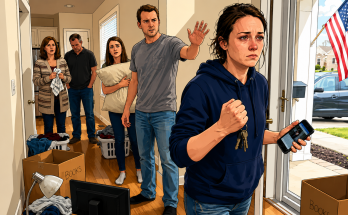
For months, I had respected my mother-in-law’s strict insistence on keeping the guest room entirely private. The morning after she moved out, I discovered she had been hiding something under that bed that was deeply unsettling.
The guest room finally smelled of fresh, empty air instead of Jacqueline’s lavender lotion or Theodore’s peppermint cologne. Only a faint, yeasty warmth lingered in the corner, a peculiar scent that I had never quite been able to place. I brushed the strange odor off because the cool autumn breeze was drifting through the window and bright sunshine hit the bare mattress.
I stood at the foot of the bed with my hands on my hips and smiled warmly at the open space. Six whole months had passed, and now this room was finally mine again.
“Goodbye, guest room,” I announced to the quiet walls. “Hello, brand-new home office!”
I grabbed the elastic corner of the fitted sheet and gave it a firm yank.
“Oh, come on, don’t stick now,” I muttered when the sheet failed to yield.
From a few rooms away down the hallway, I could hear my husband, Zachary, moving around the kitchen as he rinsed a coffee mug in the sink. He had offered to help me strip the bed, but I had waved him off because I really wanted to reclaim this room myself.
The sheet stuck again, stubbornly refusing to budge from the corner.
I gave the fabric another strong pull while thinking about my own mother, who had also been a woman of closed doors and tight secrets. My mind drifted back to the troubling things that had surfaced from behind her bedroom door when I was twelve years old.
Jacqueline was nothing like my mother. My mother-in-law was a devout churchgoer who organized my pantry spices by color and once apologized profusely for using too much soap on my good dinner plates.
Still, Jacqueline had kept that guest bedroom door shut tight every single day.
I braced my knee against the edge of the mattress and pulled hard on the fitted sheet.
“Just let go already,” I muttered under my breath while fighting the elastic.
Two weeks ago, I had walked past this closed door and heard low, rhythmic humming inside, as if someone were softly chatting with a houseplant. A month before that, my father-in-law, Theodore, had ambled into the kitchen laughing about her secret little projects.
PART 3: WHAT JACQUELINE LEFT BENEATH THE MATTRESS
A neat, long row of small glass bottles had been taped to the wooden slats beneath the mattress.
There were twelve of them.
Each bottle was no larger than my thumb.
Every one contained a cloudy amber liquid.
A narrow strip of white tape had been wrapped around each cap.
Dates were written on the tape in Jacqueline’s careful handwriting.
The oldest date was from the week she and Theodore moved into our house.
The newest was from three nights earlier.
But it was not the bottles themselves that made my blood run cold.
It was what Jacqueline had written beneath every date.
BRENDA.
My name appeared twelve times.
I stopped breathing.
The mattress slipped from my shoulder and crashed onto the bed frame.
The bottles rattled beneath it.
“Brenda?”
Zachary called from the kitchen.
“Are you okay?”
I could not answer.
I lifted the mattress again, more slowly this time.
The bottles were still intact.
Beside them lay a black notebook, two sealed envelopes, and a small digital recorder.
One envelope had Zachary’s name on it.
The other had mine.
Across mine, Jacqueline had written four words.
OPEN THIS ONE FIRST.
“Brenda?”
Zachary’s footsteps moved into the hallway.
I lowered the mattress and backed away from the bed.
He appeared in the doorway holding a dish towel.
His expression changed the moment he saw my face.
“What happened?”
I pointed toward the bed.
“There’s something underneath the mattress.”
“What kind of something?”
“I don’t know.”
“You just looked at it.”
“There are bottles.”
“Bottles of what?”
“They have my name on them.”
He stared at me.
“What do you mean they have your name on them?”
“I mean your mother wrote my name on every one.”
He set the dish towel on the dresser.
Then he walked toward the bed.
“Wait.”
The sharpness in my voice made him stop.
“What?”
“Don’t touch them.”
“Brenda, if my mother forgot medicine or something—”
“Medicine does not usually come in twelve unlabeled glass bottles taped beneath someone else’s mattress.”
His eyes moved from me to the bed.
“You said they have dates.”
“Yes.”
“How many?”
“Twelve.”
“Anything else?”
“A notebook.”
“Two envelopes.”
“A recorder.”
He gave a short, nervous laugh.
“That sounds like one of Mom’s strange organization systems.”
“Does your mother usually label strange projects with my name?”
The laugh disappeared.
“No.”
“Then stop acting as if this is normal.”
“I’m not.”
“You are trying to make it normal before we even know what it is.”
Zachary looked toward the hallway as if expecting his parents to return.
Then he placed both hands on the edge of the mattress.
“We need to see everything.”
“I agree.”
“But we need to photograph it first.”
He looked at me.
“Why?”
“Because she hid it.”
“Maybe she forgot it.”
“She taped the bottles to the bed slats.”
The room became very quiet.
I took out my phone and photographed the bed exactly as it was.
Then Zachary lifted the mattress while I took pictures of the bottles, the notebook, the envelopes, and the recorder.
Neither of us spoke.
When I finished, he lowered the mattress carefully against the wall.
The entire hiding place was exposed.
The bottles had been arranged chronologically.
A thin plastic tube ran between several of them.
There was also a small square device attached to the underside of the bed frame.
A faint green light blinked on its side.
Zachary crouched beside it.
“What is that?”
“I don’t know.”
He reached toward it.
“Don’t.”
He stopped again.
I moved closer without touching it.
The device was connected to a tiny sensor pressed against one of the wooden slats.
A cable disappeared through a narrow hole drilled into the baseboard.
I followed it with my eyes.
The cable ran along the wall and vanished behind the nightstand.
Zachary pulled the nightstand forward.
A compact recording unit sat behind it.
It was plugged into the wall.
Three memory cards had been stacked beside it.
My mouth went dry.
“Your mother was recording something in this room.”
Zachary shook his head.
“No.”
“There is a recorder attached to the bed.”
“That doesn’t mean she was recording us.”
“I didn’t say she was.”
His face tightened.
“But you thought it.”
“I’m trying to understand why your parents installed equipment in our house without telling us.”
“My father might have done it.”
“Why would Theodore record the guest bed?”
“I don’t know.”
“That is the problem.”
He stood and ran both hands through his hair.
For six months, I had watched my husband defend his parents’ peculiar habits.
When Jacqueline refused to let me wash their sheets, he called her independent.
When she installed a lock on the guest-room door, he said she needed privacy.
When Theodore began checking the back door three times every night, Zachary said his father had always been cautious.
Each explanation had sounded reasonable by itself.
Now they formed a pattern I could no longer ignore.
I picked up the envelope with my name.
Zachary watched me.
“Shouldn’t we call them first?”
“No.”
“Brenda.”
“Your mother left an envelope telling me to open it first.”
“She may not have intended for you to find it today.”
“She hid it under a mattress she knew I would eventually strip.”
“That doesn’t mean—”
“She left yesterday.”
“I found it this morning.”
I held the envelope toward him.
“This was meant to be found.”
He said nothing.
I broke the seal.
Inside were three folded pages.
The first line made me sit down.
Brenda, if you are reading this, Theodore has convinced me to leave your house before I was ready to tell you the truth.
I read the sentence aloud.
Zachary moved closer.
The next lines were written more unevenly.
I know the bottles will frighten you.
I am sorry.
They contain samples taken from the drinks Theodore prepared for you during our stay.
Do not open them.
Do not smell them.
Do not pour them away.
Take them to a laboratory or to the police.
I lowered the page.
Zachary stared at me.
“What drinks?”
My mind moved backward through six months.
The morning coffee Theodore sometimes prepared.
The herbal tea he insisted helped with headaches.
The homemade tonic he brought into my office on evenings when I worked late.
The glasses of wine he poured at dinner.
The warm milk he once made when I could not sleep.
A cold sensation moved through my stomach.
“He made me drinks all the time.”
“He made drinks for everyone.”
“The note specifically says mine.”
Zachary took the letter from me and continued reading.
I began collecting samples after I saw Theodore place something from a small white packet into your tea.
He told me it was sweetener.
You do not use sweetener.
I asked him why he was preparing your drink differently.
He became angry and told me I had imagined it.
Two days later, you became dizzy at the dinner table.
You said you had skipped lunch.
I did not believe that was the only reason.
I remembered the evening.
I had stood to carry my plate into the kitchen.
The room tilted.
Zachary caught my arm before I fell.
Theodore had insisted I was exhausted.
Jacqueline had stared at my glass for the rest of the meal.
At the time, I thought she was worried about me.
Now I understood that she had been watching him.
Zachary continued reading.
The first bottle contains what remained of that tea.
The following bottles contain samples from other drinks Theodore prepared specifically for you.
I tried to have one tested without his knowledge.
He discovered what I was doing before I could send it.
That was when he began insisting that we return home as soon as the repairs were complete.
He believes I destroyed the samples.
I did not.
My husband stopped reading.
His face had gone pale.
I took the letter back.
There was more.
Do not confront him until you understand what is in those bottles.
Do not allow Zachary to dismiss this because Theodore is his father.
There are things Zachary does not know.
There are things I should have told him many years ago.
The black notebook explains some of them.
The recording explains the rest.
I am sorry I waited.
I am more sorry than these pages can express.
Jacqueline had signed the letter with her full name.
Beneath her signature, she had written one final warning.
If Theodore calls before you reach the end of this letter, do not tell him what you found.
My phone began ringing.
Both of us flinched.
Theodore’s name appeared on the screen.
THE CALL
Zachary stared at the phone.
Theodore’s name continued flashing.
“Don’t answer,” I whispered.
“If I don’t, he might suspect something.”
“He might already suspect something.”
“What if Mom told him?”
“What if he noticed she left the bottles?”
Zachary reached for the phone.
I pulled it away.
“What are you doing?”
“Let it go to voicemail.”
“He will keep calling.”
“Then let him.”
The ringing stopped.
A moment later, a message appeared.
Dad: Did your mother leave her blue sweater in the guest room?
Neither of us moved.
Jacqueline did own a blue sweater.
She had worn it often during the first weeks of their stay.
But I had seen her pack it the previous morning.
She had folded it and placed it inside the front pocket of her suitcase.
“He’s checking whether we entered the room,” I said.
“You don’t know that.”
“You watched your mother pack the sweater.”
Zachary rubbed the back of his neck.
“Maybe she has two.”
“Call her.”
“What?”
“Call Jacqueline.”
“If Dad is beside her—”
“Ask about the sweater.”
Zachary dialed his mother.
The call went directly to voicemail.
He tried again.
The same thing happened.
Then he called Theodore.
His father answered immediately.
“Zach?”
“Dad.”
“Did you find your mother’s sweater?”
Zachary looked at me.
“We haven’t checked.”
“That room is still a mess?”
Theodore laughed.
“I assumed Brenda would have torn it apart the moment we left.”
I felt the insult beneath the humor.
Zachary forced a laugh.
“She’s been busy.”
“Well, check when you can.”
“Is Mom there?”
A pause followed.
“She’s resting.”
“I called her phone.”
“She turned it off.”
“Why?”
“She has a headache.”
“Can I speak to her?”
“Not right now.”
Another pause.
Then Theodore’s voice became gentler.
“Is something wrong?”
“No.”
“You sound strange.”
“I’m tired.”
“Did you sleep badly?”
The question seemed ordinary.
But Zachary looked toward the bottles.
“I slept fine.”
“Good.”
“Tell Brenda we miss her.”
“I will.”
“And Zach?”
“Yes?”
“Don’t let her throw away anything from the guest room until we check it.”
The call ended.
Zachary kept the phone against his ear after the line went silent.
“He knows.”
“We don’t know that.”
“You heard him.”
“He could mean the sweater.”
“He told you not to let me throw away anything.”
My husband lowered the phone.
“I want to read the notebook.”
THE BLACK NOTEBOOK
Jacqueline’s notebook began with a date from seven months earlier.
That was one month before she and Theodore moved into our home.
The first entry described the flooding at their house.
A pipe had burst in the upstairs bathroom while they were away for the weekend.
Water damaged the ceiling, walls, flooring, and electrical system.
The repairs were real.
But according to Jacqueline, the damage had not been the reason she asked to stay with us.
I needed a reason Theodore would accept.
I have been trying to get closer to Brenda because I believe he has chosen her.
The next page contained a list of names.
There were seven women.
I recognized two of them.
One was Theodore’s younger sister, Margaret, who had died before Zachary and I met.
The other was Helen Cross, a former employee at the insurance company Theodore once managed.
I had met Helen at a Christmas party years earlier.
She had walked with a cane and spoken very slowly.
Zachary pointed to her name.
“Dad said she had a stroke.”
Beside Helen’s name, Jacqueline had written:
Confusion.
Dizziness.
Weakness.
Speech difficulty.
The symptoms began after Theodore started bringing her afternoon coffee.
My stomach tightened.
Beside Margaret’s name, Jacqueline had written:
Repeated falls.
Memory loss.
Severe fatigue.
Theodore handled her medication.
She died after being moved into assisted care.
Zachary turned the page.
The remaining women were identified as neighbors, relatives, or former colleagues.
Each name was followed by symptoms.
Dizziness.
Confusion.
Numbness.
Memory problems.
Loss of balance.
One woman had been injured in a car accident after apparently becoming disoriented.
Another had resigned from her job after colleagues began questioning her judgment.
A third had signed a financial document transferring control of a property to Theodore.
“What is she saying?” Zachary whispered.
“She thinks your father did something to them.”
“Why?”
“I don’t know.”
The next pages began to answer that question.
Jacqueline described Theodore’s need to control people who challenged him.
He did not shout.
He did not threaten them openly.
He created situations in which others began doubting their own minds.
If someone opposed him, he told relatives that the person was unstable.
If someone remembered events differently, he described them as confused.
If a woman became ill, he stepped forward as the calm, helpful man willing to handle everything.
I remembered the way Theodore had spoken to me during his stay.
He often corrected small details in my stories.
If I said something happened on Tuesday, he insisted it had been Wednesday.
If I misplaced an object, he joked that I was too young to be losing my memory.
When I forgot an appointment, he mentioned dementia in my family.
The comments had seemed harmless.
Over time, I had begun writing reminders for myself.
I had started checking whether I turned off the oven.
I had asked Zachary twice whether he noticed me becoming forgetful.
He told me I was overworked.
Perhaps I was.
But now I wondered how much of that anxiety had been planted deliberately.
Zachary turned another page.
A photograph had been taped inside.
It showed Theodore standing beside a much younger woman.
They were in front of an office building.
On the back, Jacqueline had written:
Helen, three weeks before the first incident.
“She looks healthy,” I said.
“She was.”
Zachary’s voice sounded hollow.
“I remember her.”
“She used to bring me birthday gifts when I was a kid.”
“Why would your father hurt her?”
“I don’t know.”
The next entry was dated five months earlier.
Tonight Theodore asked Brenda about her mother’s illness again.
He wanted to know whether anyone in her family had experienced early memory loss.
When she said yes, he smiled.
I am beginning to understand why he chose her.
I stopped reading.
My mother had developed serious memory problems in her final years.
The doctors believed a neurological condition was responsible.
I had told Theodore that family history during dinner.
Afterward, he began making jokes whenever I misplaced something.
If I developed similar symptoms, everyone around me would assume they were inherited.
No one would question him.
“No,” Zachary said.
He stood abruptly.
“This is insane.”
“You think your mother invented all of this?”
“I think she was frightened.”
“Of what?”
“My father.”
“That does not make the notebook less credible.”
“It means she might have interpreted everything through fear.”
“She collected samples.”
“We don’t know what is in them.”
“That is why she said to test them.”
Zachary paced toward the window.
“My father is controlling.”
“I know that.”
“He humiliates people.”
“I know that too.”
“But secretly poisoning women?”
The word hung in the room.
Neither of us had said it until then.
Poisoning.
The bottles seemed more frightening once the possibility had a name.
“What happened to your aunt Margaret?” I asked.
He turned toward me.
“She became ill.”
“What kind of illness?”
“Doctors never agreed.”
“Did your father manage her finances?”
“He helped her.”
“Did he receive anything after she died?”
Zachary’s face changed.
“She left him her house.”
THE RECORDING
The digital recorder required two new batteries.
I found them in the kitchen drawer.
Before switching it on, I photographed the device and the memory card inside it.
Zachary sat beside me on the floor.
The guest room no longer felt like part of our home.
It felt like a place where another life had been unfolding behind a closed door.
I pressed play.
At first, we heard fabric moving.
Then Jacqueline’s voice.
“Theodore, what did you put in Brenda’s tea?”
A long silence followed.
My father-in-law answered calmly.
“Sweetener.”
“She does not use sweetener.”
“She said she wanted some.”
“No, she didn’t.”
“You are confused again.”
“I watched you take the packet from your coat.”
“You saw sugar.”
“Let me see the packet.”
Another silence.
Then the sound of a drawer closing.
“You have been going through my things,” Theodore said.
“You have been preparing every drink she consumes.”
“She works too hard.”
“That is not an answer.”
“You sound tired, Jackie.”
“Do not call me that.”
“You should lie down.”
“I collected the tea.”
The recording became silent for several seconds.
When Theodore spoke again, the warmth had left his voice.
“What did you do with it?”
“I put it somewhere safe.”
“You are making a terrible mistake.”
“Tell me what was in the packet.”
“You need help.”
“I have heard you say that to other women.”
“Margaret needed help.”
“Helen needed help.”
“You made sure everyone believed that.”
“You are becoming hysterical.”
“No.”
For the first time, Jacqueline’s voice sounded steady.
“I am finally becoming honest.”
A loud impact followed.
Something scraped across the floor.
Then Theodore spoke close to the recorder.
“You will give me the sample.”
“No.”
“You will stop filling Zachary’s head with accusations.”
“I have not told him yet.”
“Then you will keep it that way.”
“You cannot control him forever.”
“He is my son.”
“And Brenda is his wife.”
“Brenda is the reason he stopped listening to me.”
There it was.
The motive was not money.
Not entirely.
It was control.
Theodore believed I had taken his son away.
He believed my presence had weakened his influence.
I had encouraged Zachary to question his father.
I had persuaded him to decline a business partnership Theodore wanted.
I had asked him to establish boundaries around unannounced visits.
I had helped my husband become less obedient.
In Theodore’s mind, that may have made me dangerous.
The recording continued.
“What are you trying to do to her?” Jacqueline asked.
“I am not doing anything.”
“You said the same thing about Helen.”
“Helen made mistakes.”
“You caused those mistakes.”
“Be careful.”
“She lost her job.”
“She was incompetent.”
“She trusted you.”
“That was her decision.”
“And Margaret?”
Theodore’s voice sharpened.
“Do not speak about my sister.”
“She begged me to take her to another doctor.”
“She was sick.”
“She became sick whenever you visited.”
“That is enough.”
“No.”
A heavy sound struck the wall.
Jacqueline gasped.
Then the recording ended.
Zachary sat motionless.
I reached for his hand.
He pulled away.
Not from anger at me.
From shock.
“That is my father’s voice,” he whispered.
“Yes.”
“I know how he sounds when he’s pretending to be calm.”
I waited.
“He was pretending.”
Zachary picked up his phone.
“What are you doing?”
“Calling Mom.”
“She may be with him.”
“That is why I need to call.”
“If he realizes we found everything—”
“He already knows something is wrong.”
“Then we need help before we confront him.”
“My mother could be in danger.”
“She may be.”
“We cannot drive there alone.”
He stood.
“I’m not leaving her with him.”
I stood too.
“And I am not letting you walk into a house with a man your mother believed was harming people.”
“She is my mother.”
“And you are my husband.”
His face twisted.
“What do you want me to do?”
“Call the police.”
“With what?”
I gestured toward the bed.
“With the bottles.”
“The notebook.”
“The recording.”
“The equipment hidden in our room.”
“That recording could be years old.”
“It mentions me.”
“The first notebook entry was seven months ago.”
“We still don’t know whether a crime occurred.”
“Then let professionals determine that.”
Zachary looked toward the envelope bearing his name.
“We haven’t opened mine.”
THE SECOND LETTER
His hands trembled as he broke the seal.
The letter inside was shorter than mine.
My darling Zachary,
If Brenda found this, then I hope she has shown you everything.
I know your first instinct will be to defend your father.
I taught you to do that.
When you were a child, I asked you to apologize every time he frightened you.
I told you he was stressed.
I told you he loved you.
I told you that good sons did not embarrass their fathers.
I trained you to doubt your own memories because I was afraid of what would happen if you told the truth.
I have regretted that for most of my life.
Your father did not begin with Brenda.
He has been doing versions of this for decades.
Sometimes he wanted money.
Sometimes he wanted obedience.
Sometimes he wanted to punish someone who questioned him.
I helped him by remaining silent.
I will not remain silent again.
There is one thing I have never told you.
The damage to our house was not caused by a broken pipe.
Your father caused it after he found the first evidence I had collected.
He flooded the upstairs rooms to destroy papers I had hidden inside the wall.
I used the repairs as an excuse to move us into your home because I believed Brenda might become his next target.
I thought that if I stayed near her, I could protect her and gather proof.
Instead, I allowed him to live under your roof.
I am sorry.
Please believe Brenda.
Please do what I was too frightened to do.
The final line had been underlined twice.
Do not come to the house.
Call the police first.
Zachary finished reading.
Then he sat on the edge of the bed.
For several minutes, he said nothing.
I heard a vehicle slowing outside.
We both turned toward the window.
A dark sedan stopped in front of our house.
It looked like Theodore’s car.
THE MAN AT THE DOOR
Zachary moved toward the window.
I caught his arm.
“Stay back.”
The driver’s door opened.
Theodore stepped out.
He wore the same gray jacket he had worn the previous morning.
He walked around the vehicle and opened the passenger door.
No one emerged.
The passenger seat appeared empty.
“Where is Jacqueline?” I whispered.
Zachary took out his phone.
Before he could dial, the doorbell rang.
The sound echoed through the house.
Theodore pressed it again.
Then he knocked.
“Zachary?”
His voice came through the front door.
“I know you’re home.”
My husband looked at me.
I pointed toward the guest room.
“Take the bottles and the letters.”
“What are you going to do?”
“Call the police.”
“You are not opening the door.”
“I’m not.”
He collected the notebook, recorder, letters, and photographs.
We placed them inside a plastic storage bin without disturbing the bottles.
Theodore knocked again.
“Brenda?”
His voice sounded cheerful.
“Your mother left something important under the bed.”
My skin went cold.
He knew exactly where it was.
I dialed emergency services.
The operator asked whether Theodore had threatened us.
“Not directly.”
“Does he have a weapon?”
“I don’t know.”
“Why do you believe you are in danger?”
“My mother-in-law left evidence suggesting he may have been putting something into my drinks.”
The operator’s questions became more focused.
She instructed us not to open the door.
Officers were being dispatched.
From the hallway, we heard the front doorknob turn.
Once.
Twice.
Then Theodore walked around the side of the house.
“He knows the kitchen door code,” Zachary whispered.
We heard buttons being pressed.
The keypad rejected the first attempt.
Then it beeped.
The lock opened.
Zachary had forgotten to remove the temporary code his parents used during their stay.
The kitchen door moved inward.
My husband stepped into the hallway.
“Dad, stop.”
The door became still.
“Zach?”
“Stay outside.”
“I only came for your mother’s belongings.”
“Where is Mom?”
“She is at home.”
“Let me speak to her.”
“She is sleeping.”
“At eleven in the morning?”
“She had a difficult night.”
“Put her on the phone.”
Theodore pushed the door wider.
Zachary held it from the inside.
“Move,” Theodore said.
“No.”
The single word changed something between them.
For the first time in his life, my husband had directly refused his father.
Theodore’s voice lost its warmth.
“You have no idea what your wife has dragged you into.”
“She did not drag me into anything.”
“She found the bottles, didn’t she?”
Zachary looked toward me.
That was confirmation.
Theodore knew.
“What was in them?” Zachary asked.
“Cleaning solution.”
“Mom said they were samples from Brenda’s drinks.”
“Your mother is unwell.”
“She recorded you.”
Theodore went silent.
Zachary’s voice trembled.
“She recorded you asking where she hid the sample.”
“You do not understand the context.”
“Then explain it.”
“Not through a door.”
“The police are coming.”
Theodore stepped backward.
I could see part of his face through the narrow opening.
For one instant, his expression showed something I had never seen before.
Not fear.
Calculation.
He looked toward his car.
Then toward the street.
He released the door.
By the time the first patrol vehicle turned onto our road, Theodore was already driving away.
But instead of turning toward the main highway, he headed in the direction of his house.
The house where Jacqueline was supposedly sleeping………………