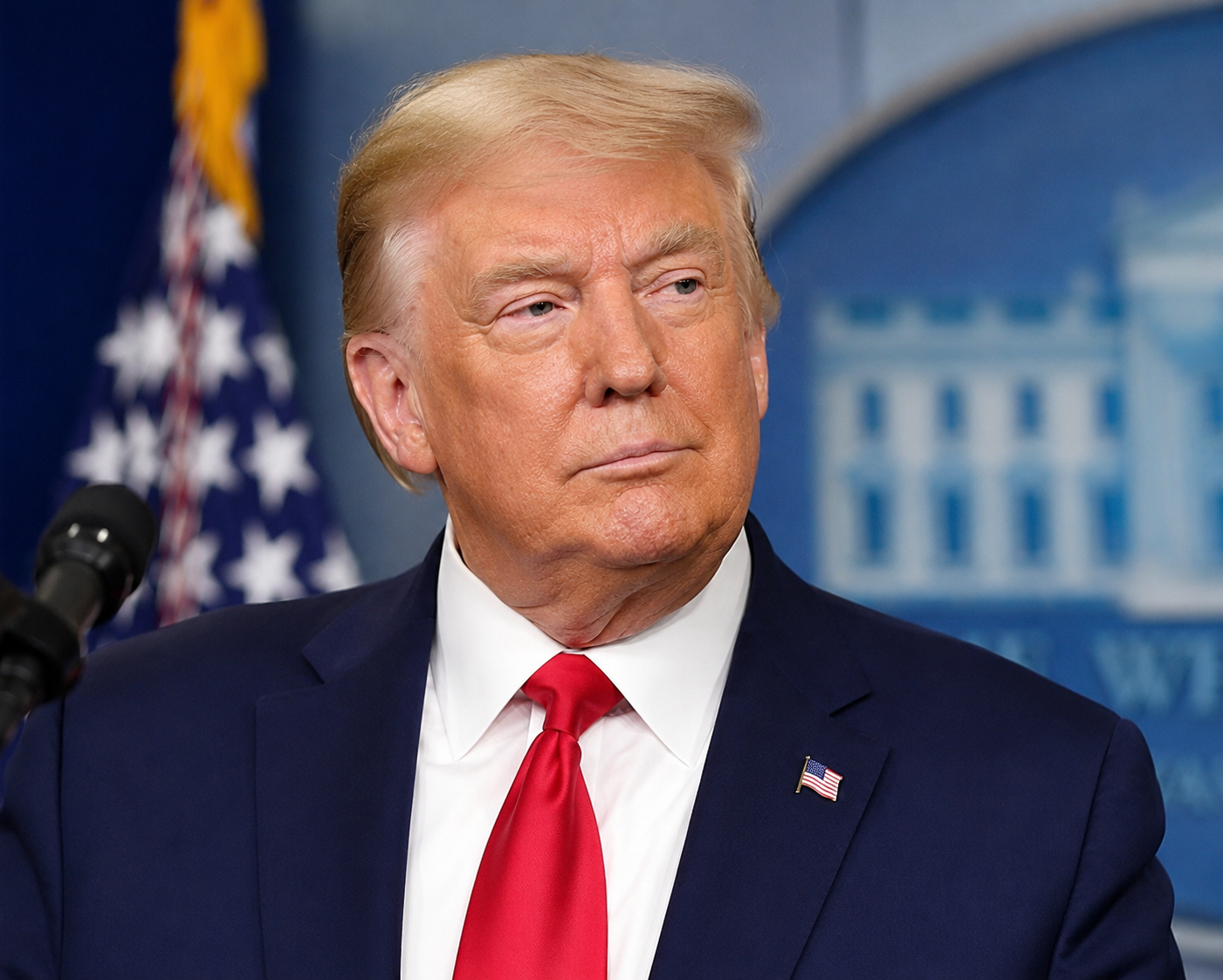
Claims About Donald Trump Hospitalization Remain Unverified Amid Online Speculation
Online Claims Have Drawn Attention
Online posts have circulated claiming that President Donald Trump was hospitalized, prompting questions about whether a significant medical event had taken place.
However, the information has not been confirmed by an official source or established as fact in the reports referenced here. Without credible confirmation, the hospitalization claim should not be presented as a verified medical development.
The situation highlights the importance of separating online speculation from confirmed information, particularly when the subject involves the health of a prominent public figure.
Posts about a possible hospitalization can spread rapidly, especially when they are accompanied by photographs, short video clips, or dramatic headlines. Their widespread circulation does not by itself establish that the underlying claim is accurate.
Interest in Trump’s Health Has Increased
Public attention surrounding Trump’s physical condition has increased following recent photographs, appearances, and online discussion about his health.
Those discussions have contributed to heightened interest in any new claim involving his medical condition. In that environment, even an unconfirmed statement can quickly attract attention and be repeated across multiple platforms.
That does not mean the information has been independently established. Repetition can make an online claim appear more certain than it actually is, particularly when readers encounter the same statement in several different posts.
For that reason, speculation surrounding Trump’s health should remain clearly separated from information that has been officially confirmed.
Social Media Speculation Is Not Medical Confirmation
Social media allows information to move quickly, but speed does not guarantee accuracy.
A post can make a strong claim about a hospitalization, medical emergency, or diagnosis without providing evidence that the event actually occurred. When that happens, readers may see a dramatic statement long before any reliable confirmation becomes available.
Claims involving Trump should therefore be evaluated based on the information supporting them rather than the number of times they have been shared.
If a post does not provide credible confirmation of a hospitalization, it should not be treated as proof that a hospitalization occurred.
The same standard applies to claims about specific illnesses, medical emergencies, treatments, or diagnoses. Without reliable supporting information, those details remain unverified.
Photographs Cannot Establish a Diagnosis
Photographs and short video clips often become a major part of online discussion about the health of public figures.
An image may prompt questions about someone’s appearance, movement, or physical condition, but it cannot reliably establish a medical diagnosis.
Images can also circulate without their full context. Viewers may not know when a photograph was taken, what happened immediately before or after it, or whether the image accurately reflects the broader situation.
Drawing medical conclusions from a photograph alone can therefore turn uncertainty into speculation.
A person’s appearance in a single image does not confirm that the person was hospitalized, experienced an emergency, or received a particular diagnosis.
For the same reason, short clips should not automatically be interpreted as evidence of a specific health problem. They may generate questions, but questions are different from confirmed medical information.
Dramatic Headlines Require Careful Reading
Readers should be especially cautious when encountering headlines that present an alleged medical event as certain while offering little information to support the claim.
A headline stating that Trump was hospitalized can create a strong impression before the reader has examined whether any confirmation is actually provided.
Similar caution is appropriate when a headline claims that he suffered a medical emergency or received a specific diagnosis.
The presence of confident wording does not make a claim verified. The important question is whether reliable reporting or an official statement supports what is being presented.
If that supporting confirmation is absent, the claim remains uncertain regardless of how strongly the headline is written.
Health Claims Can Spread Faster Than Verification
Medical information involving public figures can attract immediate attention because readers naturally want to know whether something significant has happened.
That interest can create an environment in which incomplete information spreads before its accuracy has been established.
A photograph may lead to speculation. That speculation can then become a social media post, which may be repeated by other accounts using increasingly dramatic language.
As the claim spreads, the original uncertainty can become less visible even though no new evidence has appeared.
This is why readers should distinguish between a claim becoming popular and a claim becoming confirmed.
Popularity measures how widely something is being discussed. Confirmation requires credible information establishing that the event actually occurred.
Hospitalization Would Be a Significant Development
A confirmed hospitalization involving the president would represent a significant medical development and would naturally receive considerable public attention.
Information of that importance would typically be accompanied by reporting from established news organizations or information from authorized representatives.
The absence of that kind of confirmation is an important reason to avoid treating circulating claims as established fact.
Until credible information becomes available, there is a meaningful difference between saying that people online are claiming Trump was hospitalized and stating that he was hospitalized.
The first describes the existence of an online claim. The second presents the medical event itself as factual.
At this stage, the information provided here supports only the existence of circulating claims, not confirmation that the hospitalization occurred.
No Specific Medical Condition Should Be Assumed
Unverified hospitalization rumors can sometimes expand into additional claims about what may have caused the alleged hospital visit.
Those additional claims should be treated with the same caution.
Without reliable confirmation, there is no basis in the information presented here for asserting that Trump suffered a particular medical emergency or was diagnosed with a specific condition.
Speculating about a diagnosis based on appearance, photographs, videos, or online commentary can create an inaccurate impression that medical facts are already known.
They are not established by the information provided here.
The responsible distinction is therefore straightforward: public discussion about Trump’s physical condition exists, but that discussion does not establish a hospitalization or diagnosis.
Unverified Does Not Mean Confirmed
The term unverified is important in situations like this because it accurately reflects what is known and what remains uncertain.
Describing a claim as unverified does not make an additional medical assertion. It simply means that sufficient confirmation has not been presented to establish the claim as fact.
That distinction allows readers to understand that they may encounter posts making a particular statement while also recognizing that the statement has not been reliably confirmed.
In this case, online material claiming that Trump was hospitalized should remain in that category unless credible confirmation emerges.
Readers should not interpret repeated posts, photographs, or speculation as substitutes for verified information.
Context Matters When Viewing Online Images
Images involving public figures frequently become the starting point for broader narratives about their health.
A photograph can be examined, reposted, enlarged, cropped, or paired with commentary that encourages viewers to interpret it in a particular way.
Yet none of those actions provide medical confirmation.
Without full context, viewers may reach conclusions that go beyond what the image actually demonstrates.
The same problem can occur with short videos. A brief moment may be presented as evidence of a larger medical issue even though the clip itself cannot establish what happened medically.
For this reason, photographs and videos are not reliable substitutes for confirmed information about hospitalization or diagnosis.
Readers Should Separate Questions From Facts
It is reasonable for public appearances or images to generate questions, particularly when a prominent political figure is involved.
However, asking whether someone is experiencing a health issue is not the same as confirming that a health event has occurred.
This distinction becomes especially important when online discussions begin turning questions into declarative claims.
A post may begin by asking about Trump’s health and later be repeated by another account as though a hospitalization has already been confirmed.
That progression can create confusion for readers who encounter only the later version of the claim.
Maintaining clear language about what is known helps prevent speculation from being mistaken for established information.
Credible Confirmation Remains the Key Standard
The central issue is not whether a claim is receiving attention but whether it has been supported by reliable information.
At the time reflected in this article, the claim that Trump was hospitalized has not been established as fact by the information referenced here.
Likewise, there is no basis here for presenting an alleged medical emergency or specific diagnosis as confirmed.
If reliable reporting or an official statement later provides confirmation, the factual status of the situation could change.
Until that happens, the appropriate description remains that the hospitalization claim is unverified.
What Can Be Said With Confidence
What is clear is that online posts making claims about Trump’s hospitalization have circulated and attracted attention.
It is also clear that public interest in his health has increased following photographs, appearances, and discussion about his physical condition.
Those facts explain why hospitalization rumors can gain significant attention quickly.
They do not, however, provide confirmation that Trump was admitted to a hospital or experienced a specific medical emergency.
Readers should therefore avoid treating speculation, photographs, short clips, or unsupported headlines as definitive medical evidence.
The Hospitalization Claim Remains Unverified
For now, claims that President Donald Trump was hospitalized should be regarded as unverified rather than established fact.
No diagnosis or conclusion about his current medical condition can be made from the information presented here.
The distinction is important because health-related rumors involving prominent figures can travel widely before reliable confirmation becomes available.
Until an official source, authorized representative, or established reporting provides credible confirmation of a hospitalization, readers should approach such claims cautiously.
Photographs and videos may generate discussion, but they cannot independently establish a diagnosis or confirm that a hospital visit occurred.
The most accurate conclusion based on the information available here is therefore limited: online claims about Trump being hospitalized are circulating, but those claims have not been confirmed…
PART 3: THE RUMOR THAT OUTRAN THE TRUTH
By evening, the claim had traveled far beyond the account that first posted it.
It appeared in private messages, community groups, political discussions, and videos assembled from unrelated photographs.
Some versions said Donald Trump had been taken to a hospital.
Others claimed that an emergency had occurred during the night.
A few posts went even further, naming supposed medical conditions without providing a doctor, document, official statement, or credible report.
Yet beneath the dramatic headlines, the central problem remained unchanged.
No reliable confirmation had established that the alleged hospitalization happened.
The rumor was growing.
The evidence was not.
That difference became harder to recognize each time the story was reposted.
One account copied the headline but removed the word “reportedly.”
Another replaced “unconfirmed” with “breaking.”
A third added an old photograph of a motorcade and suggested that it showed an emergency journey.
Within hours, many readers were no longer asking whether the claim was true.
They were asking what had caused the hospitalization.
The question itself quietly assumed an event that had never been confirmed.
That was how uncertainty began disguising itself as fact.
It did not happen through one convincing piece of evidence.
It happened through repetition.
THE FIRST POST
The earliest version that attracted widespread attention was surprisingly vague.
It did not identify a hospital.
It did not name a physician.
It did not provide a statement from Trump, his family, his representatives, or the White House.
Instead, it relied on urgent wording.
“Something major is happening,” the post declared.
“People deserve to know the truth.”
Thousands of reactions appeared beneath it.
Some commenters demanded answers.
Others expressed concern.
Many repeated details they had encountered elsewhere, although those details could not be traced to an identifiable source.
A user named Rebecca paused before sharing it.
She had seen political rumors before.
Most disappeared within a day.
This one felt different because so many people were already discussing it.
Her brother Daniel sent her a message.
“Have you seen what happened?” he asked.
“What happened?” Rebecca replied.
“Trump was hospitalized.”
“Who confirmed it?”
Daniel did not answer immediately.
A minute later, he sent three links.
Rebecca opened the first.
It cited an unnamed social media account.
She opened the second.
It referred to “reports circulating online.”
The third embedded a video that cited the first two pages.
None contained independent confirmation.
“These are all repeating each other,” Rebecca wrote.
“But there are three of them,” Daniel replied.
“Three repetitions aren’t three sources.”
Daniel stared at her message.
He had never thought about the distinction.
The pages looked different.
Their headlines used different words.
Their profile photographs and layouts were unrelated.
Yet when he followed the information backward, every version led to the same unsupported assertion.
The rumor had created the appearance of corroboration by moving in a circle.
A PHOTOGRAPH WITHOUT A DATE
Soon, another image entered the discussion.
It appeared to show several vehicles near a medical facility.
A caption suggested that the photograph had been taken only minutes earlier.
The post spread rapidly because it seemed to provide visual proof.
There was just one problem.
The image was not new.
A reverse-image search showed that it had circulated years earlier in connection with an unrelated event.
The building was real.
The vehicles were real.
The alleged connection to the current rumor was not.
Nevertheless, corrections traveled much more slowly than the original post.
The dramatic version offered fear, mystery, and immediacy.
The correction offered a date and an explanation.
One invited people to react.
The other asked them to pause.
On social media, the first invitation was often more powerful.
Rebecca sent the older version of the photograph to her brother.
“Look at the publication date,” she told him.
Daniel examined it twice.
“So the picture is old?”
“Yes.”
“But that doesn’t prove nothing happened today.”
“No,” Rebecca answered.
“It proves this picture cannot establish that something happened today.”
Her response was careful because careful language mattered.
Disproving one misleading image did not reveal everything about Trump’s health.
It only removed that image from the list of credible evidence.
That was less satisfying than a dramatic conclusion.
It was also more honest.
THE EMPTY SPACE WHERE CONFIRMATION SHOULD HAVE BEEN
As night approached, journalists began watching the rumor.
They searched for official statements.
They contacted relevant representatives.
They examined public schedules and available reporting.
They looked for the ordinary signs that would accompany a major presidential medical event.
The expected confirmation did not appear.
That absence did not prove that every aspect of the rumor was impossible.
It did mean that nobody had sufficient grounds to report the alleged hospitalization as established fact.
A television producer named Marcus received a message from a colleague.
“Everyone online is talking about it,” the colleague wrote.
“Should we run something?”
Marcus looked at the draft headline.
It read, “Trump Rushed to Hospital as Health Fears Grow.”
“Who says he was rushed?” Marcus asked.
“It’s all over social media.”
“That isn’t an answer.”
“We could say sources are reporting it.”
“Which sources?”
The colleague sent him two articles.
Marcus opened them.
Neither identified a firsthand witness.
Neither cited an official representative.
Neither explained how the information had been obtained.
Both referred vaguely to online speculation.
“We cannot turn speculation into confirmation by putting it on television,” Marcus said.
“What if another network gets there first?”
“Gets where first?”
“To the story.”
“A story without verified facts is not a destination.”
The colleague fell silent.
Marcus rewrote the proposed headline.
“Unverified Claims About Trump’s Health Circulate Online.”
It was less explosive.
It was also the only headline their evidence could support.
WHY PEOPLE BELIEVED IT
The rumor did not spread merely because people were careless.
It spread because it connected with emotions that already existed.
Some readers were worried.
Some were suspicious.
Some disliked Trump and interpreted the rumor through that dislike.
Others supported him and saw the claim as evidence that opponents were hiding or manipulating information.
Different emotions led people to share the same unsupported story.
Fear gave it urgency.
Partisanship gave it meaning.
Curiosity gave it reach.
Repetition gave it familiarity.
Once a claim became familiar, it could begin to feel true even when readers could not remember where they had encountered it.
Daniel experienced that sensation himself.
By the time Rebecca challenged him, he felt as though he had known about the hospitalization for hours.
In reality, he had seen the same allegation repeated by accounts drawing from one another.
The quantity of posts had created an illusion of certainty.
“How many times did you see it before you believed it?” Rebecca asked.
“I don’t know.”
“Did you believe the first post?”
“Not completely.”
“The second?”
“Maybe a little more.”
“What new evidence did the second one contain?”
Daniel looked back through his phone.
“None.”
“That’s the problem.”
He placed the phone on the table.
“So I believed it because it kept appearing?”
“You began recognizing it,” Rebecca said.
“Recognition can feel like confirmation when we aren’t careful.”
THE VIDEO THAT SEEMED CONVINCING
Shortly before midnight, a video began spreading.
It showed Trump walking at a public appearance.
The clip had been slowed down.
Red circles highlighted his hands.
Arrows pointed toward his legs.
Dramatic music played beneath a narrator’s voice.
“Doctors are deeply concerned,” the narrator announced.
No doctors were named.
No medical records were shown.
No explanation was provided for how the narrator supposedly knew what physicians believed.
The video moved from visible details to invisible conclusions.
A gesture became evidence of pain.
A pause became evidence of confusion.
A facial expression became evidence of a diagnosis.
Every interpretation was presented with confidence.
None could be medically established from the footage.
A physician named Dr. Elena Morris encountered the clip after several patients sent it to her.
One message asked, “Can you tell what condition he has?”
Dr. Morris responded carefully.
“No responsible physician can diagnose a person from this edited video.”
The sender replied, “But doesn’t his movement look unusual?”
“Something appearing unusual to a viewer is not a diagnosis.”
“What if the video is accurate?”
“Even an authentic video lacks the medical history, examination, testing, and context required for a diagnosis.”
Dr. Morris knew her answer would disappoint people.
They wanted certainty.
Medicine frequently required restraint.
A short clip could raise a question.
It could not answer every question it raised.
THE COST OF INVENTED DETAILS
As the rumor continued, individual users began filling the gaps.
One person claimed that a family member worked at a hospital.
Another said a friend had seen security vehicles.
A third published a supposed timeline of the alleged emergency.
None supplied evidence that readers could independently examine.
The invented details made the story feel complete.
They also made it more dangerous.
False medical information could cause unnecessary fear.
It could influence political discussion.
It could damage trust in legitimate reporting.
It could make future official statements harder for people to believe.
The consequences extended beyond one public figure.
Every unsupported claim trained readers to treat suspicion as proof.
Every misleading photograph weakened the distinction between documentation and decoration.
Every fabricated quotation made authentic statements more difficult to recognize.
Rebecca watched the comments multiply.
Some users were celebrating.
Others were praying.
Many were arguing.
All were responding emotionally to an event that remained unconfirmed.
“This is becoming cruel,” she told Daniel.
“Because it might be false?”
“Because people have stopped caring whether it’s false.”
A SECOND WAVE
The following morning brought no credible confirmation.
For a brief period, interest began to decline.
Then a large account reposted the story.
Its message contained no new evidence, but its enormous audience gave the rumor a second life.
“Major media refuses to cover the developing Trump hospitalization,” the account claimed.
The absence of credible reporting was transformed into alleged proof of a cover-up.
This created a trap.
If established outlets reported no confirmed hospitalization, believers could say the media was hiding it.
If outlets discussed the rumor in order to correct it, believers could say the story had finally been acknowledged.
The claim had become resistant to evidence.
Marcus recognized the pattern immediately.
“They’re using the lack of confirmation to strengthen the allegation,” he told his colleague.
“How do we answer that?”
“With transparency.”
“Meaning?”
“We explain what we checked, what we found, and what remains unknown.”
“Will that convince everyone?”
“No.”
“Then what is the point?”
“The point is to give careful readers something reliable.”
Marcus understood that journalism could not force people to accept evidence.
It could only make the evidentiary boundary visible.
THE DIFFERENCE BETWEEN PRIVACY AND A COVER-UP
Some commenters argued that medical privacy explained the absence of confirmation.
Public figures retained personal privacy rights, and not every health detail had to be disclosed.
That was true.
But privacy could not be used as proof that a particular rumor was accurate.
A lack of disclosure left a lack of information.
It did not validate whichever story attracted the most attention.
Rebecca tried to explain this beneath one viral post.
“It is possible that the public does not know every detail about a politician’s health,” she wrote.
“That does not mean this specific hospitalization claim is true.”
A stranger replied almost immediately.
“So you admit something could be hidden.”
Rebecca considered ignoring him.
Instead, she answered.
“I admit there are things I do not know.”
“That’s the same thing.”
“No,” she wrote.
“Not knowing is not evidence for the conclusion you prefer.”
The stranger never responded.
Others continued arguing beneath them.
THE BUSINESS OF URGENCY
Behind several rumor pages was a simple financial incentive.
Dramatic headlines generated clicks.
Clicks created advertising revenue.
Accuracy was less profitable when uncertainty could be packaged as revelation.
A headline saying “No Hospitalization Confirmed” offered little mystery.
A headline promising “The Truth They Don’t Want You to Know” encouraged readers to open the page.
Once inside, they often encountered paragraphs that repeated the allegation without supporting it.
The article might end by admitting that confirmation remained unavailable.
By then, the headline had already performed its purpose.
The reader had clicked.
The advertisement had loaded.
The rumor had gained another share.
Daniel opened one such article and scrolled slowly.
“The headline says doctors issued a warning,” he said.
“Does the article identify them?” Rebecca asked.
He searched the page.
“No.”
“Does it quote a medical statement?”
“No.”
“Does it confirm a hospital?”
“No.”
“What does it actually say?”
Daniel reached the final paragraph.
“It says social media users are concerned.”
“That means the article is using people’s reaction to the rumor as evidence for the rumor.”
He closed the page.
For the first time, he felt embarrassed rather than frightened.
WHEN CORRECTIONS ARRIVED
Fact-checking organizations eventually addressed some of the most widely shared photographs and claims.
They traced older images to their original contexts.
They noted the absence of official confirmation.
They explained that edited video clips could not establish a diagnosis.
The corrections were methodical.
They were also attacked by people who had already invested emotionally in the rumor.
Some accused the fact-checkers of political bias.
Others insisted that the corrections proved powerful institutions were becoming nervous.
A few quietly deleted their earlier posts.
Most left them online.
This created another problem.
Even after a claim had been challenged, its original form remained searchable and shareable.
A person encountering it days later might never see the correction.
Misinformation did not disappear when the moment passed.
It settled into the internet like sediment.
It waited to be rediscovered.
THE CALL
That afternoon, Daniel telephoned Rebecca.
“I shared it,” he admitted.
“I know.”
“How?”
“You sent it to the family group.”
“I forgot about that.”
Their aunt had already forwarded the claim to several friends.
One of those friends posted it publicly.
Daniel suddenly saw the rumor as a chain of individual decisions rather than an unstoppable force.
Each person believed sharing was a small act.
Together, those acts had given the claim enormous reach.
“Should I delete it?” he asked.
“Correct it first.”
“Why not just delete it?”
“Because the people who saw your claim may never know you discovered it was unverified.”
Daniel returned to the family group.
He typed a message, erased it, and tried again.
“The hospitalization story I shared has not been confirmed,” he finally wrote.
“The links I sent were repeating the same unsupported claim, and one photograph attached to the story was old.”
Their aunt responded with a question.
“So nothing happened?”
Daniel looked at Rebecca’s earlier messages before answering.
“I don’t know everything about his health.”
“What I know is that the post I shared did not prove he had been hospitalized.”
It was not a dramatic correction.
It did not pretend to settle questions beyond the evidence.
It was accurate.
THE DEEPER STORY
By the third day, the original rumor had begun losing momentum.
No dramatic revelation arrived.
No credible evidence emerged to support the most sensational versions.
The pages that had promoted the claim moved on to newer controversies.
But Rebecca could not stop thinking about how easily the story had spread.
The most important question was no longer whether one unsupported rumor survived.
It was what the rumor revealed about the people who had carried it.
Everyone wanted to believe they could recognize deception.
Few people imagined that misinformation might arrive through a friend.
It did not always look absurd.
Sometimes it appeared beneath a professional logo.
Sometimes it borrowed a real photograph.
Sometimes it included accurate background information before introducing an unsupported conclusion.
Sometimes it simply told readers what they were already prepared to believe.
That was why verification required effort.
Truth did not announce itself through typography.
A false claim could be beautifully designed.
A factual correction could appear in an ordinary paragraph.
THE EDITOR’S DECISION
Marcus gathered his newsroom team before their evening broadcast.
“We are not leading with the rumor,” he said.
A younger producer raised her hand.
“Are we ignoring a story people are discussing?”
“No.”
“Then how do we cover it?”
“We cover the information environment.”
He turned toward the screen behind him.
It displayed three columns.
The first was labeled “Confirmed.”
The second was labeled “Claimed.”
The third was labeled “Unknown.”
Under “Confirmed,” the team listed the existence of widespread online posts.
They listed the reuse of at least one older photograph.
They listed the absence of credible confirmation in the material they had reviewed.
Under “Claimed,” they placed the alleged hospitalization and the unsupported medical explanations.
Under “Unknown,” they placed any private medical information that had not been publicly established.
“This is the story,” Marcus said.
“Not the diagnosis people are inventing.”
“Not the emergency they are assuming.”
“The story is the gap between what is being claimed and what can actually be demonstrated.”
The broadcast aired that evening.
It did not attract the enormous audience generated by the most dramatic rumor pages.
But it gave viewers a clear record of what was known.
Sometimes responsible reporting was not the loudest voice.
It was the voice that refused to shout beyond its evidence.
A LESSON IN THREE QUESTIONS
Rebecca later developed a simple habit whenever she encountered a breaking claim.
She asked three questions.
Who is making the claim?
What evidence do they provide?
Can that evidence be independently confirmed?
If the first answer was vague, she slowed down.
If the second answer was merely another social media post, she slowed down again.
If the third answer was no, she did not share the story as fact.
The method was not perfect.
It did not solve every uncertainty.
It did, however, place a barrier between emotional reaction and public distribution.
Daniel adopted the same habit.
Weeks later, he received another alarming headline.
His thumb moved toward the share button.
Then he stopped.
He opened the article.
He searched for the original source.
He checked the date of the photograph.
He discovered that the story had been misrepresented.
This time, the chain ended with him.
THE POWER OF SAYING “I DON’T KNOW”
Online conversation often rewarded confidence.
People who spoke with certainty attracted attention.
Those who acknowledged limits could appear weak or uninformed.
Yet in the middle of the Trump hospitalization rumor, the most responsible sentence was also the simplest.
“I don’t know.”
It did not mean that truth was impossible.
It meant that the available information did not justify a conclusion.
“I don’t know” protected the space where verified facts could eventually appear.
It prevented imagination from occupying that space first.
Dr. Morris used the sentence when asked for a diagnosis.
Marcus used it when asked what might have happened privately.
Rebecca used it when her relatives demanded a definitive answer.
Each time, the sentence resisted pressure to transform uncertainty into spectacle.
THE RUMOR’S FINAL TRANSFORMATION
Months later, fragments of the claim resurfaced in a compilation video.
The narrator described the hospitalization as though it had been established.
Old speculative posts appeared on the screen as supposed evidence.
The absence of an original source was hidden beneath layers of repetition.
Daniel recognized one of the screenshots.
It was the post he had once shared.
His name had been cropped away, but the wording was unmistakable.
He felt a cold heaviness in his chest.
A careless decision he made in seconds had become part of someone else’s manufactured history.
He called Rebecca.
“It’s back,” he said.
“What is?”
“The hospital story.”
She watched the video he sent.
“This is why corrections matter,” she told him.
“My post is in it.”
“Then publish your correction again.”
“Will it make a difference?”
“It may make a difference to the next person who goes looking.”
Daniel wrote a public explanation.
He described how he had encountered the claim.
He explained that the sources were circular.
He identified the old photograph.
He acknowledged that he had shared the story before verifying it.
The post did not make him look clever.
It made him accountable.
Unexpectedly, hundreds of people responded.
Many admitted they had made similar mistakes.
Some thanked him for explaining how the rumor had moved.
One comment stayed with him.
“I saw your original message months ago,” a woman wrote.
“I believed it because it came from someone who appeared certain.”
“Thank you for coming back to correct it.”
WHAT THE PUBLIC DESERVES
Public interest in a president’s health is legitimate.
Leadership carries responsibilities that can make verified medical information important.
But legitimate interest does not justify invented facts.
The public deserves accurate reporting.
It deserves clarity about what is confirmed.
It deserves honesty about what remains unknown.
It does not benefit from unsupported diagnoses, recycled photographs, anonymous whispers, or headlines designed to exploit fear.
Careful reporting may feel incomplete when facts are limited.
That incompleteness is not a failure.
It is an honest reflection of the available evidence.
THE QUIET ENDING
There was no cinematic conclusion to the rumor.
No anonymous source emerged with undeniable documents.
No dramatic broadcast resolved every question.
The claim simply weakened as attention moved elsewhere.
That quiet ending revealed something important.
Rumors often promise a final revelation that never comes.
They survive by keeping readers in suspense.
They suggest that confirmation is always moments away.
When it fails to arrive, the pages promoting the story rarely apologize.
They publish another headline.
The audience carries the uncertainty forward.
Rebecca kept a screenshot of Daniel’s correction.
Not to shame him.
To remember that misinformation was not only created by distant organizations.
It was sustained by ordinary people acting before they knew.
Daniel kept it too.
Whenever a breaking story stirred anger or fear, he read his own words.
“The post I shared did not prove what it claimed.”
That sentence became a personal warning.
THE FINAL TRUTH
The strongest conclusion was not the most exciting one.
Online claims alleging that Donald Trump had been hospitalized circulated widely.
The material examined did not provide credible confirmation that such a hospitalization occurred.
Photographs and edited clips could not establish a diagnosis.
Repeated posts could not replace independent evidence.
Anonymous assertions could not become factual merely because thousands of people reacted to them.
The responsible position remained grounded in what could actually be supported.
Questions about a public figure’s health might continue.
New information might emerge.
If credible evidence appeared, responsible reporting could evaluate it.
Until then, the boundary between suspicion and fact had to remain visible.
The rumor had traveled farther than the truth because it required less effort.
The truth asked people to stop.
It asked them to examine.
It asked them to accept uncertainty.
That request was quieter than a sensational headline.
But it was also more powerful.
Because every person who paused before sharing became a barrier.
Every journalist who demanded a source became a barrier.
Every physician who refused to diagnose from a video became a barrier.
Every reader who corrected a mistake became a barrier.
And sometimes the defense of truth did not begin with discovering a hidden answer.
Sometimes it began with the courage to say that the answer had not yet been established.
That was not silence.
That was responsibility.
And in an online world built to reward speed, responsibility was its own form of resistance…………..
PART 4: THE ACCOUNT BEHIND THE RUMOR